How long do travel trailers last? It’s a fair question, because buying one is a significant investment, whether you plan to use it for weekend camping, family road trips, or extended RV living. Like any recreational vehicle, it experiences wear and tear over time. However, a well-maintained trailer can remain comfortable, functional, and roadworthy for many years.
Most travel trailers last approximately 10 to 20 years, although well-built models with consistent maintenance can reach 25 to 30 years or longer. Their actual lifespan depends on construction quality, storage conditions, frequency of use, and how quickly problems are addressed.
Depreciation is another important consideration. Travel trailers generally lose value as they age, particularly during their first few years. Understanding both lifespan and resale value can help you make a smarter purchasing decision.
How Many Years Should a Travel Trailer Last?
There is no fixed expiration date for a travel trailer. Some budget models develop significant problems within their first decade, while higher-quality trailers can remain usable for several decades.
A general lifespan estimate looks like this:
| Travel Trailer Condition | Potential Lifespan |
|---|---|
| Poorly maintained | Under 10 years |
| Average maintenance | 10–15 years |
| Well-maintained | 15–20 years |
| Excellent care and construction | 20–30+ years |
These are general estimates rather than manufacturer guarantees. A trailer’s structural condition is often more important than its model year.
Unlike motorhomes, travel trailers do not have engines or transmissions. Their longevity depends primarily on the condition of the frame, roof, walls, flooring, tires, appliances, plumbing, and electrical systems.
What Determines How Long a Travel Trailer Lasts?
Several factors influence how quickly a trailer ages and when major repairs become necessary.
1. Construction Quality and Materials
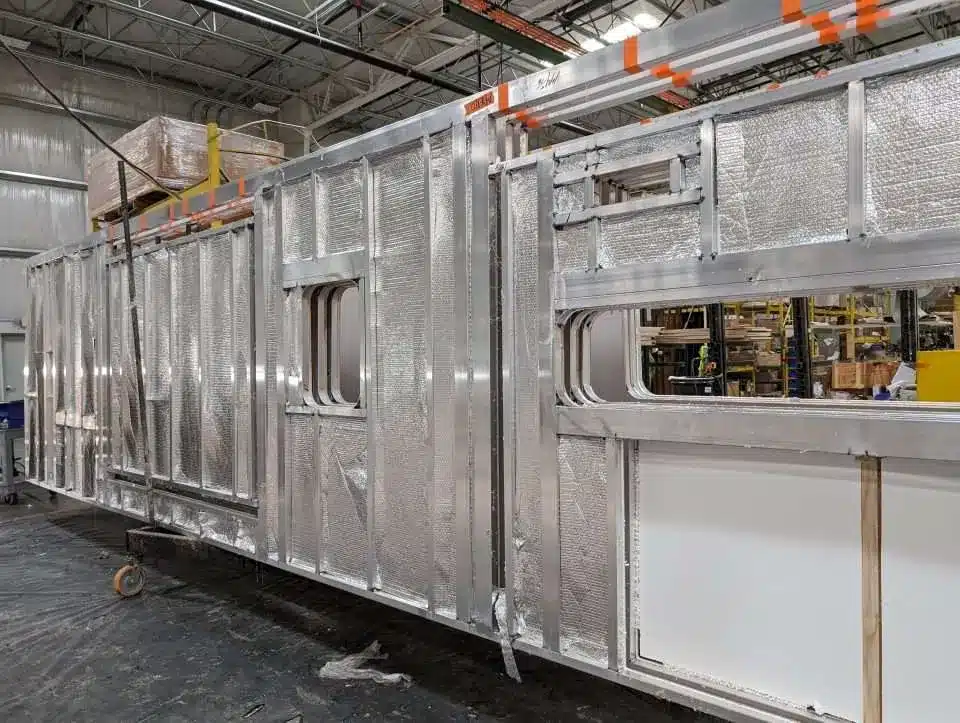
An aluminum travel trailer wall frame with insulation fitted, before the exterior panels go on.
The quality of the original construction plays an important role in long-term durability. Frame design, roofing materials, insulation, wall construction, flooring, and exterior finishes all affect how well a trailer handles years of use.
Aluminum-framed trailers and fiberglass-bodied models have different maintenance requirements and construction characteristics. Neither material automatically guarantees a longer lifespan; workmanship, sealing, and overall design matter considerably.
2. Water Damage and Roof Maintenance
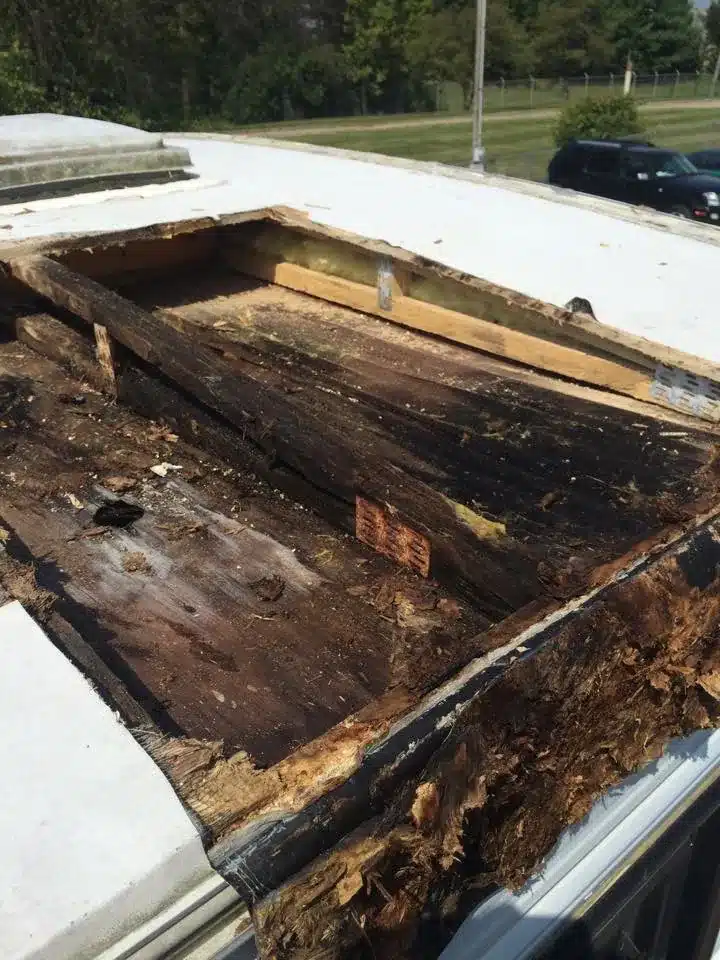
Travel trailer roof decking showing rot and water damage.
Water intrusion is one of the biggest threats to travel trailers. A small leak around a roof seam, window, vent, or door can gradually damage insulation, flooring, wall panels, and structural framing.
Regularly inspect roof seals, exterior joints, windows, and slide-out seals. Addressing minor leaks early can prevent expensive structural repairs.
3. Storage Conditions
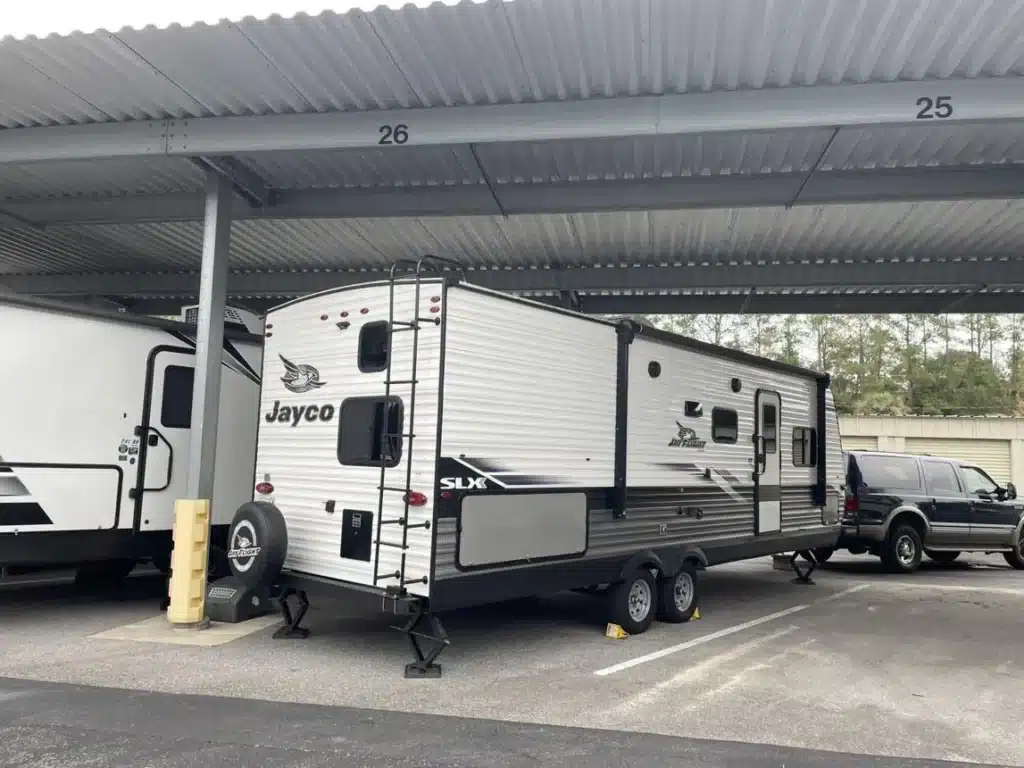
A travel trailer parked under covered storage, protected from sun, rain, and harsh weather.
Where you store your trailer can influence how quickly its exterior and interior deteriorate.
Extended exposure to direct sunlight, heavy rain, snow, humidity, and temperature fluctuations can accelerate wear. Covered storage or a suitable protective shelter can help preserve roofing materials, exterior finishes, and seals.
4. Frequency of Use and Road Conditions
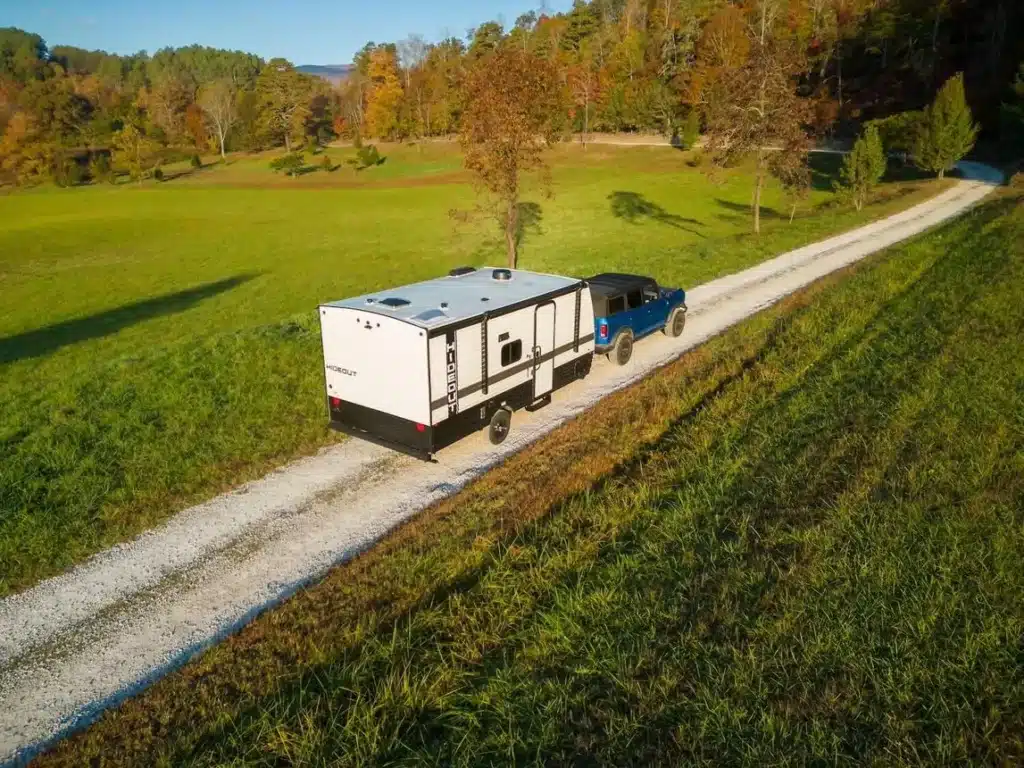
A travel trailer bouncing along a rough dirt road, showing the strain on its suspension and interior.
Frequent travel creates additional wear on tires, suspension components, brakes, appliances, and interior fixtures. Rough roads, excessive loading, and poor towing practices can also contribute to structural stress. However, leaving a trailer unused for extended periods without proper preparation can cause problems too, including deteriorating seals, tire damage, and plumbing issues.
How Quickly Do Travel Trailers Depreciate?
Travel trailers generally experience their greatest depreciation during the first few years of ownership. After that, the rate often becomes more gradual, although condition and market demand continue to influence resale prices.
RV Trader’s 2026 guidance puts typical depreciation at around 36% to 38% after five years. A 2026 RVBlogger study of 74 five-year-old trailers found they kept roughly 47% to 77% of their original MSRP, depending on the brand.
The following table provides an illustrative depreciation guide:
| Trailer Age | Estimated Original Value Retained |
|---|---|
| 1 year | 80–90% |
| 3 years | 65–80% |
| 5 years | 50–65% |
| 7 years | 40–55% |
| 10 years | 30–45% |
| 15 years | 20–35% |
These are broad planning estimates, not guaranteed resale values. Actual prices depend on the original purchase price, brand, model, condition, maintenance records, and local demand. Asking prices also do not necessarily reflect completed sale prices.
What Makes Some Travel Trailers Hold Their Value Better?
Not every travel trailer depreciates at the same rate. Some models attract stronger resale demand because of their construction, reputation, design, and overall condition.
Factors that can support better resale value include:
- Recognized manufacturers: Brands with established reputations for construction quality and customer support may attract more used buyers.
- Consistent maintenance: Documented inspections and repairs help demonstrate responsible ownership.
- Popular floor plans: Practical layouts with comfortable sleeping arrangements, kitchens, and bathrooms can appeal to a wider audience.
- Good exterior condition: Clean finishes, intact seals, and a well-maintained roof improve buyer confidence.
- Working appliances: Functional refrigerators, air conditioning, heating, plumbing, and electrical systems make a used trailer more attractive.
Avoid assuming that a premium brand will automatically retain its value. A neglected high-end trailer can be worth less than a properly maintained mid-range model.
7 Ways to Extend Your Travel Trailer’s Lifespan
Regular maintenance is one of the most effective ways to protect your investment.
- Inspect roof seals regularly: Check for cracks, gaps, and deteriorating sealant, and follow the manufacturer’s maintenance schedule.
- Protect the tires: Maintain correct inflation, inspect for cracking, and replace aging or damaged tires when necessary.
- Keep the trailer clean: Wash the exterior and remove dirt, debris, and moisture that can contribute to deterioration.
- Winterize plumbing systems: Before freezing temperatures arrive, prepare water lines, tanks, and plumbing components according to manufacturer instructions.
- Check brakes and bearings: Inspect the braking system, wheel bearings, suspension, and other running gear at recommended intervals.
- Prevent moisture buildup: Maintain ventilation, inspect for leaks, and use appropriate moisture-control measures.
- Store it properly: Use covered storage when practical and follow manufacturer recommendations for battery care, pest prevention, and long-term parking.
Keeping maintenance records is also valuable when you eventually decide to sell.
Is Buying a Used Travel Trailer Worth It?
A used travel trailer can offer excellent value, particularly because the original owner has already absorbed much of the early depreciation.
However, age alone should not determine whether a used trailer is worth buying. A 10-year-old model with a dry roof, solid flooring, functional appliances, and documented maintenance may be a better purchase than a five-year-old trailer with hidden water damage.
Before buying, inspect the roof, walls, windows, flooring, tires, brakes, plumbing, electrical systems, and appliances. Look for soft spots, musty odors, discoloration, delamination, and signs of previous repairs.
Consider hiring an independent RV inspector, especially for an expensive purchase.
Final Thoughts: Protecting Your Travel Trailer Investment
Travel trailers can provide many years of camping enjoyment, but their longevity depends on more than the manufacturer’s advertised quality. Regular inspections, proper storage, careful towing, and prompt repairs all contribute to a longer service life.
Depreciation is unavoidable, but responsible ownership can help preserve resale value and reduce expensive repairs. Whether you are buying your first camper or deciding when to upgrade, focus on construction quality, maintenance history, and overall condition rather than age alone.