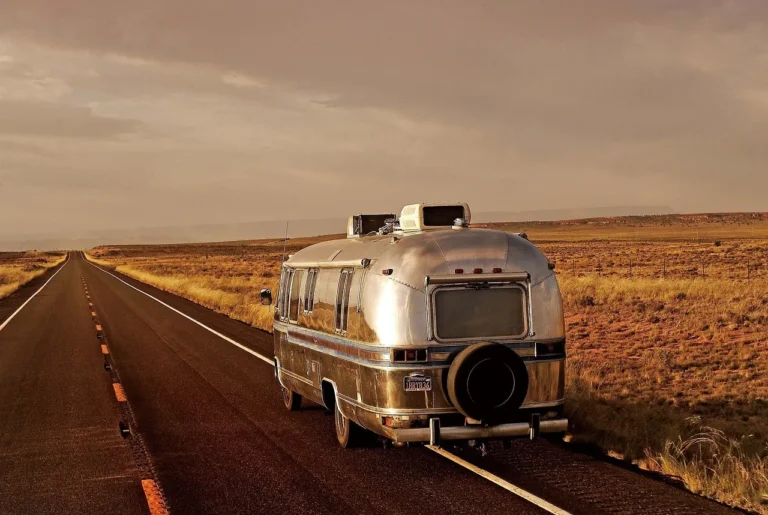
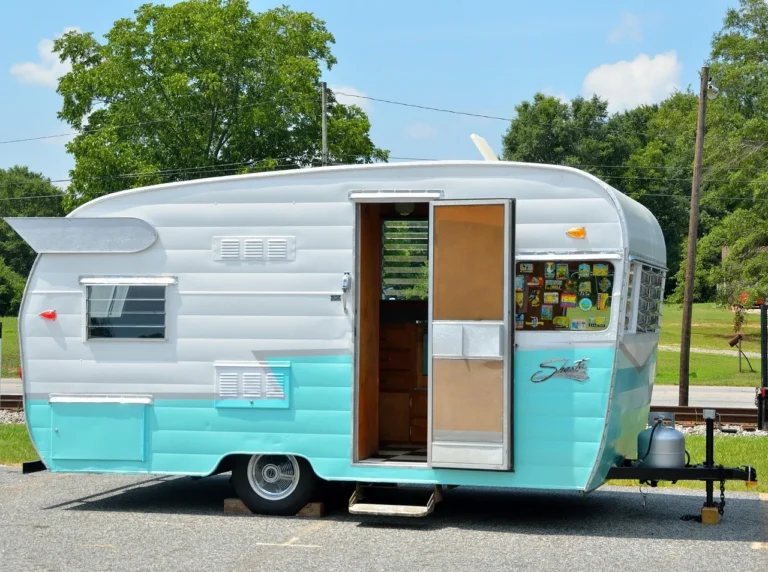
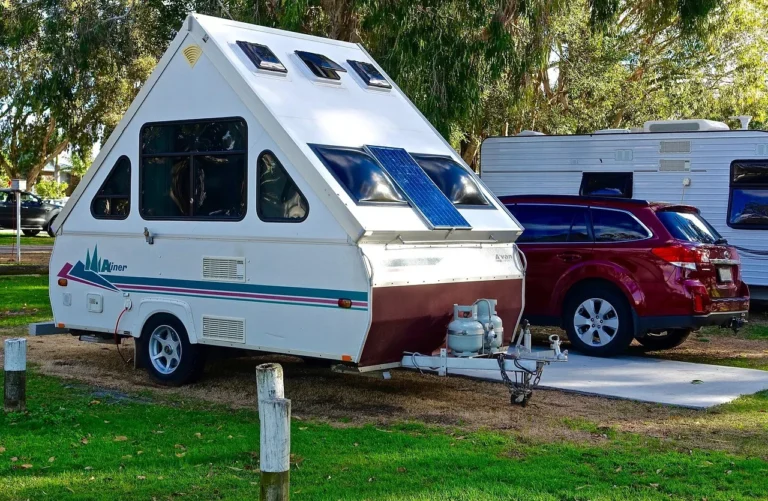
Boondocking for beginners starts with a simple idea: camping without hookups, often for free, on public land. Instead of a paid campground with water and electric posts, you park your travel trailer on Bureau of Land Management (BLM) land or in a national forest, rely on your own tanks and batteries, and enjoy the space and quiet.
It’s one of the best ways to cut camping costs and reach places campgrounds can’t. This guide covers where you can boondock legally, how to find spots, the rules to follow and what to bring on your first trip.
Where You Can Boondock for Free
Free camping outside developed campgrounds is officially called dispersed camping. The two biggest sources are BLM land and national forests, mostly in the western states.
BLM land
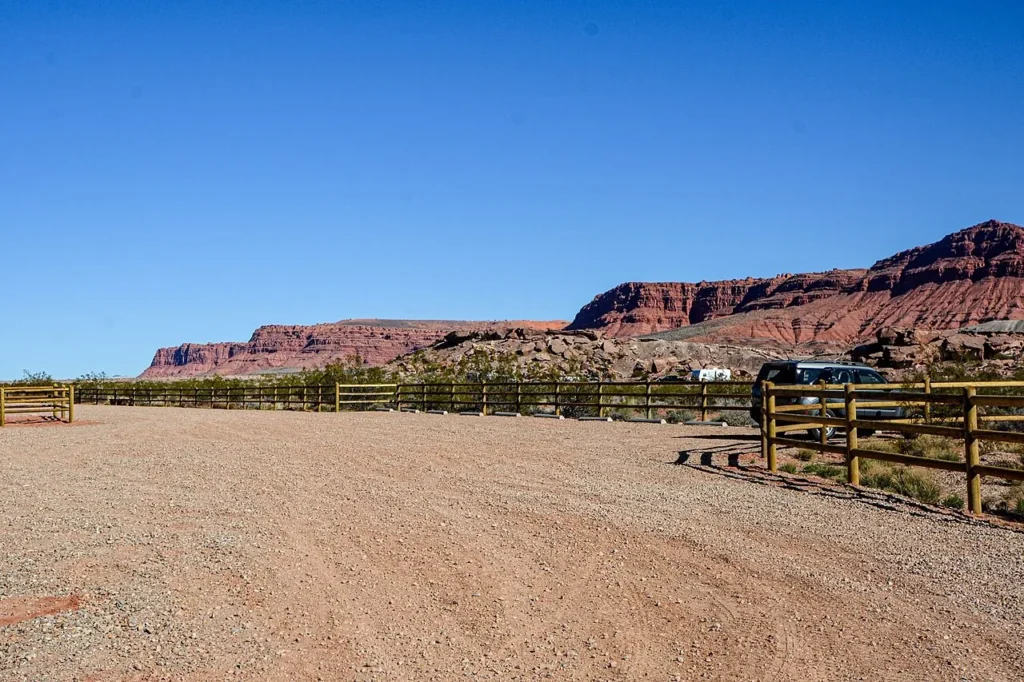
Dispersed camping on BLM land in Utah | Photo: BLM Utah (public domain)
The BLM manages millions of acres of open land, much of it in the West, and most of it is open to dispersed camping unless it’s posted otherwise. According to the BLM, you can usually stay in one spot for up to 14 days within a 28-day period. After that, you need to move at least 25 miles away. Local field offices can set different rules, so check with the office for the area you’re visiting.
Stay on existing roads and use spots that have clearly been camped on before, rather than driving onto fresh ground.
National forests
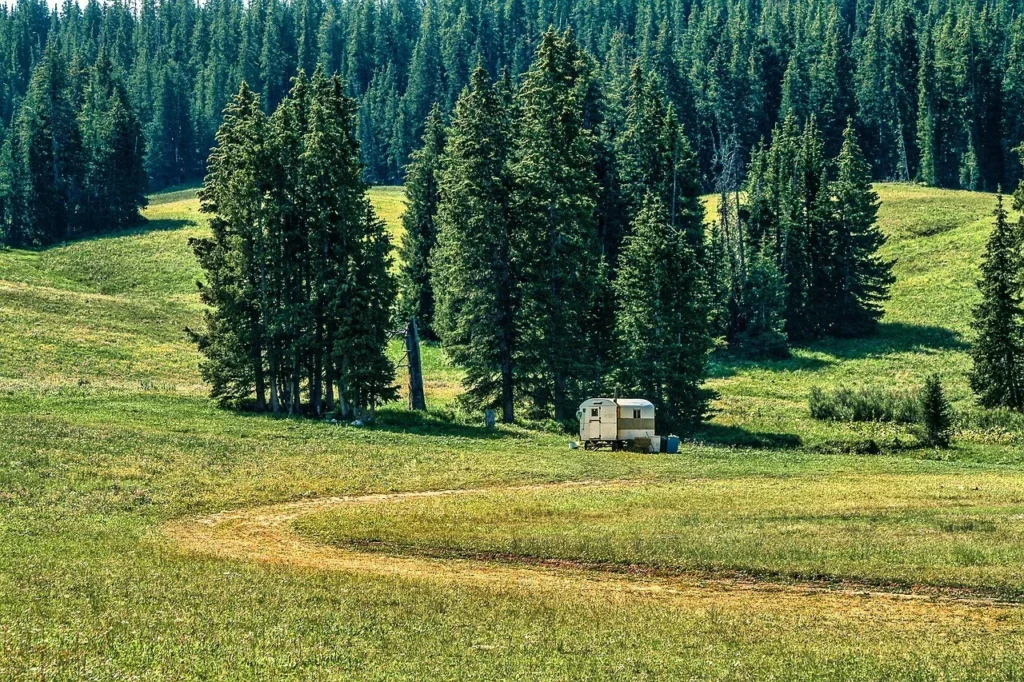
Many national forests allow free camping along forest roads | Photo: Pixabay
Most national forests also allow dispersed camping, usually for up to 14 days, though some forests set shorter limits or different windows. The key tool is the forest’s free Motor Vehicle Use Map (MVUM), which shows which roads you can drive and where camping beside them is allowed. Pick one up at a ranger station or download it from the forest’s website.
Long-Term Visitor Areas: La Posa, near Quartzsite, Arizona
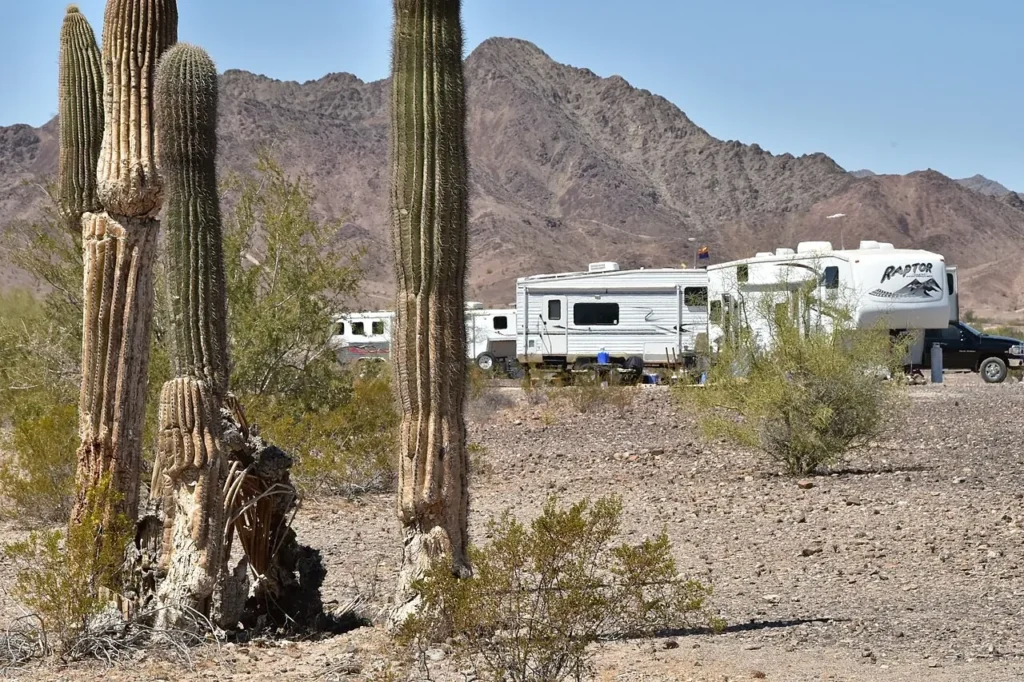
La Posa Long-Term Visitor Area near Quartzsite, Arizona | Photo: BLM Arizona (public domain)
For winter, the BLM runs Long-Term Visitor Areas (LTVAs) in the Arizona and California desert, and La Posa near Quartzsite is the best known. Instead of the 14-day rule, you buy a pass and can stay for the season. For the 2025–26 season, the BLM charged $180 for a long-term pass (September 15 to April 15) or $40 for 14 days. The BLM has proposed raising these fees, so check the current price before you go. LTVAs aren’t free, but they’re far cheaper than RV parks and are a popular first step into boondocking.
How to Find Boondocking Spots
- Apps and websites: Campendium, iOverlander and FreeRoam list free sites with user reviews, photos and recent cell signal reports.
- Official maps: BLM and Forest Service maps show land boundaries, and the MVUM shows legal roads in national forests.
- Ranger stations and field offices: staff know which roads are passable, where fire restrictions apply and which areas are closed.
- Scout first: if you can, unhitch and check a rough road or tight turnaround with your tow vehicle before taking the trailer in.
Shorter trailers reach far more spots on dirt roads. Our guide to what length travel trailer is best explains why size matters.
The Rules to Follow
- Respect stay limits and move on when your time is up.
- Pack out all trash and leave the site cleaner than you found it.
- Dump tanks only at proper dump stations, never on the ground.
- Check fire restrictions before every campfire, as bans are common in dry seasons.
- Keep your distance from water sources, trails and other campers.
- Follow quiet hours with generators, even if none are posted.
What You Need for Your First Trip
Boondocking means relying on what you carry. Before your first trip:
- Water: fill your fresh tank and carry extra jugs. Water weighs about 8.3 pounds per gallon, so check your RV weight limits.
- Power: a charged battery bank, solar panels, a quiet inverter generator, or a combination.
- Tank awareness: know your gray and black tank sizes, and conserve with short showers and a dishpan.
- Navigation and safety: offline maps, a first-aid kit, a tire repair kit and a way to call for help if there’s no cell signal.
- Leveling blocks and wheel chocks for uneven ground.
Some trailers are built for this, with bigger tanks, solar and higher ground clearance. See our picks for the best boondocking travel trailers.
Tips for Your First Night
- Start close to services for a night or two, so a forgotten item isn’t a crisis.
- Arrive in daylight to judge the road and level the trailer.
- Track your tank and battery levels each day to learn your real limits.
- Have a backup spot in case your first choice is taken.
If you’re heading to Utah’s national parks, nearby BLM land is a popular way to avoid booked-up campgrounds; our Utah Mighty 5 road trip guide can help you plan the route.
Final Thoughts
Boondocking for beginners is mostly about preparation: find legal land with the right map or app, follow the stay limits and leave no trace, and bring enough water and power to be self-sufficient. Start with a short trip close to services, and you’ll soon wonder why you ever paid for a campsite.
FAQs
Is boondocking legal?
Yes, on public land where dispersed camping is allowed, which includes most BLM land and many national forests. It isn’t allowed in most national park campgrounds or where signs prohibit it.
How long can you boondock in one place?
Usually 14 days on BLM land, within a 28-day period, before moving at least 25 miles. National forests usually allow up to 14 days, but local limits vary.
Do I need a generator to boondock?
No. Many boondockers use solar panels and a battery bank instead. A generator helps in cloudy weather or if you run an air conditioner.