
Short answer: probably, yes. Most SUVs on the road today can tow some size of travel trailer. The real question isn’t “can an SUV tow a trailer” it’s “can your SUV tow this trailer,” and that depends on three numbers most shoppers never actually look up.
Here’s how to answer it properly, without guessing.
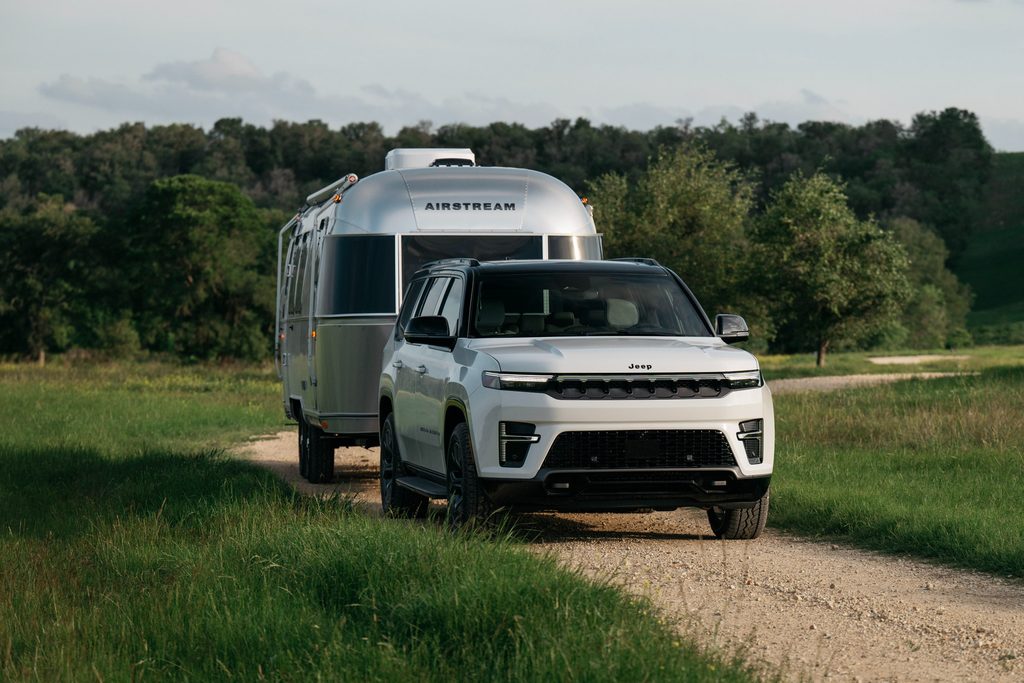
The Three Numbers That Actually Matter
Every RV dealer and brochure will throw dry weight at you first. Ignore it. Dry weight is the trailer empty, with no water, no propane, no gear, and often not even the battery installed. It’s the least useful number for deciding what you can tow.
1. GVWR (Gross Vehicle Weight Rating) — the trailer’s maximum legal loaded weight, including everything you put in it: water, propane, food, clothes, gear. This is the number to match against your SUV’s tow rating, not dry weight.
2. Your SUV’s payload capacity — how much total weight your vehicle can carry, including passengers, cargo inside the SUV, and tongue weight pressing down on the hitch. This is the number most people forget entirely, and it’s often the actual limiting factor, not the advertised tow rating.
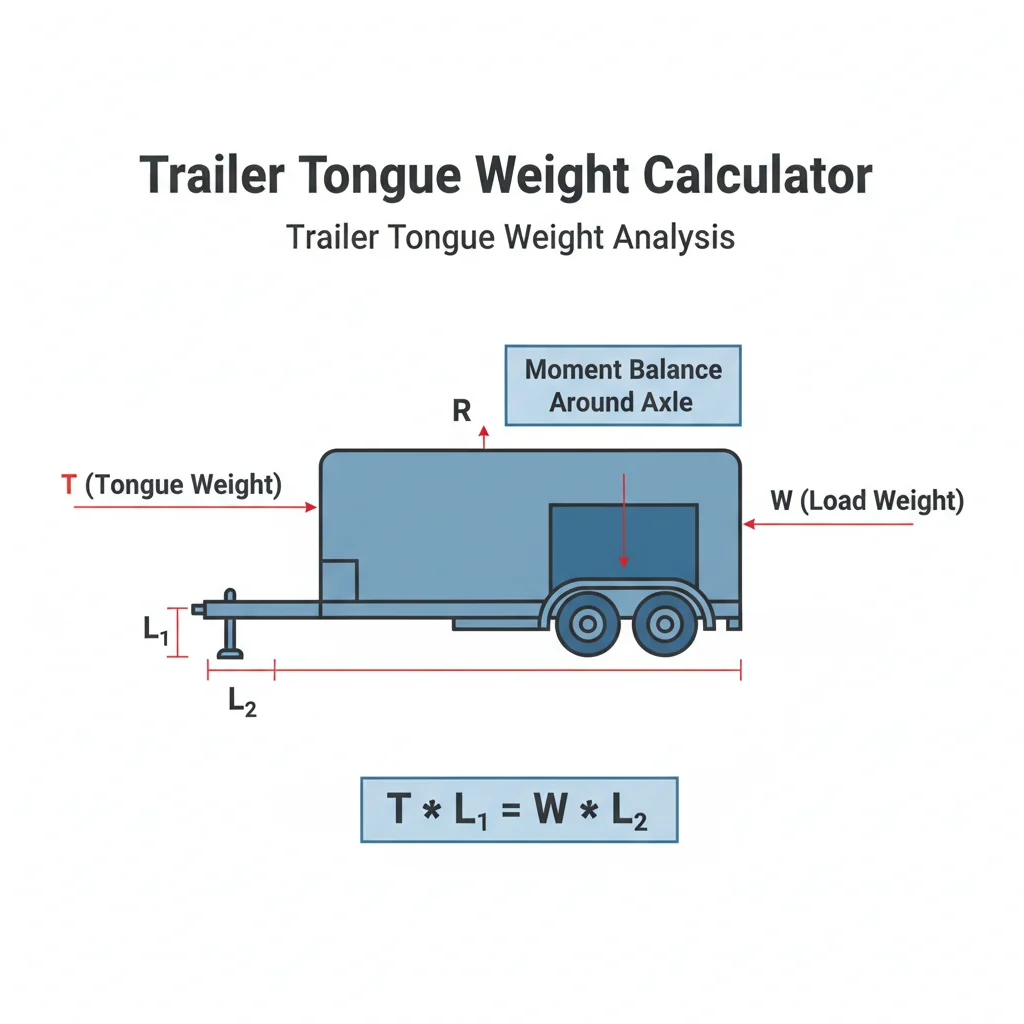
3. Tongue weight — the portion of the trailer’s weight that presses down on your hitch rather than riding on the trailer’s own wheels. It typically runs 10–15% of the trailer’s total loaded weight. A trailer with a 6,000 lb GVWR will put roughly 600–900 lb on your hitch when loaded — and that weight comes directly out of your SUV’s payload capacity, not its towing capacity.
The quick math: take the trailer’s GVWR, move the decimal one place left, and that’s a rough estimate of tongue weight. A 7,000 lb GVWR trailer means roughly 700 lb riding on your hitch.
Why Towing Capacity Alone Can Lie to You
Here’s the scenario that catches people out: your SUV is rated to tow 7,000 lb. You find a trailer with a 6,400 lb GVWR. Looks safe you’re under the limit. But then you load four passengers, a week of groceries, and your dog’s gear into the SUV itself, and now you’re over payload even though you’re nowhere near the tow rating.
Towing capacity and payload capacity are two separate numbers, calculated two separate ways, and a vehicle can fail on either one independently. You need to clear both, not just one. Check your SUV’s door-jamb sticker or owner’s manual for the actual payload figure don’t rely on the headline “tow rating” number from a car ad.
SUV Towing Capacity by Class
Towing capacity varies enormously by SUV size, engine, and tow package these are general 2026-model-year ranges to help you figure out roughly where your vehicle sits. Always confirm your specific trim and configuration against the manufacturer’s towing guide, since a base trim and a fully-optioned tow-package trim of the same SUV can differ by thousands of pounds.
| SUV Class | Typical Towing Range | Example Models |
|---|---|---|
| Small / compact SUV | 1,000 – 3,500 lb | Chevrolet Trax, Ford Mustang Mach-E, Honda CR-V |
| Midsize SUV | 3,500 – 6,000 lb | Subaru Outback, Subaru Ascent, Toyota Highlander, Kia Telluride, Hyundai Palisade, Honda Pilot/Passport |
| Full-size SUV | 7,500 – 9,600 lb | Chevrolet Tahoe/Suburban, GMC Yukon, Ford Expedition, Toyota Sequoia, Dodge Durango |
| Heavy-duty full-size SUV | 9,000 – 10,000+ lb | Jeep Wagoneer/Grand Wagoneer, properly equipped full-size trucks-based SUVs |
Matching SUV Class to Real Trailers
This is where it gets genuinely useful. Based on GVWR, here’s roughly what each SUV class can realistically handle:
Small/compact SUV (up to ~3,500 lb): Teardrop trailers and the smallest fiberglass “egg” trailers. A Casita Independence or Spirit, at a 3,500 lb GVWR, sits right at the edge of this class — comfortable for most midsize SUVs, tight for smaller crossovers once you factor in payload.
Midsize SUV (3,500–6,000 lb): Small-to-mid travel trailers like the Oliver Legacy Elite (5,000 lb GVWR) or compact bunkhouses in the Rockwood Geo Pro class. This is the sweet spot for most SUV-based camping setups.
Full-size SUV (7,500–9,600 lb): Larger family bunkhouses and mid-size travel trailers. A trailer like the Rockwood Mini Lite 2509S, with a GVWR between roughly 6,900 and 7,700 lb depending on model year, needs a vehicle in this range — generally a half-ton truck or a full-size SUV with the right tow package, not a midsize crossover.
Heavy-duty full-size SUV (9,000 lb+): Larger bunkhouses and some fifth-wheel-adjacent travel trailers approaching 9,000–11,000 lb GVWR, like the larger Outdoors RV Black Stone or Arctic Fox floor plans, though trailers in that range are genuinely better suited to a dedicated truck.
Don’t Skip the Weight-Distribution Hitch
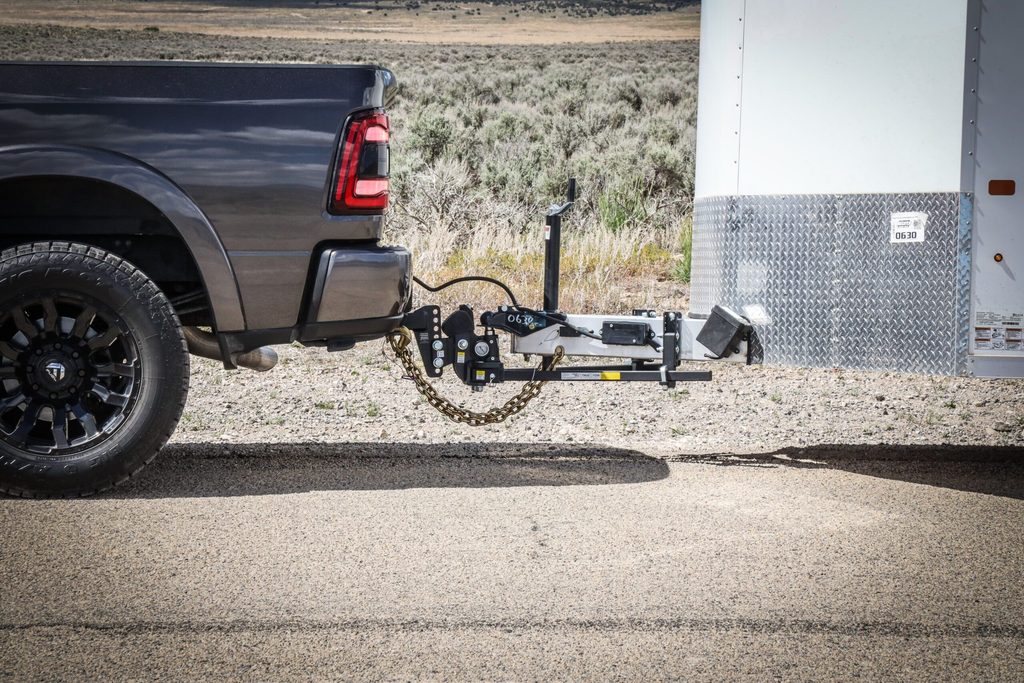
Any trailer with meaningful tongue weight — generally anything over roughly 3,000–4,000 lb GVWR — should be towed with a weight-distribution hitch, which uses spring bars to transfer some of that tongue weight back onto the trailer’s axles and forward onto the SUV’s front axle. Without one, a heavy tongue weight can push down the rear of your SUV, lift weight off the front wheels, and reduce steering and braking control.
Sway control, either built into the weight-distribution hitch or as a separate add-on, is equally important on an SUV, since SUVs generally have a shorter wheelbase than trucks and are more sensitive to trailer sway at highway speed.
The Real-World Checklist
Before you assume your SUV can tow a specific trailer:
- Find your SUV’s actual payload capacity — the door-jamb sticker, not the tow rating from a sales brochure.
- Find the trailer’s GVWR — not its dry weight.
- Estimate tongue weight at 10–15% of GVWR, and confirm your SUV’s payload can absorb it along with passengers and cargo.
- Confirm your SUV’s tow rating exceeds the trailer’s GVWR — and don’t cut it close. A rating that’s only slightly above the trailer’s weight leaves no margin for wind, hills, or a loaded cargo rack.
- Weigh the loaded rig at a CAT scale once you own it. Brochure numbers are a starting point, not a guarantee — actual built weight often runs heavier than published figures.
- Use a weight-distribution hitch with sway control for anything beyond the smallest trailers.
Frequently Asked Questions
Can any SUV tow a travel trailer? Most SUVs can tow something, but the size of trailer varies enormously — from roughly 1,500 lb for small crossovers up to 10,000 lb for heavy-duty full-size SUVs with the right tow package. Match the trailer’s GVWR, not dry weight, to your SUV’s actual tow rating and payload capacity.
What’s the difference between towing capacity and payload? Towing capacity is how much weight your SUV can pull behind it. Payload capacity is how much weight your SUV can carry — including passengers, cargo, and the trailer’s tongue weight pressing down on the hitch. Both have to check out; exceeding either one is unsafe regardless of the other.
How much tongue weight does a travel trailer have? Typically 10–15% of the trailer’s total loaded weight (GVWR). A trailer with a 6,000 lb GVWR usually puts 600–900 lb on the hitch when fully loaded.
Do I need a weight-distribution hitch for my SUV? Generally yes, for any trailer over roughly 3,000–4,000 lb GVWR. It transfers tongue weight more evenly across the SUV and trailer, improving steering control and reducing sway.
What size travel trailer can a midsize SUV tow? Most midsize SUVs (Subaru Outback, Toyota Highlander, Kia Telluride, Honda Pilot) handle trailers in the 3,500–6,000 lb GVWR range comfortably, covering most small-to-mid travel trailers and teardrop-style campers.
Is dry weight or GVWR more important when matching a trailer to my SUV? GVWR, always. Dry weight doesn’t include water, propane, or gear, so it understates what you’ll actually be towing once the trailer is loaded for a trip.
The Bottom Line
Your SUV almost certainly can tow a travel trailer the question is which size, and that comes down to math most people skip. Pull your SUV’s real payload number off the door jamb, match the trailer’s GVWR (not dry weight) against both your tow rating and your remaining payload after tongue weight, and don’t trust a trailer’s brochure weight until you’ve seen it on a scale yourself.
Get those numbers right, and an SUV can tow anything from a lightweight fiberglass egg trailer to a genuinely substantial family bunkhouse you just need to know which end of that range your specific vehicle sits at before you fall in love with a floor plan.