You don’t need a large recreational vehicle to enjoy comfortable camping and memorable road trips. Small campers offer an appealing alternative for travelers who want more convenience than traditional tent camping without the expense, storage requirements, and towing demands of a full-sized RV. If you’re weighing a teardrop vs pop-up vs travel trailer, the right choice comes down to space, towing, and budget.
Three popular options are teardrop campers, pop-up campers, and compact travel trailers. Each offers a different balance of portability, living space, comfort, and affordability.
Teardrop campers are known for their compact designs, pop-up campers provide expandable sleeping and living areas, and small travel trailers offer more permanent interior facilities. Understanding these differences can help you choose a camper that matches your budget, vehicle, and outdoor lifestyle.
Teardrop vs Pop-Up vs Travel Trailer: At a Glance
| Feature | Teardrop Camper | Pop-Up Camper | Small Travel Trailer |
|---|---|---|---|
| Design | Compact, enclosed shell | Foldable or expandable structure | Fixed hard-sided body |
| Sleeping space | Usually 1–2 people | Often 2–6 people, depending on layout | Varies by model |
| Kitchen | Often rear outdoor galley | Usually compact indoor or outdoor setup | Commonly built-in |
| Bathroom | Rare in smaller models | Limited or optional | Available in some models |
| Setup | Minimal | Requires unfolding and securing | Generally minimal |
| Towing | Usually lightweight | Usually lightweight | Varies from lightweight to relatively heavy |
| Weather protection | Hard-sided protection | Fabric sections offer less insulation | Generally strong |
| Best for | Couples and minimalist campers | Families and flexible camping | Travelers wanting more amenities |
1. Teardrop Campers: Best for Couples and Minimalist Travel
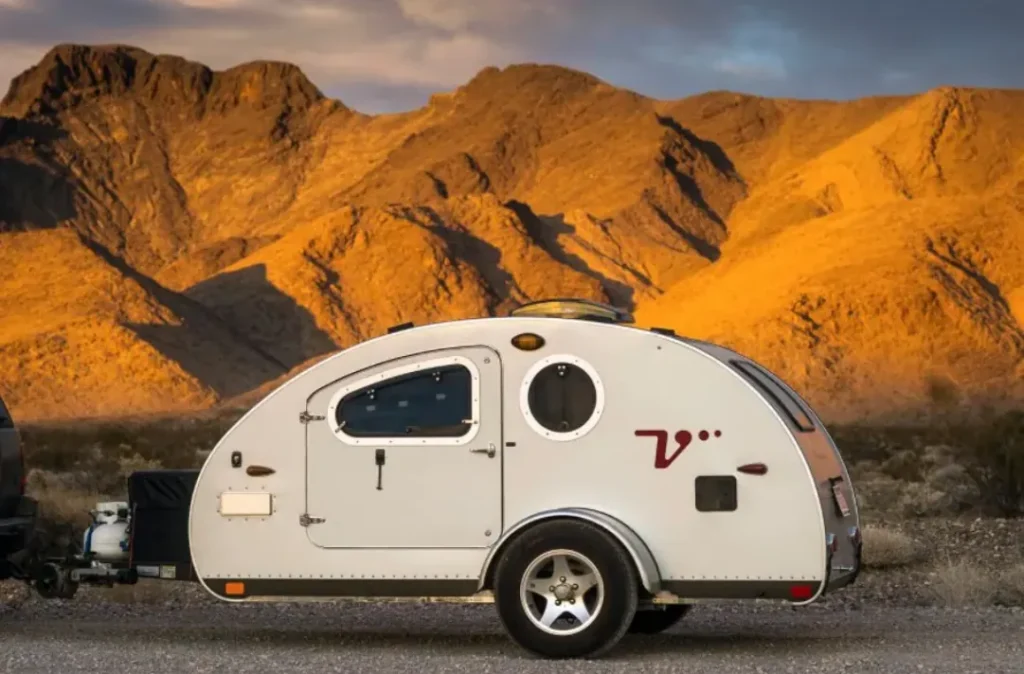
Teardrop campers are among the smallest and simplest towable RVs. Their distinctive rounded shape keeps the overall design compact, making them attractive to couples, solo travelers, and people who prefer uncomplicated camping.
Most models feature an enclosed sleeping area with a mattress, windows, lighting, and basic storage. Many also include a rear galley with a countertop, cabinets, and cooking equipment that can be accessed from outside. Their small size makes them relatively easy to tow, maneuver, and store. Some lightweight models can be pulled by smaller SUVs and other suitably rated vehicles.
Advantages
- Compact and relatively easy to tow.
- Quick to set up at a campsite.
- Hard-sided construction offers better protection than a tent-style camper.
- Often easier to store at home.
- Suitable for short road trips and weekend adventures.
Limitations
- Limited interior space.
- Most models lack standing room.
- Bathroom and shower facilities are uncommon.
- Outdoor cooking may be inconvenient in bad weather.
Teardrop campers are ideal for travelers who prioritize mobility and simplicity over extensive residential amenities.
2. Pop-Up Campers: Best for Families on a Budget

Pop-up campers, also known as folding campers, offer a balance between portability and sleeping space. They collapse into a compact trailer for transportation and expand at the campsite to reveal canvas or other flexible sleeping sections.
Depending on the design, they may include multiple beds, a dining area, a small kitchen, storage cabinets, and sometimes a bathroom or shower.
One of their biggest advantages is the amount of living space they provide relative to their compact towing size. Families can enjoy separate sleeping areas without needing a large conventional RV.
Advantages
- Generally lightweight and easier to tow than many full-sized trailers.
- Expandable sleeping and living areas.
- Often more affordable than conventional travel trailers.
- Compact storage when folded.
- Suitable for families and group camping.
Limitations
- Setup takes longer than with a hard-sided trailer.
- Canvas sections offer less insulation and sound protection.
- Rain, wind, and cold weather can reduce comfort.
- Fabric requires proper drying and maintenance to prevent mildew.
Pop-up campers are particularly attractive to families who want more space without investing in a large RV.
3. Small Travel Trailers: Best for Comfort and Convenience
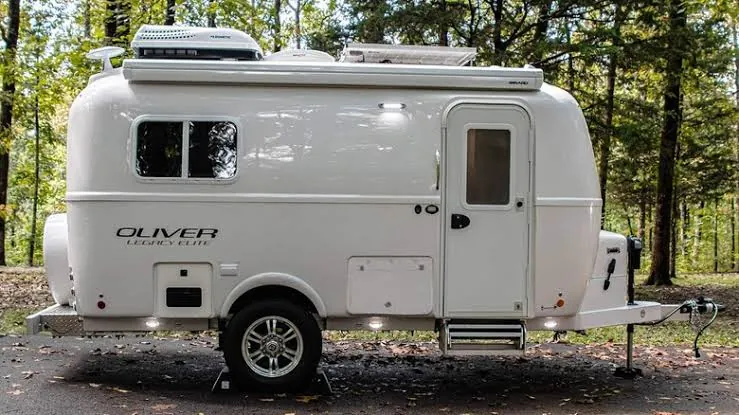
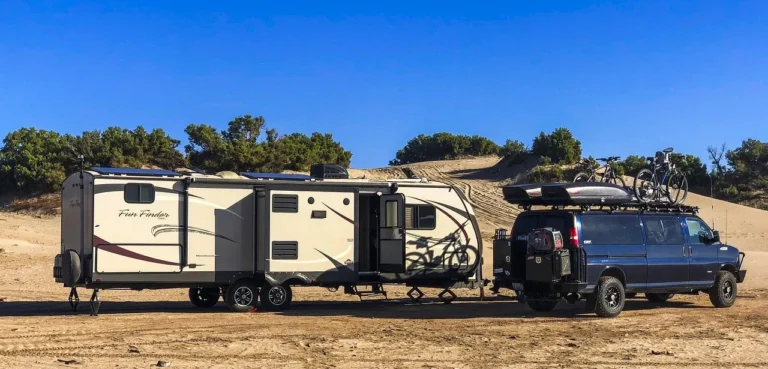
Small travel trailers provide a more traditional RV experience in a compact package. Unlike pop-up campers, they feature permanent hard-sided construction, enclosed living areas, and fixed interiors. Depending on the floor plan, a compact travel trailer may include a bed, kitchenette, dining area, bathroom, refrigerator, and climate-control equipment.
Their enclosed construction offers better protection from wind, rain, and temperature changes than most folding campers. They also provide more privacy and convenience for travelers who spend several nights away from home.
However, not every small travel trailer includes a full bathroom or all the amenities found in larger RVs. Buyers should compare individual floor plans carefully.
Advantages
- The enclosed interior provides reliable weather protection.
- More privacy than tent-style pop-up campers.
- Permanent kitchen and sleeping arrangements.
- Some models include bathrooms and showers.
- Suitable for longer camping trips.
Limitations
- Often heavier than teardrop and pop-up campers.
- May require a more capable tow vehicle.
- Can cost more than simpler small-camper options.
- Larger models require more storage space.
Small travel trailers are best for people who want a comfortable camping experience without moving into a full-sized motorhome.
How Do They Compare on Price?
Purchase price is a major factor, particularly for first-time camper buyers.
Teardrop campers can be budget-friendly, although premium models with upgraded kitchens, insulation, and off-road features may cost considerably more. Pop-up campers often offer excellent value by providing extra sleeping space without the expense of a fully enclosed trailer. Small travel trailers typically cost more because of their hard-sided construction, appliances, bathrooms, and added comforts.
Buying used can help reduce costs, but inspect the camper carefully for water damage, worn tires, damaged canvas, faulty appliances, and structural issues before making a purchase.
Which Small Camper Is Easiest to Tow?
Towing requirements depend on the camper’s loaded weight, equipment, and cargo rather than its category alone. Teardrop campers are typically the lightest and easiest to tow, while pop-up campers are also relatively manageable. Small travel trailers may weigh more, particularly those with bathrooms, kitchens, and additional appliances.
Before buying, check your vehicle’s towing capacity, payload rating, gross combined weight rating, and hitch limits. Account for passengers, luggage, water, and camping gear, and never rely on a camper’s dry weight alone to determine whether your vehicle can tow it safely.
Which Small Camper Fits Your Lifestyle?
The best option depends on how you camp and who travels with you.
- Solo travelers: A teardrop camper offers a simple, compact setup for independent adventures.
- Couples: Teardrop campers are excellent for minimalist trips, while small travel trailers provide more indoor comfort.
- Families with children: Pop-up campers offer expandable sleeping areas that can accommodate several people.
- Weekend campers: All three options can work, depending on your preferred level of comfort.
- Frequent travelers: A teardrop camper is convenient for short stops, while a hard-sided travel trailer may be better for longer journeys.
- Cold-weather campers: Small travel trailers generally provide better insulation and weather protection, although construction and heating systems vary.
What to Check Before Buying
Before choosing a small camper, think beyond its advertised sleeping capacity.
Consider the number of people who will use it, the availability of indoor cooking facilities, bathroom requirements, storage space, and the weather conditions you expect to encounter.
For used pop-up campers, inspect the canvas, seams, lift system, and floor for moisture damage. Teardrop and travel trailer buyers should examine roof seals, windows, tires, brakes, and signs of water intrusion.
Most importantly, confirm that your tow vehicle can safely handle the camper when fully loaded.
Final Verdict: Choose the Camper That Matches Your Adventures
Teardrop campers, pop-up campers, and small travel trailers each offer unique advantages for camping. Teardrops suit couples and minimalist travelers, pop-ups provide an affordable option with more sleeping space, and small travel trailers offer greater comfort, privacy, and weather protection.
Consider your towing capacity, budget, desired amenities, and travel habits before choosing. If simplicity and lightweight towing are your priorities, go with a teardrop. If you need affordable sleeping space for the family, a pop-up is a smart choice. If comfort and convenience matter most, a small travel trailer is worth the extra investment. The best camper is one that fits your lifestyle, your tow vehicle, and the kind of adventures you plan to enjoy.