Owning an RV comes with the freedom to travel, but finding a safe place to keep it between trips can be challenging, and the first question most owners ask is: how much does RV storage cost? Many homeowners do not have enough driveway or garage space for a large motorhome, travel trailer, or fifth wheel. Dedicated RV storage facilities provide a convenient alternative, with options ranging from basic outdoor parking to fully enclosed, climate-controlled units.
The answer depends on the size of your vehicle, the type of storage you choose, and where you live. Outdoor spaces are generally the most affordable, while covered and indoor facilities cost more because they offer additional protection.
Understanding these options can help you find a storage solution that fits your budget without exposing your RV to unnecessary damage.
Average RV Storage Costs in 2026
RV storage prices vary widely across the United States, so it helps to start with typical ranges. Based on HomeGuide’s cost data for 25- to 35-foot RVs, here is what you can expect to pay each month:
| Storage Type | Typical Monthly Cost | Best For |
|---|---|---|
| Outdoor uncovered | $75–$150 | Mild climates and tight budgets |
| Covered storage | $125–$200 | Sunny or hail-prone areas |
| Indoor storage | $150–$400+ | Long-term storage and high-value RVs |
These are typical ranges, not guaranteed quotes. Actual prices can be higher or lower depending on location, vehicle dimensions, facility features, and availability.
Some markets fall well outside these ranges. Extra Space Storage, for example, reports outdoor uncovered RV storage costing anywhere from about $35 to $363 a month, depending on where you live.
1. Outdoor RV Storage: The Most Affordable Option
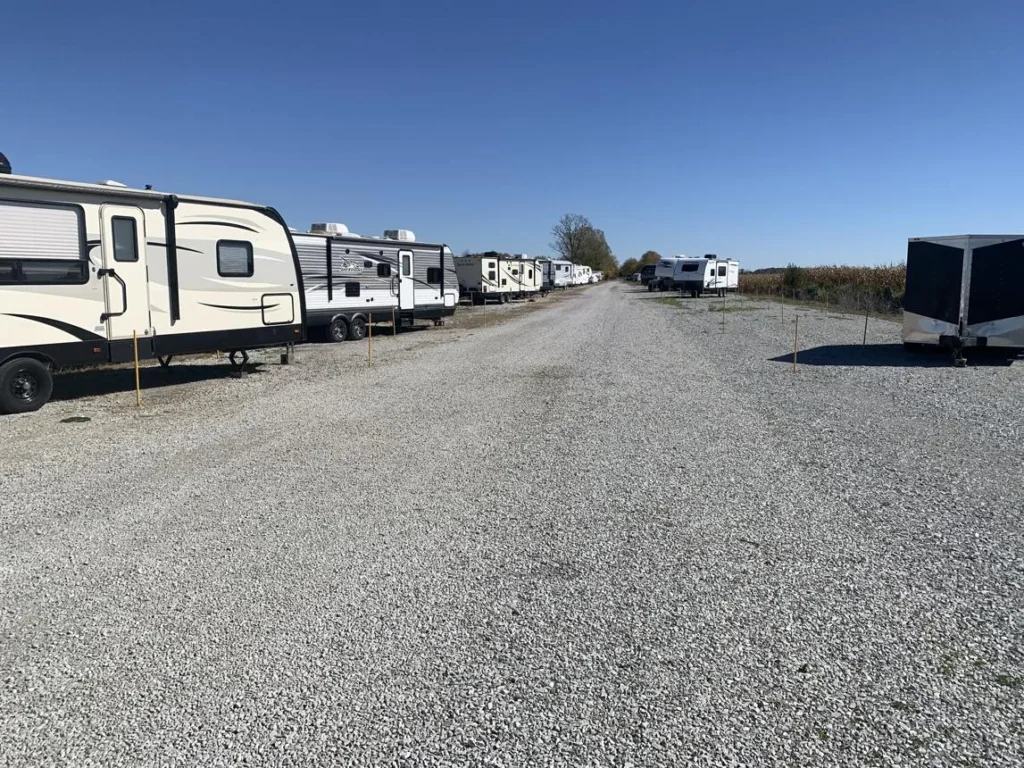
Travel trailers parked in an outdoor storage lot.
Outdoor RV storage involves parking your vehicle in a designated space at an open storage facility. It is generally the cheapest option and works well for owners who want convenient parking without paying for additional protection.
Many facilities offer gated access, security cameras, perimeter fencing, and designated parking spaces. However, the RV remains exposed to sunlight, rain, wind, dust, and other environmental conditions.
Advantages
- Lower monthly storage costs.
- Often easier to find available spaces.
- Convenient access at many facilities.
- Suitable for owners who use their RV frequently.
Disadvantages
- Limited protection from weather.
- Greater exposure to UV damage and debris.
- More frequent exterior cleaning may be necessary.
Outdoor storage is a practical option for budget-conscious owners, particularly in areas with relatively mild weather.
2. Covered RV Storage: A Balance Between Cost and Protection
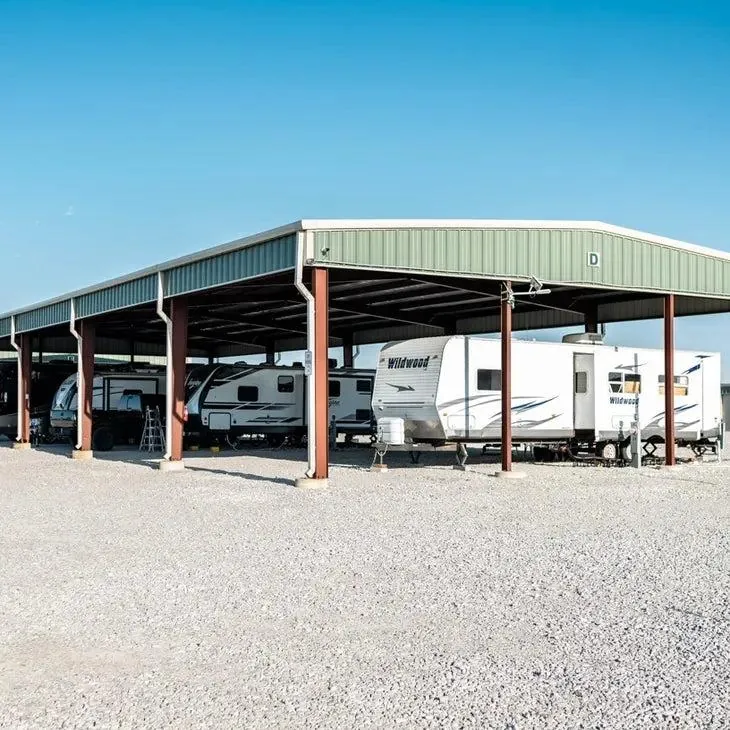
Travel trailers parked beneath a large, open-sided covered storage shelter.
Covered RV storage provides a roof over the vehicle while keeping its sides exposed to the surrounding environment. It offers more protection than an open parking space without the higher cost of a fully enclosed facility.
The roof helps reduce direct sunlight and limits exposure to rain, hail, and falling debris. This can help protect exterior finishes, roof materials, and other weather-sensitive components.
Advantages
- Protection from direct sunlight and some weather conditions.
- Less exposure to rain and falling debris.
- More affordable than most indoor facilities.
- Useful in regions with intense sun or seasonal storms.
Disadvantages
- Sides remain exposed to wind and moisture.
- Not all structures accommodate larger RVs.
- Availability can be limited in high-demand areas.
Covered storage is a good middle-ground solution for owners who want additional protection without paying for enclosed storage.
3. Indoor RV Storage: Maximum Protection
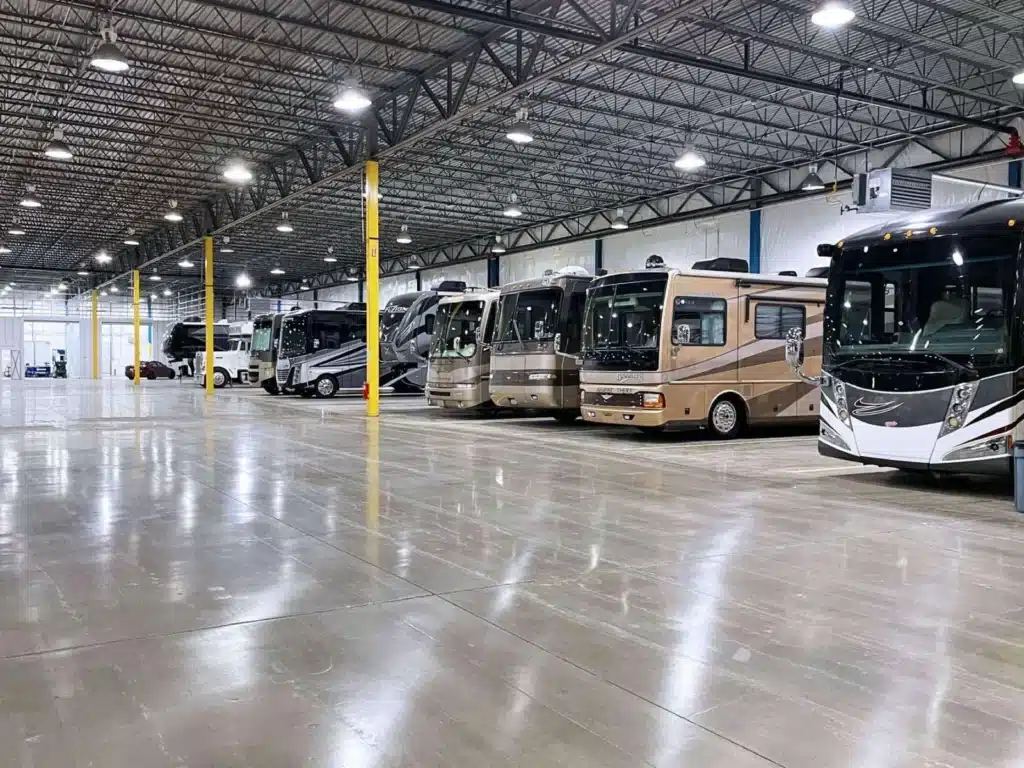
Travel trailers parked inside a large enclosed storage facility.
Indoor RV storage keeps the vehicle inside a fully enclosed building or dedicated storage unit. Some facilities offer basic enclosed spaces, while premium options include climate and humidity control.
This type of storage provides better protection against weather, theft opportunities, dust, and environmental exposure. It can be particularly attractive to owners of expensive motorhomes, luxury fifth wheels, and RVs that remain unused for extended periods.
Advantages
- Protection from rain, snow, sunlight, and wind.
- Reduced exposure to dust and environmental debris.
- Greater security at many facilities.
- Climate-controlled options may help manage temperature and humidity.
Disadvantages
- Higher monthly prices.
- Limited availability for oversized vehicles.
- Some facilities have restricted access hours.
- Height and width restrictions may apply.
Indoor storage is worth considering when protecting the condition and long-term value of an RV is a priority.
What Factors Affect RV Storage Prices?
Several factors determine how much you will pay to store your RV.
RV size: Larger vehicles require longer and wider parking spaces. Storage facilities often charge according to the length of the space, so a 40-foot motorhome will generally cost more to store than a compact camper.
Location: Storage prices vary by region. Areas with limited facility availability, high land costs, or strong seasonal demand often have higher rates.
Storage type: Outdoor parking is usually the cheapest, followed by covered and enclosed indoor storage.
Security and amenities: Facilities offering gated entry, surveillance, electrical hookups, wash stations, and additional services may charge more.
Climate control: Temperature and humidity management can increase monthly costs but may be useful in environments where moisture and extreme temperatures are concerns.
Length of storage: Some facilities offer discounts for long-term agreements, annual payments, or extended reservations.
How Much Does RV Storage Cost by Vehicle Size?
The size of your RV can significantly affect the amount you pay. Most facilities price spaces by length, so a 40-foot motorhome or fifth wheel usually costs more to store than a 20-foot travel trailer.
The ranges above are based on 25- to 35-foot RVs. Expect to pay toward the top of each range, or more, for longer rigs, and toward the bottom for small campers and pop-ups.
Measure your vehicle from end to end, including the hitch or other protruding components where applicable. Confirm the facility’s required clearance before booking.
5 Ways to Save Money on RV Storage
You do not necessarily need to pay premium prices to store your RV safely. A few practical decisions can help reduce your expenses.
- Compare multiple facilities: Request quotes from several providers instead of choosing the first available option.
- Consider outdoor storage: If your budget is limited and local weather is manageable, uncovered parking may be sufficient.
- Ask about long-term discounts: Some facilities offer reduced rates for annual agreements or advance payments.
- Choose the right location: A facility slightly farther from major cities may offer more affordable rates.
- Prepare your RV properly: Clean the exterior, inspect seals, protect tires, and follow appropriate storage procedures to reduce maintenance costs.
Final Thoughts: Choosing the Right RV Storage Option
RV storage costs vary depending on your vehicle’s size, the level of protection you need, and local pricing. Outdoor storage is generally the cheapest, covered storage offers a balance of cost and weather protection, while indoor storage provides the greatest protection.
Before choosing a facility, compare monthly rates, security features, access hours, space dimensions, and additional fees. Measure your RV, request quotes from at least three storage facilities, and compare the total monthly cost alongside the protection offered. If your RV will be stored for several months, covered or indoor storage may be worth the extra expense to reduce exposure to weather and potential damage.