
When you travel, local restaurants, street markets and local food tell a story about a city and its culture that most sightseeing can’t even see.
Food tours take the hassle out of this by leading tour-goers to a number of restaurants, regional specialties and local food traditions during a guided tour.
So are food tours worth it? For many travelers, the answer is yes, because of the time saved, the cultural experience, and the chance to find hidden food gems, but it really depends on the tour. The value you get depends on the guide, itinerary, meal quality and value, and overall price.
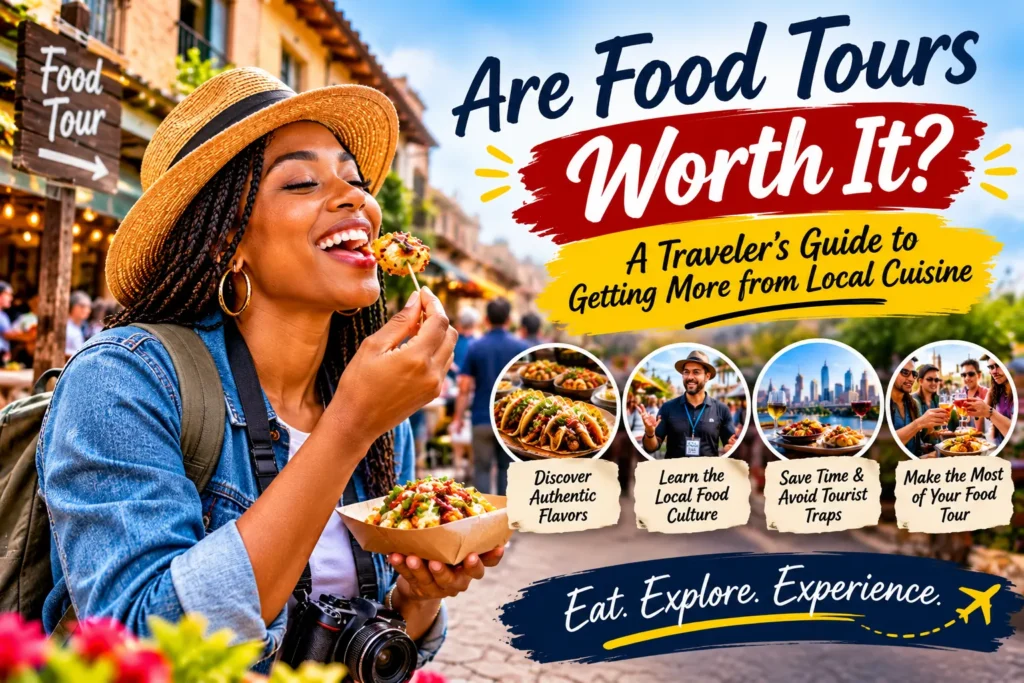
What Happens During a Food Tour?
Most food tours involve visiting several restaurants, markets, bakeries, or street-food vendors within a few hours.
A typical experience may include:
- Sampling traditional dishes and local specialties.
- Visiting independent restaurants and food markets.
- Learning about regional ingredients and cooking traditions.
- Hearing stories about the area’s culinary history.
- Receiving recommendations for other places to eat.
Tours usually last between two and five hours. Some provide enough food for a full meal, while others offer smaller tastings.
Why Travelers Enjoy Food Tours
Explore lesser-known food spots: Local guides can introduce visitors to family-run restaurants, neighborhood cafés, and street food stalls that may be difficult to discover independently.
Learn the stories behind local dishes: Understanding a meal’s history and cultural influences adds depth to the experience. In New Orleans, for instance, tasting gumbo becomes more meaningful when you learn about its Creole and Cajun roots.
Sample a wider range of dishes: Food tours allow travelers to taste different specialties across several locations without having to order a full meal at every stop.
Spend less time planning: Guides organize the restaurants, route, and tastings, making the experience easier for visitors unfamiliar with the area.
Find places to revisit: Guides can recommend worthwhile restaurants, bakeries, markets, and coffee shops to explore throughout the remainder of the trip.
When a Food Tour May Not Be Worth It
Not every food tour offers good value. Consider these potential disadvantages before booking:
- Small portions: Tastings may not be enough to replace a full meal.
- Tourist-focused restaurants: Some itineraries prioritize popular visitor spots rather than authentic local businesses.
- Large groups: Bigger groups can make the experience less personal.
- Dietary restrictions: Fixed menus may not accommodate allergies or specific food preferences.
- Familiar destinations: Travelers who already know the local food scene may prefer exploring independently.
A worthwhile tour should offer quality food, knowledgeable guides, interesting stops, and meaningful cultural information.
Guided Food Tours vs. Independent Dining
| Consideration | Guided Food Tour | Independent Dining |
|---|---|---|
| Restaurant selection | Carefully selected by the tour operator | Chosen according to personal preference |
| Cultural insights | Guide shares local history and food traditions | Requires personal research |
| Food variety | Several planned tastings across different stops | Depends on restaurant choices and budget |
| Flexibility | Follows a set schedule and route | Allows greater freedom |
| Convenience | Minimal planning required | Requires more research and organization |
| Social experience | Opportunity to meet fellow travelers | Varies by restaurant and dining setting |
A guided food tour is ideal for travelers who value convenience, cultural knowledge, and the chance to sample several local specialties in one experience. Independent dining is better suited to those who prefer flexibility, want to explore at their own pace, or already have specific restaurants in mind.
How Much Do Food Tours Cost?
Prices depend on the destination, duration, group size, and number of tastings.
| Tour Type | Estimated Cost Per Person ($) |
|---|---|
| Short street-food tour | 50 |
| Standard neighborhood tour | 100 |
| Premium culinary experience | 175 |
| Luxury or specialty tour | 300+ |
These are general planning estimates rather than confirmed prices. Before booking, check whether food, drinks, transportation, and gratuities are included.
Which Type of Food Tour Should You Choose?
Different experiences appeal to different interests:
- Street-food tours: Ideal for discovering everyday local dishes, markets, and inexpensive specialties.
- Traditional cuisine tours: Focus on regional recipes, cooking methods, and food history.
- Market tours: Explore local ingredients, seafood, spices, and seasonal produce.
- Premium dining tours: Feature selected restaurants, specialty dishes, and refined tasting experiences.
- Cooking classes: Allow travelers to prepare traditional meals and learn practical cooking skills.
Five Cities Where Food Tours Are Especially Rewarding
Some destinations offer particularly memorable culinary experiences:
- New Orleans, USA: Discover Creole and Cajun dishes, gumbo, jambalaya, and seafood.
- Tokyo, Japan: Explore ramen, sushi, traditional markets, and Japanese dining culture.
- Mexico City, Mexico: Sample tacos, street food, and regional specialties.
- Rome, Italy: Experience traditional pasta, bakeries, and neighborhood restaurants.
- Istanbul, Türkiye: Discover Turkish breakfasts, street food, traditional sweets, and local markets.
These cities combine distinctive food traditions with opportunities to learn about their cultural heritage.
What to Check Before Booking
A little research can help you avoid disappointing experiences.
- Review the itinerary: Check the actual food stops rather than relying only on the advertised number.
- Understand portions: Confirm whether the tastings are substantial enough to replace a meal.
- Research the guide: Look for reviews mentioning food knowledge and engaging explanations.
- Check group size: Smaller groups often provide a more personal experience.
- Confirm dietary options: Contact the operator about allergies and food preferences.
- Review cancellation terms: Understand refund and rescheduling policies before paying.
Final Verdict: Are Food Tours Worth It?
Food tours are great options if you love finding new foods, sharing food history, and eating at places you might not normally visit. The tours are especially ideal for new visitors, individual travelers and short stay tourists. But travelers with a desire for total flexibility or who already know the great restaurants, might benefit more from their own dining experience.
So in the end, the best food tour isn’t either the most costly, or the one with the most stops. It’s the food tour that offers delicious food, good guides, and a great deal of local knowledge.
Frequently Asked Questions
Are food tours worth it for first-time visitors?
Yes. They introduce visitors to local dishes, restaurants, and neighborhoods while providing useful recommendations for the rest of the trip.
Do food tours provide enough food for a full meal?
Some do, while others offer smaller samples. Check the itinerary and portion details before booking.
How long does a food tour last?
Most last between two and five hours, depending on the number of stops and activities.
Are food tours suitable for solo travelers?
Yes. Group tours offer opportunities to meet other travelers while exploring an unfamiliar food scene.
Should you eat before a food tour?
Arrive with a light appetite so you can enjoy the different tastings.
Are private food tours better than group tours?
Private tours offer more flexibility and personal attention but usually cost more. Group tours can provide better value.
Can food tours accommodate dietary restrictions?
Some operators provide alternatives, but policies vary. Contact the provider before booking, especially if you have food allergies.