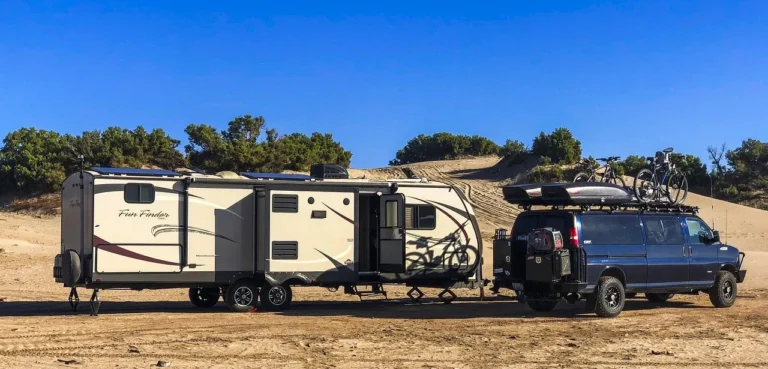
RV weight terms are where a lot of new owners get lost. GVWR, dry weight, CCC, tongue weight, payload and GCWR all sound similar, but each one answers a different question. Get them wrong and you can end up with a trailer your truck shouldn’t be pulling.
The good news is that you only need to understand a handful of numbers, and they’re printed on stickers on your trailer and your tow vehicle. Here’s what each one means and how they fit together.
The Trailer’s Numbers
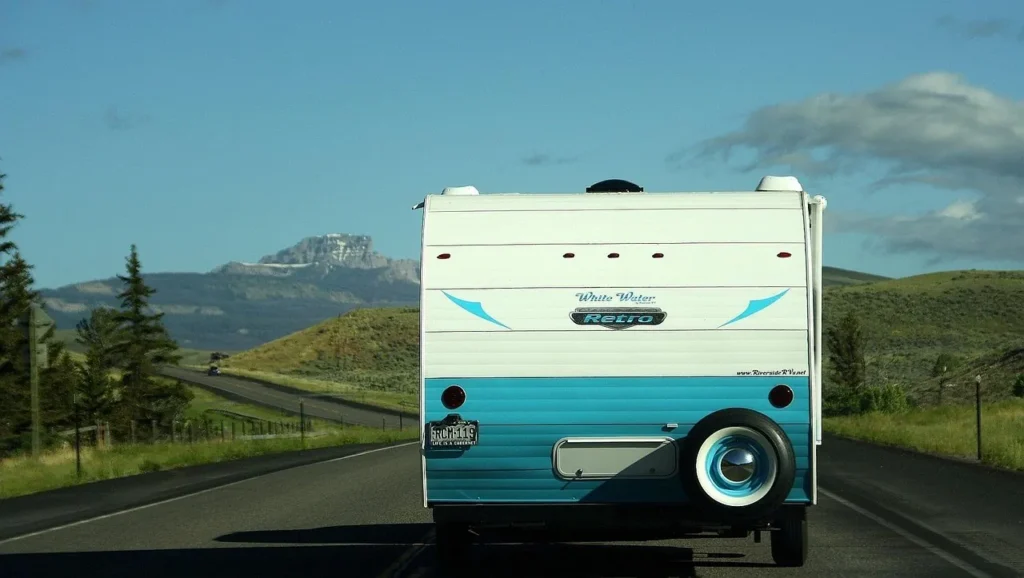
Every trailer has a weight label, usually near the entry door | Photo: Pixabay
Dry weight (UVW)
Dry weight, also called unloaded vehicle weight (UVW), is what the trailer weighs as it left the factory. It doesn’t include water, cargo or dealer-installed accessories, and depending on the maker it may or may not include propane. Brochures love it, but nobody tows at dry weight.
GVWR (gross vehicle weight rating)
GVWR is the maximum the trailer is allowed to weigh when fully loaded, including water, propane, food, gear and everything else. It’s set by the manufacturer based on the frame, axles and tires. Never exceed it.
Cargo carrying capacity (CCC)
CCC is how much you can add before hitting GVWR. Manufacturers such as Forest River define it simply as GVWR minus UVW. Older RVIA labels also subtracted full fresh water and propane, so read your own label to see which method it uses.
Water is the item people forget. It weighs about 8.3 pounds per gallon, so a 40-gallon fresh tank adds roughly 330 pounds before you pack a single bag.
Tongue weight (hitch weight)
Tongue weight is the downward force the trailer’s coupler puts on your hitch. For a travel trailer it’s typically about 10% to 15% of the loaded trailer weight. Too little causes sway; too much overloads the rear of your tow vehicle. For a fifth wheel, the equivalent “pin weight” is higher, often 15% to 25%.
GAWR (gross axle weight rating)
GAWR is the most weight a single axle can carry. Trailers and tow vehicles each have one per axle, and a badly loaded trailer can overload one axle even when the total weight is fine.
The Tow Vehicle’s Numbers
Towing capacity
The maximum trailer weight your vehicle can pull, as rated by the maker. Most truck makers now rate towing using the industry test standard SAE J2807. Treat it as a best case, not a target.
Payload
Payload is how much weight your vehicle can carry: passengers, pets, cargo in the cab and bed, the hitch itself, and the trailer’s tongue weight. You’ll find it on the tire and loading label on the driver’s door jamb. For most people towing a travel trailer, payload runs out before towing capacity does.
GVWR and GCWR
Your vehicle has its own GVWR, the most it can weigh loaded. GCWR (gross combined weight rating) is the maximum for the vehicle and the loaded trailer together. GCWR is usually in the owner’s manual or towing guide rather than on the door sticker.
Quick Reference
| Term | What it means | Where to find it |
|---|---|---|
| Dry weight / UVW | Trailer weight as built | Trailer weight label, brochure |
| GVWR (trailer) | Max loaded trailer weight | Trailer weight label |
| CCC | Room for cargo and water | Trailer weight label |
| Tongue weight | Load on the hitch | Trailer specs, or measure it |
| Towing capacity | Max trailer the vehicle can pull | Owner’s manual, towing guide |
| Payload | Max load the vehicle can carry | Driver’s door-jamb label |
| GCWR | Max for vehicle plus trailer | Owner’s manual, towing guide |
A Worked Example
Say you’re looking at a trailer with a 5,900-pound dry weight and a 7,600-pound GVWR, so its cargo capacity is 1,700 pounds. Loaded for a trip, it weighs about 7,000 pounds.
At 12% tongue weight, that’s 840 pounds on your hitch. Now add four people at 600 pounds, 150 pounds of gear in the truck and about 100 pounds for a weight distribution hitch. That’s 1,690 pounds against your payload. If your truck’s door sticker says 1,600 pounds, you’re over, even though a 7,000-pound trailer is well under its 9,000-pound towing capacity.
That’s exactly why our guide to whether your SUV can tow a travel trailer starts with payload. If the numbers are tight, look at lightweight travel trailers instead of pushing the limits.
Weigh Your Rig to Know for Sure
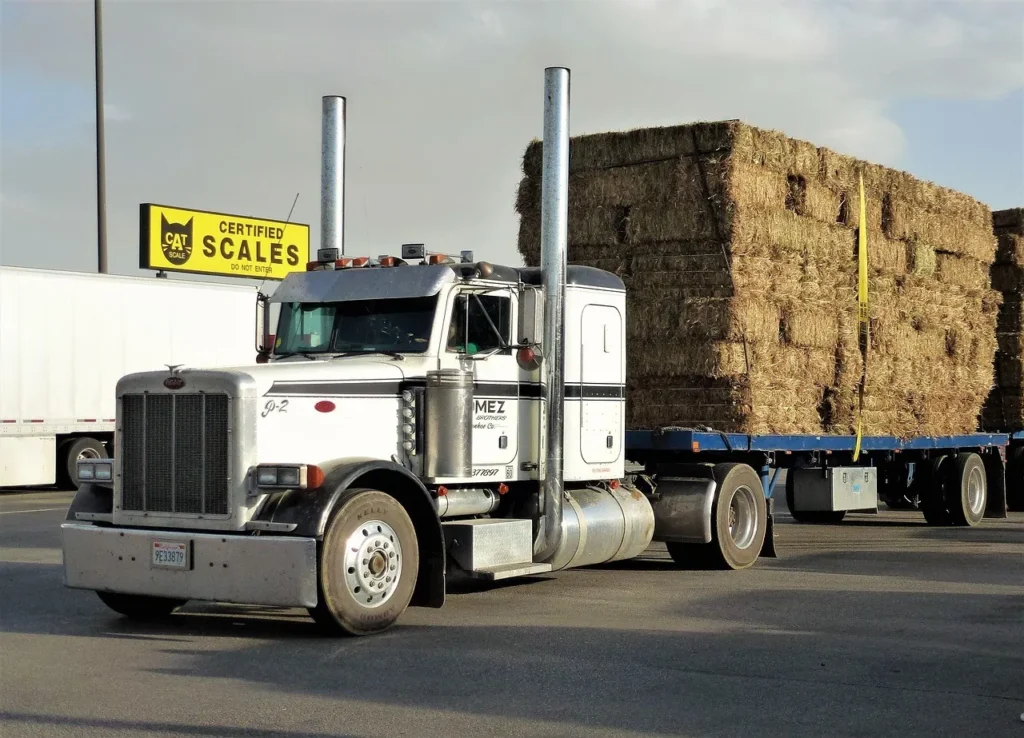
Truck stop scales are a cheap way to check your real weights | Photo: Pixabay
Spec sheets are a starting point; a scale tells the truth. Many truck stops have certified scales where you can weigh your loaded rig axle by axle for a small fee. Weigh the vehicle and trailer together, then the vehicle alone, to work out your real tongue weight and trailer weight.
A common rule of thumb is to stay at or below about 80% of your vehicle’s rated towing and payload capacities, which leaves a margin for hills, wind and extra gear. This matters even more with toy haulers, where the garage can add hundreds of pounds.
Final Thoughts
Ignore dry weight when you shop. Compare the trailer’s GVWR, or better its real loaded weight, with your vehicle’s towing capacity, then check that tongue weight plus people and gear fit within your payload. Weigh the rig once it’s loaded, and you’ll know you’re towing safely.
FAQs
Is GVWR the same as towing capacity?
No. A trailer’s GVWR is its maximum loaded weight. Towing capacity is how much your vehicle can pull. The trailer’s GVWR should sit comfortably below your vehicle’s towing capacity.
Should I use dry weight or GVWR when choosing a trailer?
Use GVWR, or your expected loaded weight, which is often close to it. Dry weight leaves out water, propane and everything you pack.
Where is the weight label on a travel trailer?
Usually on the outside near the entry door or inside a cabinet near the door. It lists the trailer’s GVWR, UVW and cargo carrying capacity.