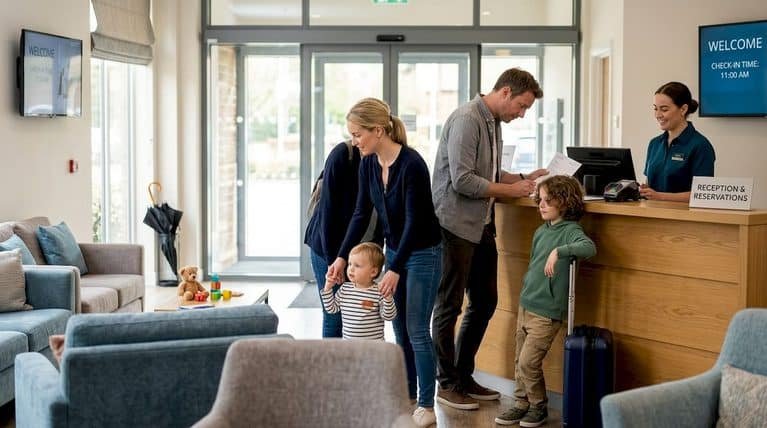
Are hostels safe? For most travelers, yes. A well-run hostel with good reviews, staffed reception and lockable storage is about as safe as a budget hotel. The difference is that you share a room with strangers, so a little extra care with your belongings goes a long way.
The real risks are mostly petty theft and the occasional rowdy dorm. Pick the right hostel, lock up your valuables and use normal street sense, and you’ll likely have a great stay for a fraction of hotel prices.
What makes a hostel safe (or risky)
Safety comes down to how a hostel is run. Good ones control who gets in, give you secure storage, and have staff around when something goes wrong.
Hostelling International USA, for example, says its larger city hostels staff the front desk 24 hours a day, only guests are allowed past the lobby, and dorm guests get free in-room lockers. That’s a solid baseline to look for anywhere.
Risk creeps in when those basics are missing: no lockers, open doors, or a party scene the staff can’t manage.
How to choose a safe hostel

Read the reviews, not just the score
Hostelworld asks guests to rate seven categories, and security is one of them. Only guests who booked through Hostelworld and actually stayed can leave a review, so the scores come from real stays.
Still, a security score reflects how safe people felt. Read recent written reviews for mentions of lockers, theft and staff. Hundreds of reviews tell you more than a dozen.
Check the security basics
Before you book, look for:
- 24-hour reception or staff on site overnight
- Key-card or code access to the building and rooms
- Lockers in the dorm (and whether they fit a backpack)
- Female-only dorms, if you’d prefer one
- Luggage storage before check-in and after check-out
Think about location
A cheap bed in a sketchy area isn’t a bargain if you’re walking back alone at midnight. Check the map and neighborhood reviews; near transit and well-lit streets is ideal.
Protecting your belongings
Bring your own padlock. Many hostels provide lockers but not locks; HI USA, for example, asks guests to bring one or buy one at the front desk. A small combination lock means no key to lose.
Lock up your passport, cards, laptop and spare cash whenever you leave the room, and overnight too. Keep your phone and wallet in your bunk or a small pouch while you sleep.
Our guide to common travel scams covers the tricks that tend to target backpackers outside the hostel, too.
Personal safety tips
Most hostel friendships are just travelers swapping tips over breakfast. Still, don’t share your room number with people outside the hostel, watch your drink at hostel bars, and tell someone back home where you’re staying.
If you’re traveling abroad, the State Department’s free Smart Traveler Enrollment Program (STEP) lets you register your trip so the nearest US embassy can send alerts and reach you in an emergency.
Solo and female travelers
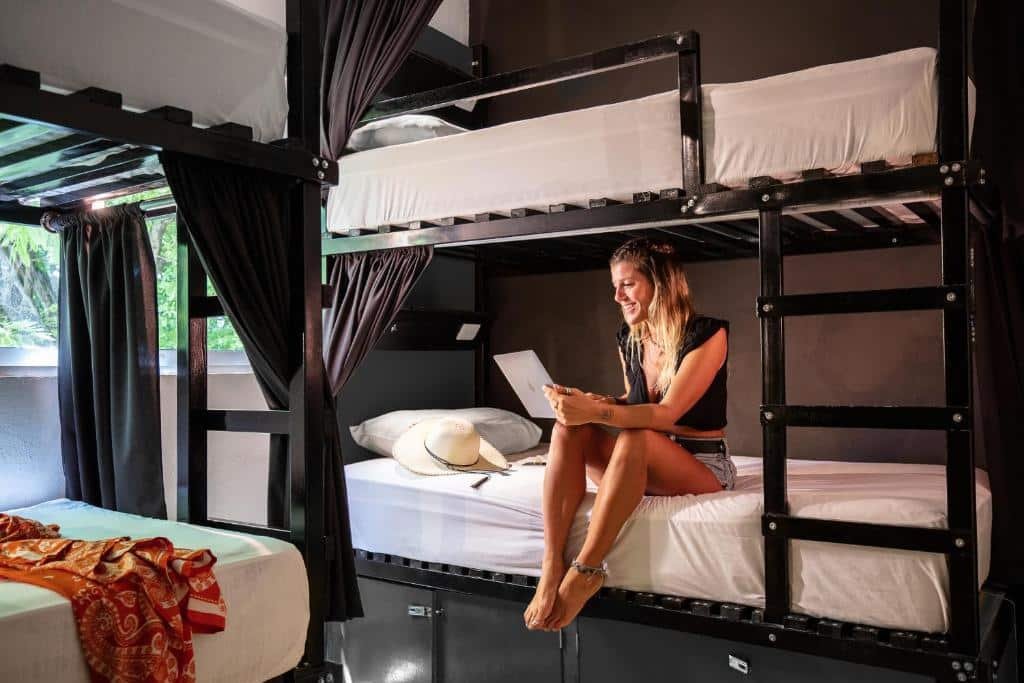
Hostels are a natural fit for solo trips because it’s easy to meet people. Many hostels offer female-only dorms, and HI USA lists male, female and mixed rooms. If you want more privacy, book a private room; most hostels have them, often for much less than a hotel.
For more on staying safe when you’re on your own, see our solo female travel safety tips and our guide to solo travel on a budget.
Age limits at some hostels
Age rules vary by hostel, so check the listing before you book. Some examples:
- Hans Brinker Amsterdam limits its shared dorms to guests aged 18 to 40; under-18s can only stay in a private room with a family member or guardian.
- Generator hostels welcome minors in private rooms with a parent or guardian, and only allow unaccompanied teens in a few countries with a signed consent form.
- HI USA welcomes travelers of all ages, but most guests under 18 must travel with a parent.
Hostels in the US vs. abroad
Hostels are everywhere in Europe, Southeast Asia and Latin America, from quiet family-friendly places to party hostels. In the US they’re fewer and mostly in big cities and near national parks.
The safety checklist is the same in both places. Abroad, also think about language barriers and how you’d get help at 2 a.m. Hostels are one reason some of our best budget travel destinations are so affordable.
Red flags to watch for
- No lockers, or lockers with broken doors
- Recent reviews mentioning theft, bedbugs or staff who shrug off complaints
- No staff overnight and doors that don’t lock
- Photos that look nothing like what reviewers describe
- Pressure to pay cash only or hand over your passport for the whole stay
So, are hostels safe?
Hostels aren’t risk-free, but neither is any budget lodging. Choose one with strong recent reviews, 24-hour staff and lockers, bring a padlock, and trust your gut. If a place feels wrong when you arrive, it’s fine to walk away and book somewhere else.
FAQs
Are hostels safe for female travelers?
Generally, yes. Choose a hostel with good recent reviews, consider a female-only dorm or a private room, and follow the same precautions you’d use anywhere.
Do I need to bring a lock to a hostel?
Usually, yes. Many hostels provide lockers but expect you to bring your own padlock, or sell one at reception.
Can you stay in a hostel if you’re over 40?
Most hostels have no upper age limit, but a few restrict their dorms (Hans Brinker Amsterdam limits dorms to ages 18 to 40). Check the listing, or book a private room.
Are US hostels safer than hostels abroad?
Not automatically. Safety depends on how each hostel is run, so use the same checks everywhere.