
Mountain destinations offer breathtaking scenery, unforgettable hiking experiences, and exciting outdoor adventures. However, traveling to higher elevations can affect how your body functions. As altitude increases, air pressure decreases, making less oxygen available with every breath. For some travelers, this can lead to altitude sickness.
Whether you are planning a trek in the Himalayas, visiting Cusco in Peru, or exploring the mountains of Colorado, understanding the symptoms and precautions can help make your journey safer. With gradual acclimatization, proper planning, and early attention to warning signs, many altitude-related problems can be avoided or managed.
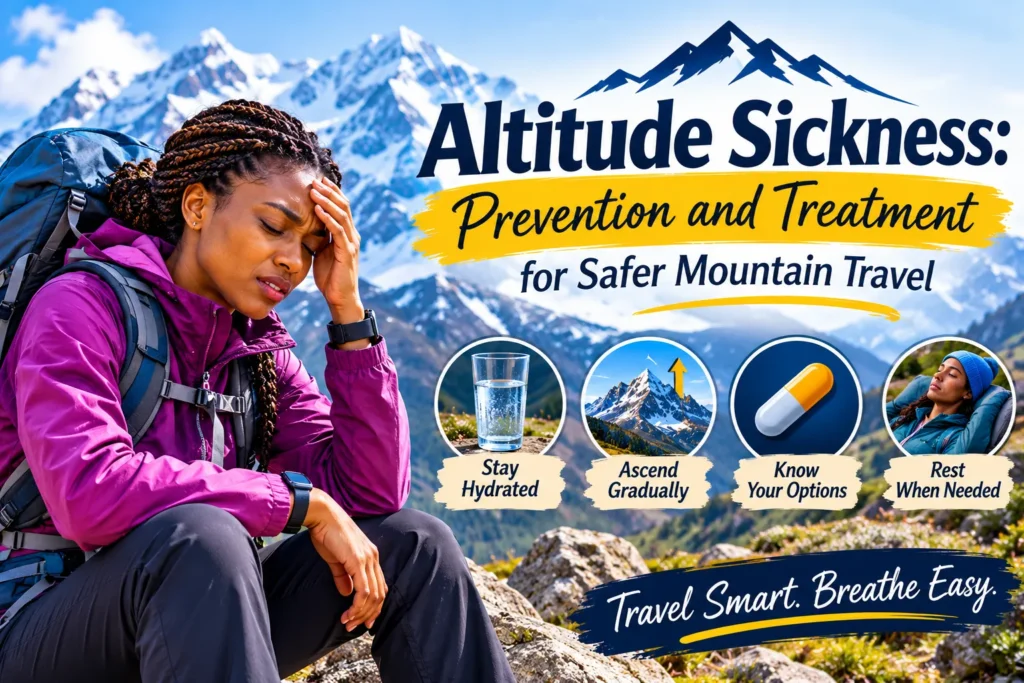
What Is Altitude Sickness?
Altitude sickness is a condition that can develop when someone ascends to a high elevation too quickly, giving the body insufficient time to adjust to lower oxygen levels. It commonly becomes a concern at sleeping elevations around 8,000 feet (2,450 meters) and above.
The most common form is acute mountain sickness (AMS). Symptoms can resemble a hangover and may include:
- Headache
- Nausea or vomiting
- Dizziness
- Unusual tiredness
- Loss of appetite
- Difficulty sleeping
More serious conditions include high-altitude cerebral edema (HACE), which affects the brain, and high-altitude pulmonary edema (HAPE), which involves fluid building up in the lungs. Both are medical emergencies.
How to Prevent Altitude Sickness
Prevention starts before reaching your destination. These practical measures can help your body adjust more comfortably.
1. Ascend gradually
Avoid traveling rapidly from a low elevation to a high sleeping altitude. Once above approximately 10,000 feet (3,000 meters), aim to increase your sleeping altitude by no more than about 1,600 feet (500 meters) per day, with an extra acclimatization day for every 3,300 feet (1,000 meters) gained.
2. Allow time to acclimatize
Spend your first few days at a moderate elevation before continuing higher. Consider day trips to higher locations while returning to a lower altitude to sleep.
3. Avoid alcohol and strenuous activity initially
Give your body time to adjust. Avoid alcohol and intense exercise during the first 48 hours at high altitude.
4. Stay hydrated and eat regularly
Drink enough water to avoid dehydration and maintain regular meals. However, drinking excessive amounts of water does not prevent altitude sickness.
5. Discuss preventive medication with a doctor
Acetazolamide may help speed up acclimatization and reduce the risk of acute mountain sickness. A healthcare professional can determine whether it is appropriate based on your health and travel plans.
How Is Altitude Sickness Treated?
Treatment depends on the severity of the symptoms.
For mild cases, stop ascending, rest, and remain at your current elevation until symptoms improve. Appropriate pain relief or medication for nausea may help, but these measures do not replace medical assessment when symptoms persist or worsen.
If symptoms become worse or fail to improve, descending to a lower altitude is important. Even a descent of approximately 1,000 feet (300 meters) can provide significant relief.
Severe symptoms require immediate action. Confusion, difficulty walking, extreme drowsiness, breathlessness at rest, or a worsening cough may indicate HACE or HAPE. Arrange emergency medical assistance and descend immediately, using supplemental oxygen if available. Do not wait for symptoms to disappear on their own.
Who Is Most at Risk?
Anyone traveling to high elevations without adequate acclimatization can develop altitude sickness. Risk increases with rapid ascent, high sleeping elevations, and a previous history of altitude-related illness.
People with existing heart or lung conditions and other significant medical concerns should seek medical advice before traveling. Physical fitness alone does not guarantee protection.
Final Thoughts: Enjoy the Mountains with Proper Preparation
Altitude sickness should not prevent you from experiencing the world’s remarkable mountain destinations, but it deserves serious attention. Allowing time to acclimatize, recognizing early symptoms, and avoiding rapid ascents can make a significant difference.
Most importantly, never continue climbing when symptoms develop. A flexible itinerary and willingness to descend when necessary are essential parts of responsible high-altitude travel.
Frequently Asked Questions
At what altitude does altitude sickness begin?
It can occur at sleeping elevations around 8,000 feet (2,450 meters) or higher, although individual susceptibility varies.
How long does altitude sickness last?
Mild symptoms often improve within one to two days when you stop ascending and allow your body to adjust. Persistent or worsening symptoms require medical attention.
Does drinking water prevent altitude sickness?
Staying hydrated helps prevent dehydration, but excessive water intake does not prevent altitude sickness.
Can you get altitude sickness even if you are fit?
Yes. Physical fitness does not guarantee protection. Anyone can develop symptoms if they ascend too quickly.
When should you descend?
Descend if symptoms become severe, worsen despite rest, or fail to improve. Confusion, loss of coordination, and breathlessness at rest require urgent descent and emergency medical assistance.