
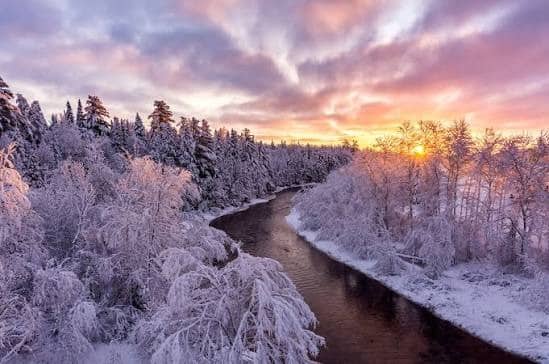
Winter Landscape, Maine | mainetourism.com
Maine spends the summer being the place everyone photographs and the winter being the place almost nobody visits, which is precisely why winter is the best-value season in the state. Lodging rates fall, the coastal towns empty out, and the interior turns into something genuinely wild: more than 14,000 miles of groomed snowmobile trail, six thousand frozen lakes and ponds, and ski terrain that includes the only lift-served above-treeline skiing in the eastern United States.
This guide covers the best winter activities in Maine across the whole state, from downhill skiing in the western mountains to ice fishing derbies in Aroostook County and a national championship held on a 400-foot wooden toboggan chute that ends on a frozen pond. It also covers the practical side, including when the season actually runs, what licenses and registrations you need, and where to base yourself depending on what you want to do.
When Is Winter in Maine?
Reliable snow generally runs from late December through March, though the season varies significantly by region. The southern coast around Portland and Kennebunkport averages roughly 25 degrees Fahrenheit in midwinter, while the northern interior in Aroostook County sits closer to 15 degrees and holds snow far longer. The western mountains around Rangeley and Carrabassett Valley get the deepest, most consistent snowfall, with Saddleback averaging around 225 inches a year.
That spread matters when you plan. February is the safest month for snow-dependent activities statewide. January is colder and quieter, which suits ice fishing and snowmobiling. March can be excellent in the north while the coast is already sliding into mud season, and by late March the carriage roads in Acadia and many trail systems begin closing to protect the surfaces during the thaw.
The Best Winter Activities in Maine
Downhill Skiing and Snowboarding
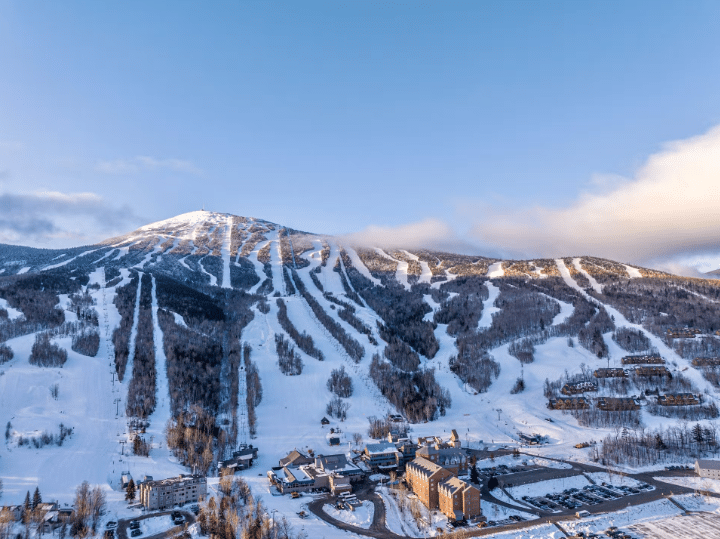
Sugarloaf, Carrabassett Valley, Maine | sugarloaf.com
Maine has the biggest ski terrain in New England and a genuine range of options, from destination resorts to community hills where a lift ticket costs less than lunch at a bigger mountain.
Sugarloaf in Carrabassett Valley is the headline mountain, with 162 trails across 1,240 acres served by 13 lifts, and it is the only place in the East offering lift-served skiing above the treeline. The Snowfields and the Brackett Basin sidecountry are what serious skiers come for. Sunday River near Bethel spreads across eight interconnected peaks and is the easier drive from Portland, roughly two hours from the jetport. Both are on the Ikon Pass and are owned by Boyne, which also sells multi-day ticket packs valid across its New England mountains.
Saddleback in Rangeley is the value pick and, for many Mainers, the favorite. It has the highest base elevation of any resort in New England, 2,000 feet of vertical across 68 trails and 600 acres, an Indy Pass affiliation, and adult day tickets that start considerably below the larger resorts. The 44 acres of ungroomed tree skiing in Casablanca are the draw for stronger skiers.
One practical note that applies statewide: lift tickets at the major Maine resorts are dynamically priced, so buying online well in advance is meaningfully cheaper than walking up to the window.
| Ski Area | Region | The Numbers | Best For |
|---|---|---|---|
| Sunday River | Newry | Eight interconnected peaks; Ikon Pass | Variety, night skiing, easiest access from Portland |
| Sugarloaf | Carrabassett Valley | 162 trails, 13 lifts, 1,240 acres; Ikon Pass | The only lift-served above-treeline skiing in the East |
| Saddleback | Rangeley | 2,000 ft vertical, 68 trails, 600 acres, 225 in. snow; Indy Pass | Value, uncrowded slopes, glade skiing in Casablanca |
| Camden Snow Bowl | Camden | 850 ft vertical, 15 trails, 105 acres | Ocean views from the trails and the toboggan chute |
| Mt. Abram, Big Rock, Titcomb, Lost Valley | Statewide | Small community hills | Families, beginners and the cheapest lift tickets in Maine |
Snowmobiling the Interconnected Trail System
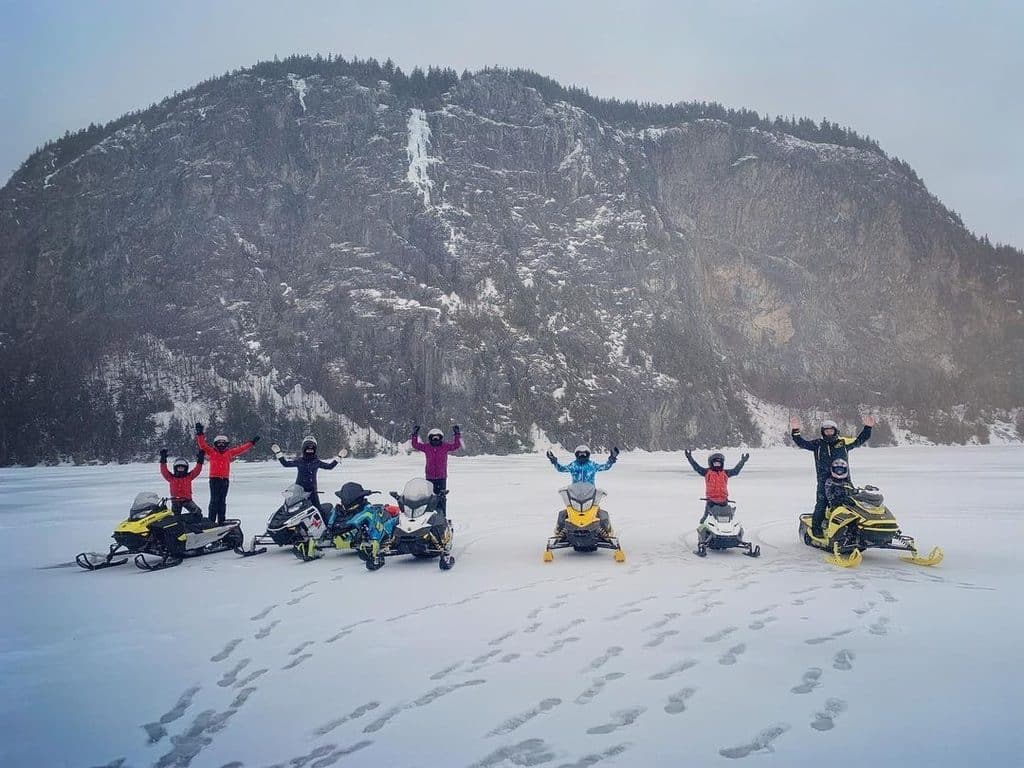
ITS Trail, Moosehead Lake Region, Maine | visitmaine.com
Snowmobiling may be the single best argument for visiting Maine in winter. The state maintains more than 14,000 miles of marked and groomed trail, cared for by over 280 local clubs, which makes it one of the largest networks in North America. At its center is the Interconnected Trail System, roughly 4,000 miles of primary corridor marked in red on the official map, with green connector trails and junctions labeled by county. Riders can genuinely travel from the southern highlands to the Canadian border without leaving the network.
The best trail towns are Jackman, The Forks and Bingham, Greenville and Rockwood on Moosehead Lake, and Rangeley in the western mountains. For serious long-distance riding, Aroostook County is the destination, where a multi-day trip can cover 300 to 400 miles without repeating terrain.
There is no trail pass in Maine, but every sled must be registered in the state. Residents pay $45 for a one-year registration, and non-residents can choose a three-day registration for $49, a ten-day for $75, or a full season for $99, plus a small agent fee. Maine also runs an annual free weekend when non-residents with a valid out-of-state or provincial registration can ride without registering in Maine, usually in early March. Check the Department of Inland Fisheries and Wildlife for that year’s dates.
Cross-Country Skiing and Snowshoeing
Maine’s Nordic centers offer around 550 kilometers of groomed trail between them, and the quality is high. The Rangeley Lakes Trails Center at the base of Saddleback has 55 kilometers of mapped trails with a yurt lodge and rentals. The Nordic Heritage Center in Presque Isle has hosted World Cup competition and Olympic trials. Pineland Farms, Quarry Road in Waterville, Titcomb Mountain and the Sugarloaf Outdoor Center round out a deep list.
For something more ambitious, Maine Huts and Trails maintains more than 25 miles of groomed backcountry trail linking a series of huts in the Carrabassett Valley area, including Stratton Brook, Poplar Stream and Flagstaff Lake. You can ski hut to hut over two or three days with meals and lodging arranged along the way, which is one of the more distinctive winter experiences in the Northeast. The climb to Stratton Brook Hut is steep in the final mile and better suited to skiers with some experience.
Ice Fishing and Derby Season
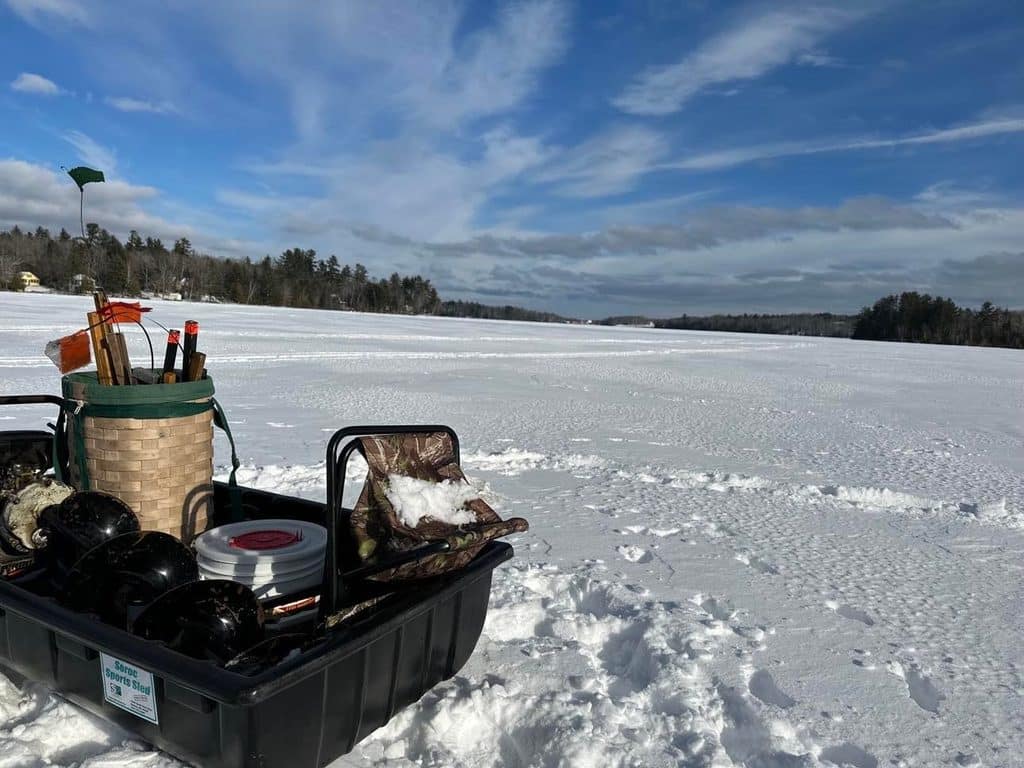
Ice Fishing, Moosehead Lake, Maine | destinationmooseheadlake.com
Ice fishing is close to a state pastime, and derby season runs from January through mid-March. Most Maine lakes open to ice fishing on January 1 and close March 31, but rules vary substantially from water to water, with some lakes closed to ice fishing entirely to protect wintering populations. Anglers may fish up to five lines while ice fishing, and a Maine fishing license is required.
The derbies are where the sport becomes a social event. The Long Lake derby is the state’s largest, and the Schoodic Lake Ice Fishing Derby has run for more than six decades across Schoodic, Ebeemee, Seboeis and Boyd lakes. The Sebago Lake Rotary derby covers two dozen lakes and ponds in Cumberland County, and the Moosehead Togue Derby brings Greenville and Rockwood to life at the end of January. Target species include togue, or lake trout, along with landlocked salmon, brook trout, perch and northern pike.
Before you go, check the current Maine Open Water and Ice Fishing Laws for the specific lake, since bag limits and slot rules change by water and are updated annually.
Dog Sledding
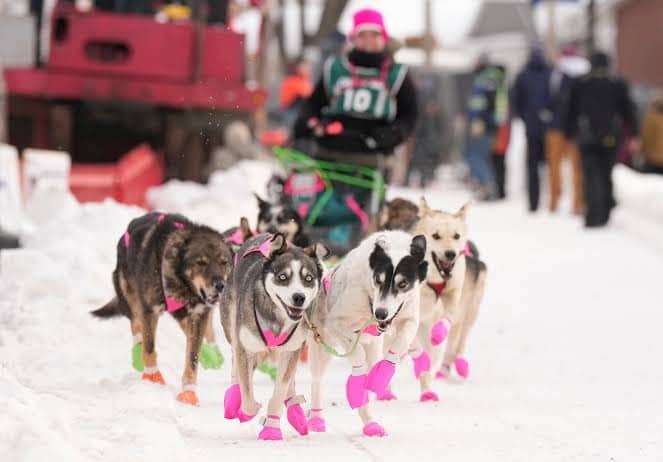
Can-Am Crown Sled Dog Races, Fort Kent, Maine | press.com
Several Maine outfitters run guided dog sledding trips, ranging from 20-minute rides and kennel tours to half-day runs through the woods, with the Moosehead Lake region and the western mountains being the main hubs. Trips book out well ahead during February school vacation weeks, so reserve early.
For spectators, the Can-Am Crown International Sled Dog Races in Fort Kent are the event to build a trip around. Three races run simultaneously at 30, 100 and 250 miles, with the 250 being an Iditarod qualifier and the longest, highest-caliber race in the eastern United States, with a purse around $29,000. Teams leave from Main Street in downtown Fort Kent and finish at the Lonesome Pine ski lodge, with additional public viewing points in Portage Lake and Allagash. There is no charge to watch. The race is held annually in late winter, typically around the end of February or the first Saturday in March, so confirm the date before booking.
Acadia National Park in Winter
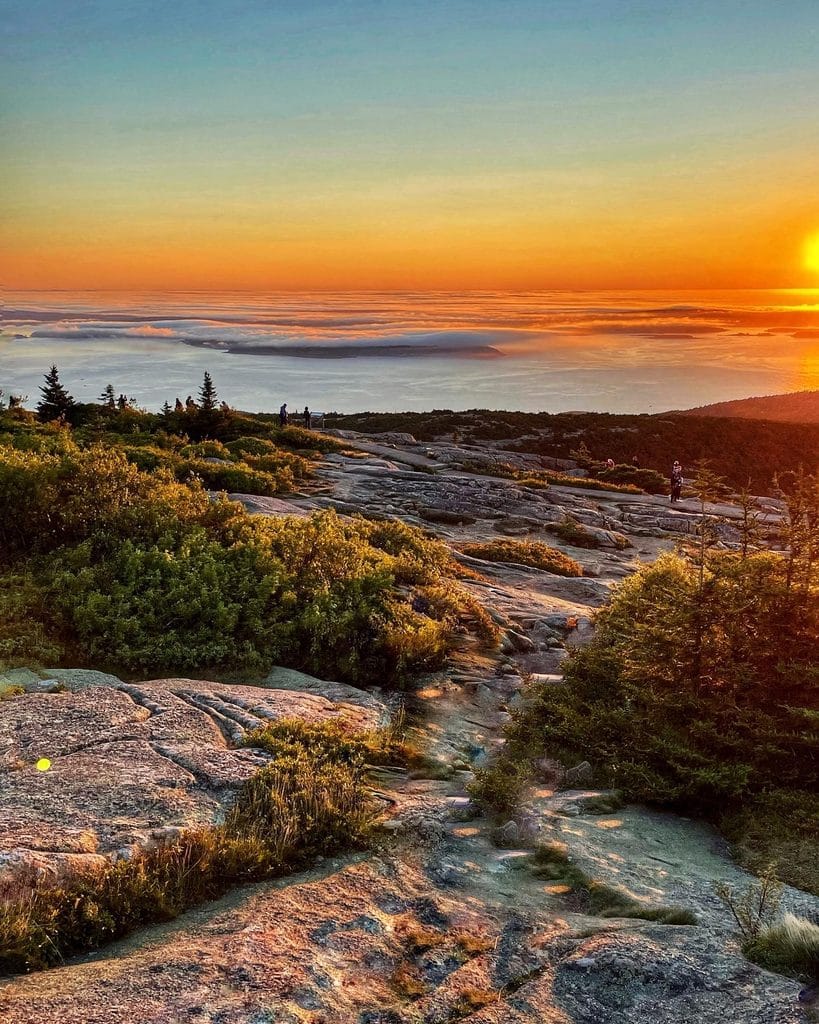
Cadillac Mountain, Mount Desert Island, Maine | offtheeatenpathblog.com
Acadia is one of the most visited national parks in the country and one of the emptiest places in Maine in January. The park stays open year round, but access changes completely. Most of the Park Loop Road and the road to the summit of Cadillac Mountain close to motor vehicles from December 1 through April 14, leaving only two short sections open, including a scenic stretch past Sand Beach and Thunder Hole reached via Schooner Head Road.
That closure is the opportunity. The 45-mile carriage road network becomes a cross-country skiing and snowshoeing system, some of it groomed, and the closed sections of the Park Loop Road are open to skiers, snowshoers and walkers. Snowmobiles are permitted on the closed road sections under park regulations. Blackwoods Campground allows walk-in winter camping with a permit from December 1 through March 31. Rentals are available in Bar Harbor if you are not traveling with gear.
Two cautions. Summit trails can be genuinely icy and warrant traction devices, and the carriage roads close abruptly in mid-March or so when the spring thaw begins, since wet conditions cause lasting damage to the surface.
Tobogganing at the Camden Snow Bowl
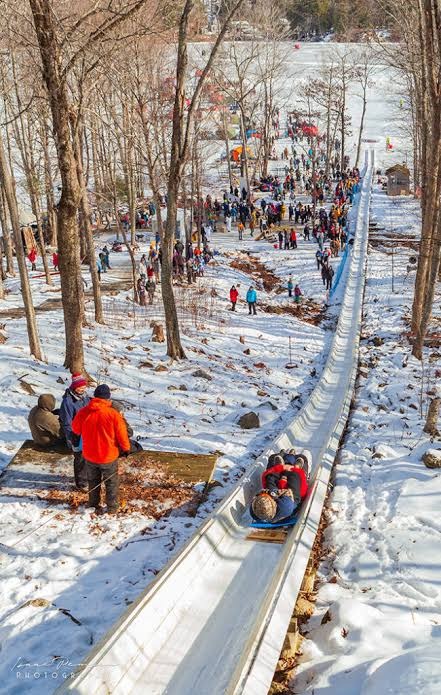
Jack Williams Toboggan Chute, Camden Snow Bowl, Maine | camdensnowbowl.com
The Camden Snow Bowl is a town-owned ski area on Ragged Mountain and the only ski area on the East Coast with ocean views from the trails. It also has the Jack Williams Toboggan Chute, a 400-foot gravity-driven wooden chute with a 70-foot drop, coated in ice and finishing on frozen Hosmer Pond. It is open to the public through the season, and toboggans reach speeds of around 40 miles per hour.
The chute closes to public rides during the U.S. National Toboggan Championships, the only organized wooden toboggan race in the country. Around 400 teams and 5,000 spectators fill the area for a weekend of costumed racing across two-person, three-person, four-person and experimental divisions. Spectating is free, though on-site parking is $20 and fills early, so use the shuttle from downtown Camden. The 36th running is scheduled for February 5 to 7, 2027, and team registration closes weeks in advance.
Fat Biking, Skating and Small-Town Winter Festivals
Fat biking has grown quickly, with rentals and dedicated trails at Bethel, Rangeley, Carrabassett Valley and a number of Nordic centers. Outdoor skating is easy to find, from the rink at Thompson’s Point in Portland to countless plowed ponds, and pond hockey is a legitimate cultural institution in the interior.
The winter festival circuit is worth planning around. Camden Winterfest adds ice carving, a polar plunge and the Maine State Snow Sculpture Championships around the toboggan weekend. Belfast hosts the State of Maine Ice Carving Championship with sculptures throughout downtown. Rangeley Snodeo in January brings snowmobile races and fireworks. Aroostook County towns run carnivals, sliding hills and fishing derbies through February. And at the end of the season, Maine Maple Sunday Weekend in late March opens sugarhouses statewide for tastings.
Portland and Indoor Options
When the weather turns genuinely hostile, Portland carries a winter trip on its own. The city has one of the strongest restaurant and brewery scenes in the Northeast, and it is far easier to get a table in February than in July. The Portland Museum of Art, the Children’s Museum and Theatre of Maine and the Southworth Planetarium cover rainy-day options, and the L.L. Bean’s flagship store in Freeport is open around the clock year round, which is its own kind of Maine experience at two in the morning during a snowstorm.
Where to Base Yourself
- Western mountains, Rangeley and Carrabassett Valley: the best choice for downhill and Nordic skiing, snowmobiling and hut-to-hut trips. Deepest, most reliable snow in the state.
- Bethel and Newry: closest major ski base to Portland, good for a short trip built around Sunday River with Nordic and fat biking nearby.
- Moosehead Lake, Greenville and Rockwood: the hub for snowmobiling, ice fishing and dog sledding, with a genuine North Woods feel and limited services, so plan fuel and food stops.
- Aroostook County, Presque Isle and Fort Kent: the most snow, the longest season, world-class Nordic facilities and the Can-Am races. Also the longest drive.
- Midcoast, Camden and Rockland: ocean-view skiing, the toboggan chute, winter festivals and easy access to good food and inns.
- Bar Harbor and Mount Desert Island: quiet access to Acadia, though many businesses close for the season, so check what is open before you book.
Tips for Visiting Maine in Winter
- Plan for February: it is the most reliable month for snow-dependent activities statewide, though it is also when school vacation weeks push up prices and fill guided tours.
- Sort registrations and licenses in advance: snowmobiles must be registered in Maine, and ice fishing requires a state license. Both can be handled online before you travel.
- Buy lift tickets online and early: dynamic pricing means walk-up window rates are the most expensive way to ski in Maine.
- Check trail conditions daily: the Maine Snowmobile Association publishes grooming reports, and conditions vary wildly between regions in the same week.
- Prepare the car properly: winter tires, a full tank in the north woods where gas stations are sparse, and an emergency kit. Cell coverage is unreliable inland.
- Carry traction devices for hiking: Acadia’s summit trails and most coastal trails ice over, and microspikes turn a treacherous walk into a straightforward one.
- Confirm what is open: many coastal restaurants, inns and attractions close from November through spring, particularly on Mount Desert Island.
- Book guided experiences early: dog sledding trips and hut bookings sell out weeks ahead for February and holiday weekends.
Making the Most of a Maine Winter
The reason to come to Maine in winter is not that it is a cheaper version of the summer trip. It is a different state entirely. The lakes that carry boats in August carry pickup trucks and fishing shacks in February. The carriage roads that see thousands of cyclists become empty ski trails. The interior, which is quietly one of the largest undeveloped areas east of the Mississippi, becomes accessible in a way it simply is not the rest of the year.
Pick one anchor activity, whether that is a ski weekend at Sugarloaf, a snowmobile trip out of Greenville or a derby weekend on a frozen lake, then let the small-town festivals and the empty coastline fill in around it. Come in February, dress for real cold, and Maine gives you a version of itself that most visitors never see.
Dates, fees and access rules in this guide reflect published information for the 2026 and 2027 seasons and are subject to change. Confirm current rates, event dates and regulations with the relevant resort, club or state agency before traveling.