
Bali is a year-round destination, but that does not mean every month delivers the same trip. The island sits eight degrees south of the equator, so the temperature barely moves across the calendar. What changes is the rain, the swell, the water clarity, the crowd levels and, crucially, the price you pay for a villa in Seminyak or a room overlooking the rice fields in Ubud. Two travelers can visit the same beach four months apart and come home with completely different stories.
This guide breaks down the best time to visit Bali by season, by month and by the kind of holiday you actually want, whether that is surfing the reef breaks of the Bukit Peninsula, diving with manta rays off Nusa Penida, hiking Mount Batur at sunrise or simply finding the cheapest week to lie by a pool. Use it to pick your dates before you book flights, because in Bali the timing decision shapes everything else.

Quick Answer: When Is the Best Time to Visit Bali?
The best time to visit Bali is during the dry season between April and October, and the sweet spot within that window is May, June, September and early October. In those months you get dependable sunshine, calm seas, excellent underwater visibility and comfortable humidity, without the July and August peak-season prices or the crowds that fill Canggu and Uluwatu during the European and Australian school holidays.
If your priority is budget rather than blue skies, the rainy season from November to March is the cheapest time to visit Bali. Rain in Bali usually arrives as a heavy afternoon downpour that clears within a couple of hours rather than a full day of grey drizzle, so a wet-season trip is far more workable than the label suggests, especially if you base yourself inland around Ubud or Sidemen where the landscape is at its most spectacular.
Understanding Bali’s Two Seasons
Bali has no spring, summer, autumn or winter. It has a dry season and a rainy season, and daytime temperatures hold at roughly 27 to 32 degrees Celsius (81 to 90 Fahrenheit) all year with sea temperatures rarely dropping below 27 degrees. Humidity, rainfall and wind direction are the real variables, and they are what separate a great Bali itinerary from a frustrating one.
Dry Season in Bali: April to October

The dry season brings low humidity, steady southeasterly trade winds and long stretches of clear weather. Beach days are reliable, sunsets at Tanah Lot and Uluwatu are consistently good, and the offshore winds groom the swell on the west coast into some of the best waves in Southeast Asia. This is peak tourist season in Bali, so expect busier beach clubs, fuller restaurants in Canggu and Seminyak, heavier traffic on the road to Ubud, and accommodation rates that climb sharply in July and August.
The trade-off is worth it for most first-time visitors. If you have limited holiday and you want to be confident that your beach days, boat trips and volcano hikes will actually happen, book inside this window and accept that you will be sharing the island.
Rainy Season in Bali: November to March

The rainy season, driven by the northwest monsoon, peaks in December, January and February. Rain typically falls as intense tropical downpours in the late afternoon or overnight, and mornings are often bright and usable. Humidity is noticeably higher, the sea can be choppier on the west coast, and boat crossings to Nusa Penida, Nusa Lembongan and the Gili Islands are occasionally cancelled in rough conditions.
What you gain is the island at its greenest, waterfalls such as Sekumpul and Tukad Cepung running at full force, rice terraces at their most photogenic, and prices that fall considerably outside the Christmas and New Year fortnight. Wet-season Bali suits travelers who plan flexible days, favor Ubud and the highlands over west-coast beach clubs, and want a wellness, yoga or culture-focused trip rather than a purely sun-and-sand one.
Best Time to Visit Bali Month by Month
The table below summarizes what to expect from each month so you can match your dates to your priorities at a glance.
| Month | Season | Crowds & Prices | What It Is Best For |
|---|---|---|---|
| January | Rainy | Low after New Year | Budget travel, spa and wellness stays, green landscapes |
| February | Rainy | Low | The cheapest time to visit Bali, quiet resorts, big villa discounts |
| March | Rainy, easing | Low to moderate | Nyepi (Day of Silence), fewer tourists, waterfalls at full flow |
| April | Dry begins | Moderate | Shoulder-season value, beaches, first reliable sunshine |
| May | Dry | Moderate | Arguably the best month overall, warm sea, low humidity, thin crowds |
| June | Dry | Building | Surfing on the west coast, Bali Arts Festival, clear skies |
| July | Dry | Peak, highest prices | Guaranteed sunshine, nightlife, big-wave surf, family holidays |
| August | Dry | Peak, highest prices | Diving with mola mola, festivals, the driest weather of the year |
| September | Dry | Moderate | Excellent value, superb diving and snorkelling, calm resorts |
| October | Dry ending | Moderate | Warm sea, green interior, good hotel rates before the rains |
| November | Rainy begins | Low | Quiet beaches, short afternoon showers, cheap flights |
| December | Rainy | Spikes at Christmas | Festive holidays, lush scenery, book far ahead for late December |
Two patterns are worth noticing. First, the shoulder months on either side of the peak, namely April, May, September and October, consistently offer the strongest balance of weather, price and space. Second, prices in Bali are driven as much by school holidays as by rainfall, which is why late December can be both wet and expensive while February is wet and very cheap.
Best Time to Visit Bali for Your Type of Trip
Best Time for Beaches and Swimming

May through September delivers the most consistent beach weather, with calm mornings, clean sand and warm water. For swimming rather than surfing, favor the east and south coasts, where Sanur, Nusa Dua and Jimbaran offer sheltered, gentler water than the exposed west-coast breaks at Canggu and Echo Beach. During the height of the rainy season, particularly December to February, monsoon currents can push debris onto the popular west-facing beaches at Kuta, Legian and Seminyak, so east-coast beaches are the smarter choice in those months.
Best Time for Surfing in Bali

Bali’s surf calendar splits neatly by coast. From April to October the dry-season offshore winds light up the west and southwest breaks, so Uluwatu, Padang Padang, Bingin, Impossibles, Balangan and Canggu are all firing, with the biggest, most powerful swell arriving in June, July and August. Beginners are better served in the shoulder months of April, May and October, when the beach breaks at Kuta, Batu Bolong and Seminyak are more forgiving.
From November to March the wind flips and the east coast comes alive. Nusa Dua, Sanur, Keramas and Serangan pick up clean conditions in the wet season, which is exactly why experienced surfers happily visit Bali in what everyone else calls the off-season.
Best Time for Diving and Snorkelling
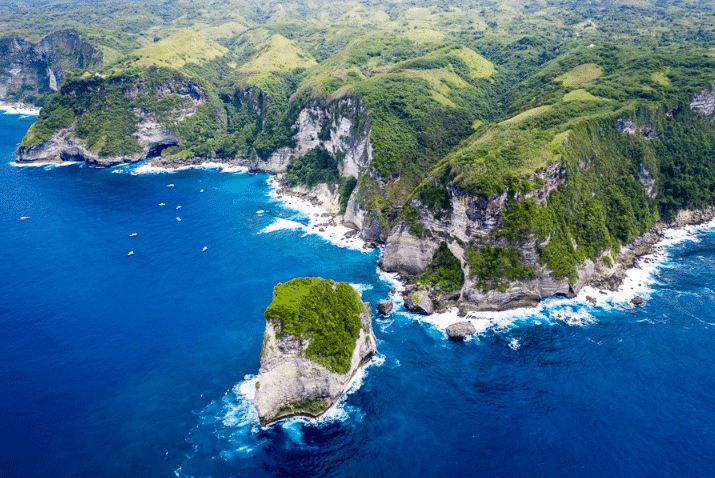
Manta Point, Nusa Penida, Bali | theworldtravelguy.com
For underwater visibility, the dry season wins outright, with April to November offering the clearest water around Bali’s best dive sites. Two seasonal highlights are worth planning around. Manta rays are seen year-round at Manta Point off Nusa Penida but are most reliably encountered from April through to around October. The famous mola mola, or oceanic sunfish, rises to the cleaning stations around Nusa Penida and Nusa Lembongan mainly between July and October, and divers should be prepared for surprisingly cold thermoclines and strong currents on those sites.
The USAT Liberty wreck at Tulamben on the northeast coast is diveable throughout the year and is a good fallback in the wet season, since the east coast is more sheltered from monsoon weather than the west.
Best Time for Hiking Mount Batur and Waterfalls

Mount Batur, Kintamani, Bali | baliislandvacation.com
The Mount Batur sunrise trek is best attempted between May and September, when clear pre-dawn skies give you the view across Lake Batur to Mount Agung and, on the very best mornings, across to Lombok’s Mount Rinjani. Trails are drier and safer underfoot, and cancellations are rare. In the wet season, cloud cover frequently smothers the summit view and slick volcanic scree makes the descent harder, so if the sunrise is a headline reason for your trip, choose dry-season dates.
Waterfalls run the opposite way. Sekumpul, Nungnung, Tukad Cepung and Aling Aling are at their most dramatic during and just after the rainy season, roughly January to April, though heavy rain can also make access paths slippery and occasionally close canyon-floor sites for safety.
Cheapest Time to Visit Bali
The cheapest time to visit Bali is late January through to early March, with February typically the single best month for value. Flights soften, villas that command premium rates in August can drop dramatically, and you will find far more negotiating room on longer stays. November and the first half of December are also good value, provided you avoid the sharp spike that begins around the third week of December and runs through the New Year.
The other reliable saving strategy is to shift a peak-season trip by two or three weeks. Travelling in the second half of September rather than mid-August, for instance, often keeps the weather but removes a substantial part of the cost.
Best Time for a Honeymoon or Couples Trip
For a honeymoon in Bali, May, June, September and early October give you dependable sunshine without peak-season congestion, which matters when the appeal is a private pool villa, a quiet clifftop dinner in Uluwatu or an unhurried morning in Ubud. These months also mean fewer weather-related cancellations for the boat trips, sunset cruises and island-hopping excursions that usually anchor a romantic itinerary.
When to Avoid Bali
There is no genuinely bad month in Bali, but a few periods deserve a note before you commit to dates.
- Mid-July to late August: this is the busiest and most expensive stretch of the year. Traffic between Canggu, Seminyak and Ubud can be severe, the best restaurants require booking days ahead, and popular viewpoints are crowded from early morning.
- The Christmas and New Year fortnight: you pay peak prices for rainy-season weather. Accommodation in Seminyak, Canggu and Uluwatu often sells out months in advance, and minimum-stay requirements are common.
- Peak monsoon on the west coast: through January and February, seasonal currents can carry debris onto west-facing beaches. Base yourself on the east coast or inland if you are visiting then.
- Nyepi, the Balinese Day of Silence: usually falling in March, this is a full 24-hour island-wide shutdown. Ngurah Rai International Airport closes, no flights land or depart, roads are empty, beaches are off-limits, and guests are expected to stay quietly inside their accommodation. It is a remarkable cultural experience if you plan for it, and a serious logistical problem if you do not, so check the date before booking flights around it.
Balinese Festivals Worth Planning Around

Penjor Poles During Galungan, Ubud, Bali | bali.com
Bali runs on a ceremonial calendar that most visitors barely notice until they walk into one, and timing a trip around a major celebration adds a dimension that no beach club can match.
- Nyepi and the Ogoh-ogoh parade: the evening before the Day of Silence brings huge, elaborately built demon effigies through towns and villages accompanied by gamelan and torchlight. It is the single most striking cultural event on the island.
- Galungan and Kuningan: held every 210 days according to the Balinese Pawukon calendar, so the Gregorian dates shift each year. Villages are lined with tall, decorated bamboo penjor poles and temple activity is at its most visible.
- Bali Arts Festival: a month-long program of dance, music and craft in Denpasar, generally running from mid-June into July, and one of the best reasons to accept peak-season crowds.
- Bali Spirit Festival: a yoga, music and wellness gathering centered on Ubud, typically held around April or May, which suits travelers already planning a shoulder-season wellness trip.
Tips for Timing Your Trip to Bali
- Book peak-season stays early: for July, August and late December, the best-value villas and boutique hotels are taken three to six months out. Shoulder-season dates give you far more flexibility to book late.
- Plan mornings, not afternoons, in the wet season: rainy-season showers usually arrive later in the day, so schedule temple visits, hikes and boat trips for early morning and leave spa treatments, long lunches and indoor plans for the afternoon.
- Match your base to your season: stay on the west coast in the dry season for surf and sunsets, and lean towards Sanur, Nusa Dua, Amed or inland Ubud and Sidemen during the rains.
- Check the Nyepi date before booking flights: the airport genuinely closes for a full day, and arriving or departing on that date is not possible.
- Build in a buffer for island crossings: fast-boat services to Nusa Penida and the Gili Islands are weather-dependent, so avoid scheduling a crossing for the day before an international flight in the rainy season.
- Do not judge the island by one region: northern Bali around Lovina and the far east around Amed are drier and quieter than the south, and can save a trip that hits unexpected weather.
Choosing the Right Month for Your Bali Trip
If you want one recommendation, go in May or September. Those two months sit either side of the crowds, give you the dry season’s reliable weather and clear water, and cost noticeably less than mid-summer. July and August remain the safest bet for guaranteed sunshine if you are tied to school holidays and are willing to pay for it, while February and March reward budget travelers, surfers chasing the east coast and anyone who would rather see Bali green and quiet than dry and busy.
The most useful thing to remember is that Bali does not really have an off-season, only different versions of itself. Decide first what you actually want from the trip, whether that is surf, silence, ceremony, diving or a discount, and let that choice set your dates. Get the timing right and the rest of the itinerary tends to fall into place on its own.