
Embarking on an African safari is surely one of the most amazing travel adventures you could ever have. Envision elephants wandering the savanna grasslands, spotting lions lounging under the shade of an acacia tree, the awe-inspiring spectacle of the Great Migration in East Africa. But the first thing you want to know before a journey to Africa, is how much does a safari in Africa cost? The price of an African safari in 2026 ranges from $150-$350 per person per day for budget safaris, $350-$750 per person per day for mid-range safaris and $750-$1,500 or more per person per day for luxury safaris.
The real cost is determined by your destination, where and when you stay, the season you go in and whether you opt for a guided group safari or a private safari. Discover the best prices for African safari vacations, from budget safaris in South Africa to the most expensive luxury safari lodges in Botswana. Learn about the costs, factors that determine safari prices, and how to price your African adventure.
African Safari Cost: Key Takeaways
- Budget safari: $150–$350 per person per day.
- Mid-range safari: $350–$750 per person per day.
- Luxury safari: $750–$1,500+ per person per day.
- Most affordable destinations: South Africa and Namibia, particularly for self-drive safaris.
- Best for classic wildlife experiences: Kenya and Tanzania.
- Best for luxury safaris: Botswana, particularly the Okavango Delta.
- Recommended safari duration: Five to seven days for first-time visitors.
Note: These are approximate planning estimates, not guaranteed 2026 booking rates. International flights, visas, travel insurance, and certain activities may cost extra.
1. How Much Does an African Safari Cost Per Person?
African safari prices vary considerably depending on the level of comfort and exclusivity you prefer.
Budget Safari: $150–$350 Per Day
Budget safaris are perfect for those who are interested in wildlife viewing but not overly concerned about where they sleep. Budget safari packages often include a standard campsite or lodge, a safari vehicle with other travelers, game drives, and meals.
South Africa, Kenya, and Namibia offer several options for budget-conscious travelers.
Estimated cost for a 7-day safari: $1,050–$2,450 per person.
Mid-Range Safari: $350–$750 Per Day
Mid-range safari fares afford you a comfortable adventure. You will stay in comfortable lodges or tented camps, have set game drives, and be guided by an experienced, trained guide. Airport transfers and park entrance fees are often included.
This option is ideal for couples, families and first time safari goers who want a comfortable wildlife safari.
Estimated cost for a 7-day safari: $2,450–$5,250 per person.
Luxury Safari: $750–$1,500+ Per Day
Luxury safaris offer premium accommodation, personalized services, and exclusive wildlife experiences. Depending on the property, guests may enjoy private game drives, spacious suites, gourmet dining, swimming pools, and scenic wilderness views.
Exclusive camps in Botswana, Kenya, and Tanzania can exceed these prices, particularly during peak travel periods.
Estimated cost for a 7-day safari: $5,250–$10,500+ per person.
2. African Safari Cost by Country
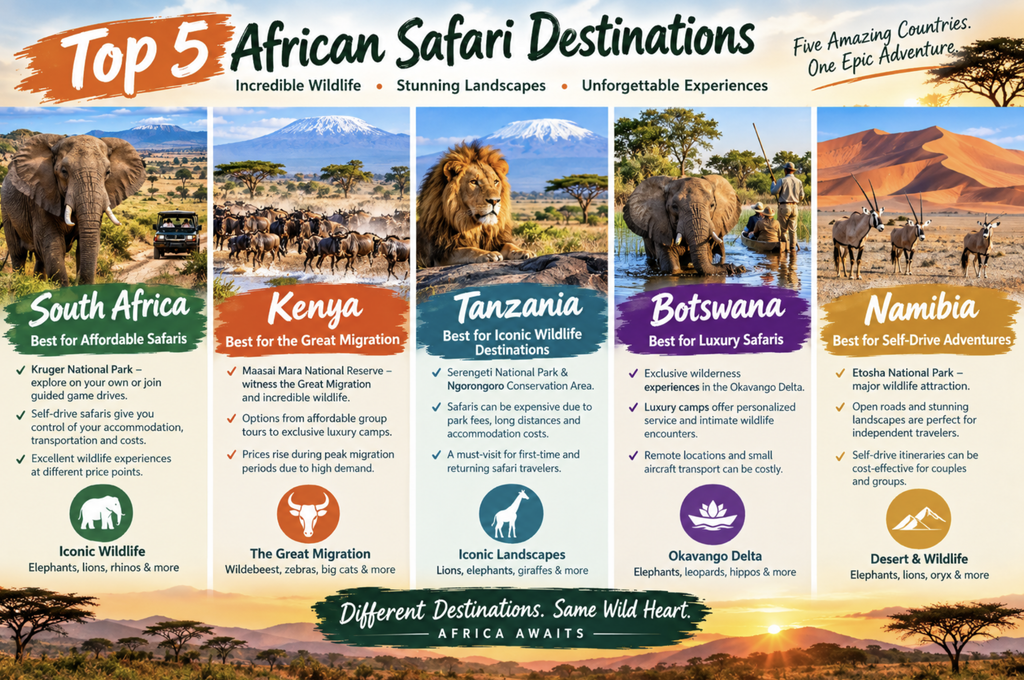
Choosing the right destination can significantly influence your overall safari budget. Some countries offer affordable self-drive adventures, while others specialize in remote wilderness experiences and luxury accommodation.
Estimated prices are in USD per person per day. The lower-cost options may involve self-driving, basic accommodation, or shared transportation. Package inclusions vary.
| Country | Budget Safari | Mid-Range Safari | Luxury Safari |
| South Africa | $120–$275 | $300–$750 | $700–$2,000+ |
| Kenya | $150–$300 | $300–$700 | $700–$1,500+ |
| Tanzania | $200–$400 | $350–$800 | $800–$2,500+ |
| Botswana | $220–$400 | $600–$1,350 | $1,500–$3,500+ |
| Namibia | $150–$275 | $300–$700 | $900–$2,000+ |
| Zambia | $160–$350 | $300–$850 | $900–$2,000+ |
South Africa: Best for Affordable Safaris
South Africa is one of the most accessible safari destinations for travelers seeking excellent wildlife experiences at different price points. Kruger National Park is especially popular because visitors can explore designated roads independently or join guided game drives.
Self-drive safaris allow travelers to control their accommodation, transportation, and daily expenses, making South Africa an attractive choice for budget-conscious visitors.
Kenya: Best for the Great Migration
Kenya is famous for the Maasai Mara National Reserve, where visitors can witness remarkable wildlife encounters and seasonal wildebeest migration. Safari options range from affordable group tours to exclusive luxury camps. Prices often increase during peak migration periods, particularly when demand for accommodation is high.
Kenya is an excellent choice for travelers seeking a classic African safari experience.
Tanzania: Best for Iconic Wildlife Destinations
Tanzania is home to the Serengeti National Park and Ngorongoro Conservation Area, two of Africa’s most celebrated wildlife destinations. Safaris here can be relatively expensive because of park fees, transportation distances, and accommodation costs.
However, the opportunity to explore vast savannas and observe diverse wildlife makes Tanzania a popular choice for first-time and returning safari travelers.
Botswana: Best for Luxury Safaris
Botswana is particularly well known for its exclusive wilderness experiences in the Okavango Delta. Many luxury camps provide personalized service, intimate wildlife encounters, and accommodation surrounded by remarkable natural landscapes.
Remote locations and transportation by small aircraft can make Botswana more expensive than other safari destinations.
Namibia: Best for Self-Drive Adventures
Namibia offers a distinctive safari experience combining wildlife encounters with spectacular desert scenery. Etosha National Park is a major attraction, while the country’s open roads and scenic landscapes make it appealing to independent travelers.
Self-drive itineraries can be particularly cost-effective for couples and groups sharing transportation expenses.
3. What Is Included in an African Safari Package?
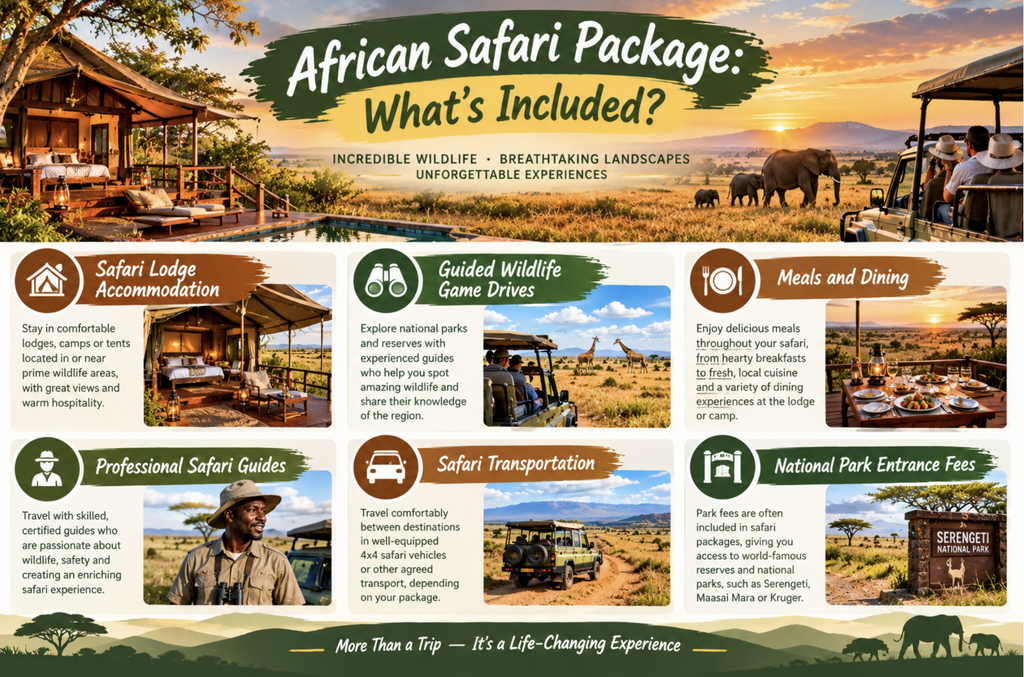
Safari packages often combine several travel expenses into one price, making planning more convenient. However, the exact inclusions depend on the tour operator, destination, and accommodation category.
Common Safari Package Inclusions
Most organized safari packages may include:
- Accommodation in safari lodges, camps, or tents.
- Daily guided game drives.
- Meals during the safari.
- Professional safari guides.
- Transportation between selected destinations.
- National park entrance fees, depending on the package.
Additional Expenses to Consider
Some expenses are not included with an all-inclusive safari. These include flights overseas, visa fees, travel insurance, tips for your guide, alcoholic drinks and optional activities such as hot-air ballooning. Costs can be further inflated by the additional cost of domestic flights, as well as the transfers to your remote safari camp.
Be sure to ask for a detailed list of what comes included before you book. The most expensive package may turn out to be the best deal when it includes costs for park admission, transportation, meals, and activities.
4. How Much Does a 7-Day African Safari Cost?
A seven-day safari is a popular choice for first-time visitors because it allows enough time to explore major wildlife destinations without rushing through the experience.
Here’s an estimated breakdown:
| Safari Type | Cost Per Person | Cost for Two People |
| Budget Safari | $1,050–$2,450 | $2,100–$4,900 |
| Mid-Range Safari | $2,450–$5,250 | $4,900–$10,500 |
| Luxury Safari | $5,250–$10,500+ | $10,500–$21,000+ |
These estimates exclude international flights and expenses not covered by the safari package. For couples and families, sharing accommodation and transportation can sometimes reduce the cost per person.
5. What Factors Affect African Safari Prices?
Several important factors determine how much you’ll spend on an African safari.
Travel Season
Prices for safaris can also rise around high season for viewing wildlife. For instance, the Great Migration draws more visitors to Kenya and Tanzania, putting upward pressure on fees. Travel during shoulder season can lead to lower prices and less crowds although weather can vary and wild animals can be more or less active.
Accommodation
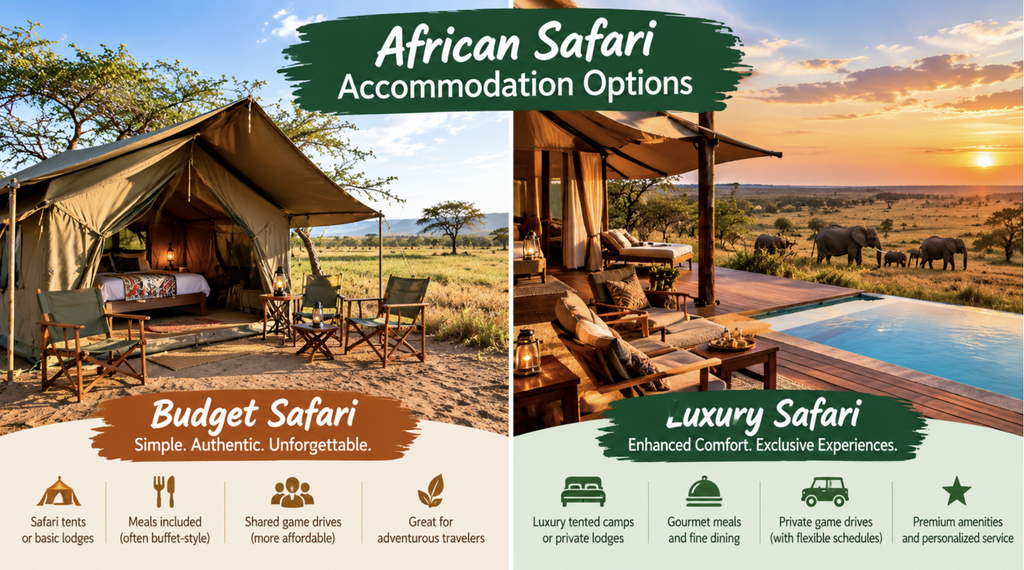
Accommodation is one of the biggest expenses on a safari. Budget travelers can choose camping or basic lodges, while luxury visitors may prefer exclusive tented camps, private villas, and premium wilderness resorts.
Private vs. Group Safari
Group safaris are generally more affordable because travelers share transportation and guiding costs. Private safaris offer greater flexibility and personalized experiences but may be more expensive, especially for solo travelers or couples.
Park Fees and Transportation
National park entrance fees vary by destination and can significantly affect the final price. Remote safari lodges may also require domestic flights or charter aircraft, increasing transportation expenses.
6. How to Save Money on an African Safari
Luxury isn’t an absolute requirement for a memorable African safari experience. Plan ahead and you’ll be able to capture incredible moments with a variety of wildlife without breaking the bank.
Opt for a less expensive destination: Namibia and South Africa are great countries for budget safaris, especially for independent travellers.
Travel off-peak: Save on hotel and tour costs by traveling outside of the peak season. A shared vehicle and guide can slash the cost of a private tour. These can be cheaper than flights, but you should factor in the driving time.
Shop around for a safari operator: Ask for quotes from reputable companies and compare accommodation, park fees, activities and transport.
If you are planning your first-ever African safari, a five- to seven-day itinerary in one or two key safari
areas is advisable. This will keep transportation costs down and allow sufficient days to enjoy game viewing.
7. Is an African Safari Worth the Cost?
For nature lovers and lovers of the wild, wildlife bug and adventurers, experiencing an African safari can be an added feather in your cap. Another difference between holidays and safaris is that safaris give you the chance to see wild animals in their natural environment while touring some of Africa’s most beautiful wilderness areas.
As you walk across the plains, elephants could be browsing, or as you watch the treetops, giraffes might be nibbling. And the shade is always best for napping while there is an increased level of comfort and luxury associated with high-end safaris, inexpensive and mid-range adventures can also be just as worthwhile for the chance to see wildlife.
A mid-range safari priced at $350-$750 per person per day can be the perfect way to combine comfort, excitement, and affordability for many first-timers.
Frequently Asked Questions
How much does an African safari cost for two people?
A seven-day safari for two people may cost approximately $2,100–$4,900 for a budget trip, $4,900–$10,500 for a mid-range experience, or $10,500–$21,000+ for a luxury safari, excluding international flights and additional expenses.
What is the cheapest African country for a safari?
South Africa is often one of the cheapest safari destinations, particularly for self-drive trips to Kruger National Park. Namibia is another affordable option for independent travelers.
How much does a luxury African safari cost?
Luxury African safaris generally cost $750–$1,500 or more per person per day. Exclusive camps, private guides, and charter flights can increase the price considerably.
Is Kenya or Tanzania cheaper for a safari?
Kenya often offers more affordable group safari packages, while Tanzania can be more expensive because of park fees and transportation distances. However, prices depend on the itinerary and travel season.
How many days are enough for an African safari?
Five to seven days is a good starting point for first-time visitors. This provides time for multiple game drives, wildlife viewing, and relaxation without an overly rushed itinerary.
Final Verdict: Finding the Perfect African Safari for Your Budget and Travel Style
South Africa has a wide variety of options for how much your safari trip will cost. No matter what type of adventure you are looking for you will be able to find something for every kind of trip, including a budget wilderness safari experience in Africa, a traditional safari in the Serengeti in Tanzania, or an upscale wilderness experience in Botswana.
If seeking comfort but also affordability, then a budget safari of $350-$750 per person per day would be a reasonable investment for any willing traveler. In the end, the “best” safari isn’t necessarily the one with the highest price tag. It’s the one that suits your budget, destinations, and travel style.
By choosing the right trip and itinerary and going with an experienced and respected safari tour operator, you can enjoy Africa’s amazing wildlife and scenery without breaking the bank.