
When shoppers search “Jay Feather vs Imagine,” they’re usually cross-shopping two of the most popular lightweight travel trailer lines on the market. The Jayco Jay Feather and the Grand Design Imagine both target the same buyer — someone who wants a towable trailer with real livability, without the weight or price tag of a full-size unit. But the two brands build toward that goal differently, and the gap between them shows up in construction, tank capacity, price, and overall feel once you’re inside.
This guide compares the Jay Feather and the Imagine head-to-head so you can decide which one actually fits your tow vehicle, budget, and camping style — not just which one looked nicer on the lot.
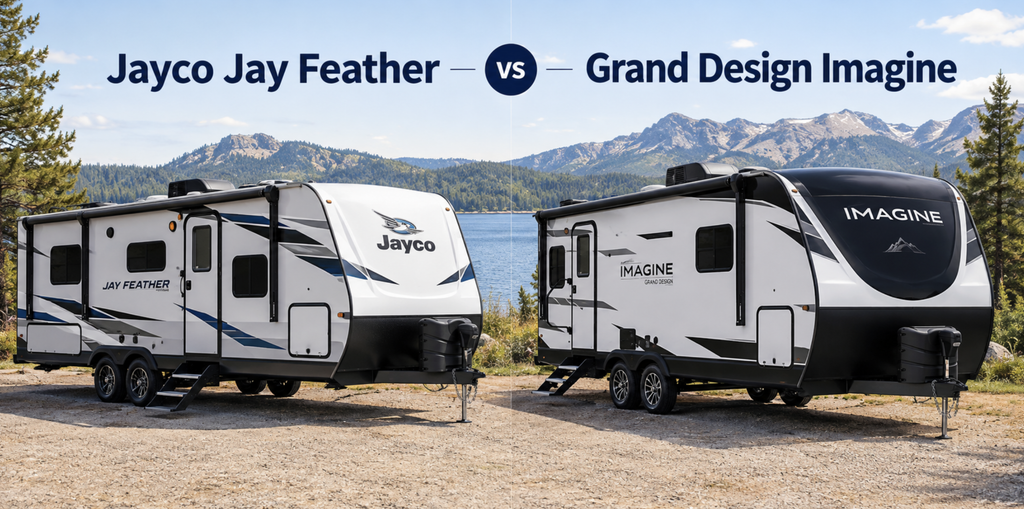
Jay Feather vs Grand Design Imagine: Quick Comparison Table
| Category | Jayco Jay Feather | Grand Design Imagine |
| Length Range | 19’7″ – 31’11” | 26’6″ – 34’6″ (standard Imagine line) |
| Dry Weight Range | ~3,895 – 6,120 lbs | ~5,850 – 6,850+ lbs |
| Starting MSRP | ~$41,000 | ~$55,000+ (standard Imagine); lighter Imagine XLS/AIM sub-lines start lower |
| Wall Construction | Stronghold VBL™ with double-sided Azdel composite panels | Aluminum-framed with gel-coated fiberglass exterior |
| Floor Construction | 2″ vacuum-bond laminated floor | Laminated floor with enclosed, heated underbelly |
| Weather Protection | Climate Shield, tested 0°F–100°F | Enclosed and heated underbelly; four-season packages on select sub-lines |
| Fresh Water Capacity | 55 gal (most floorplans) | ~52 gal (standard Imagine) |
| Gray Water Capacity | 30.5–61 gal (varies by floorplan) | ~82 gal (standard Imagine) |
| Black Water Capacity | 30.5–34 gal | ~45 gal |
| Furnace Output | 19,000–35,000 BTU | Comparable mid-range furnace output, varies by floorplan |
| Sub-Lines | Jay Feather Micro (ultra-light) | Imagine XLS and Imagine AIM (lighter, more affordable) |
Specs are very much a function of both manufacturer and floorplan, and get pretty subjective when you compare model years. This table above is meant to be more of a broad overview rather than a spec sheet for a specific unit.
Construction: Azdel Composite vs Aluminum-Framed Fiberglass
This is the most important technical difference in the Jay Feather vs Imagine comparison, and it’s where the two brands genuinely diverge in philosophy.
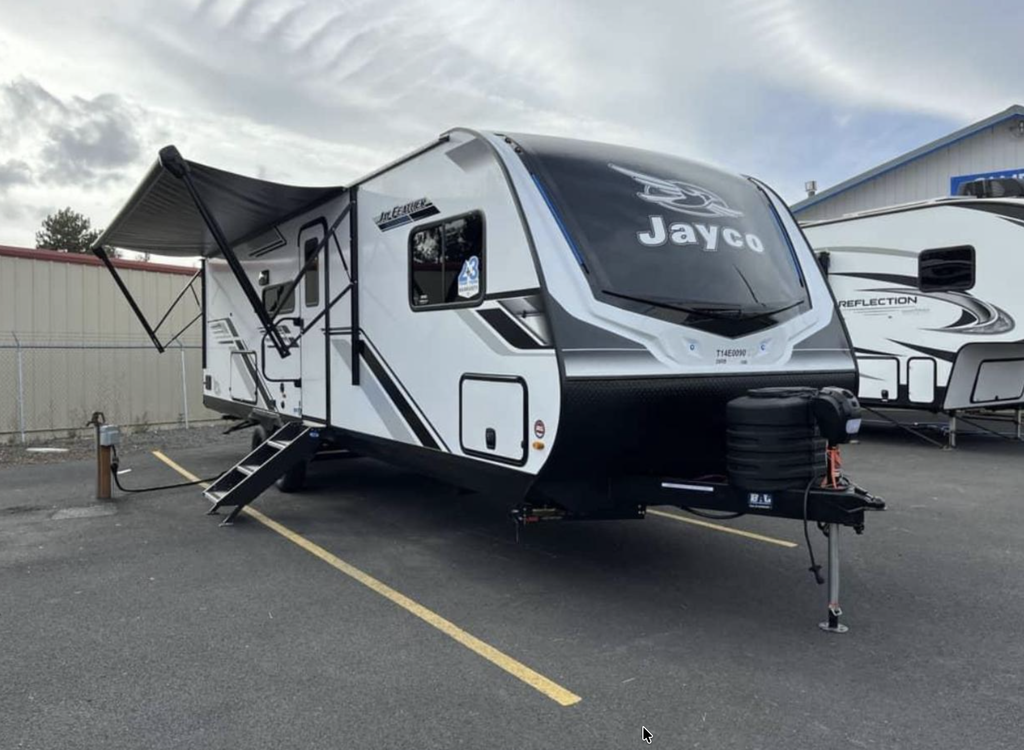
Jayco Jay Feather features Stronghold VBL construction where walls are framed with double-sided Azdel composite panels and the floors use a 2″ vacuum-bond laminated floor. The Azdel walls are light and don’t absorb water and rot like wood products, so you don’t see older or inexpensive trailers with wood wall cores anymore. The Climate Shield weather protection package is also a nice addition that gets tested between 0 and 100 degrees F. Interesting.
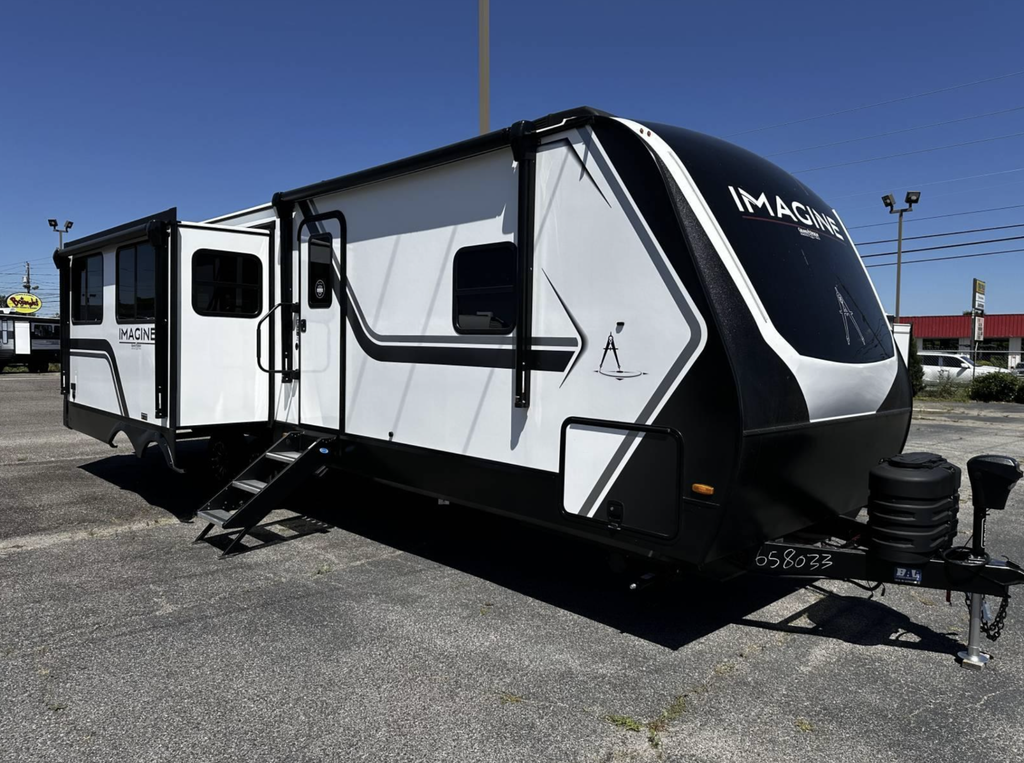
Grand Design Imagine is a very unique product – it features an aluminum frame, and the outside is a gel coated fiberglass surface. There’s no wood in this coach, so you don’t have to worry about rot – not just in your sidewalls, but in the entire coach. This type of gel coat surface is considered to be tougher and much easier to maintain over time than the laminated fiberglass skins, and it’s resistant to chalking and fading so much better. Grand Design also provides an enclosed and heated underbelly on most all their models, too.
Bottom line: They both claim to be tackling the “no wood rot” problem, just their way. Jayco utilizes Azdel composite panels, as well as Vacuum-bond laminating technology to improve strength and weight reduction. But a comparable Grand Design RV, with aluminum framing and gel-coat fiberglass that looks better over the course of ten years, typically has a premium over the Jayco of about the same floorplan.
Weight and Towability
Keep in mind that the Jay Feather line is essentially lighter, including the smaller models. The Jay Feather Micro weighs less than 4,000 lbs when dry. That means you can tow it with many mid-size SUVs and crossovers-which is a little more challenging with the standard Imagine line, which begins in the mid-5,000-lb range.
Grand Design has its own spin on this with the Imagine XLS and Imagine AIM sub-lines. These rigs, which have dry weights around 3,600-4,600 pounds for the smallest floorplans, are essentially vying for buyers with the Jay Feather Micro (rather than its full-size counterpart).
For most side-by-side floorplans in the same size class (roughly 26–32 feet), the Jay Feather tends to run slightly lighter than the equivalent Imagine, which matters if you’re towing near the edge of your vehicle’s rated capacity. If towing with a smaller SUV or a light-duty truck is the priority, that weight gap can be the deciding factor before layout or features even enter the conversation.
Tank Capacity and Off-Grid Camping
And where the standard Grand Design Imagine really takes the lead, it is in the fresh water holding tank. This coach has a huge 82-gallon tank, compared to the Jay Feather’s usual 30.5-61 gallon range. Plus, the Jay Feather’s black tank is 30.5-34 gallons, and with a black tank that deep, you’re going to have a real hard time filling it all.
Comparatively, the Imagine’s is 45 gallons, and that’s a generous amount to have. However, what this really translates to is you can camp for quite a long time in this coach before you really have to go to the dump station.
Bottom line: If boondocking or extended stays at parks with partial hookups are part of your plan, the Imagine’s larger gray and black tanks give it a practical edge. If you’re mostly camping at full-hookup sites for shorter stints, this difference matters less.
Layout and Interior Feel
Both brands offer a wide range of floorplans across similar length classes — front bedroom layouts, rear bath configurations, bunkhouse models, and rear-living designs with opposing slides. But the interior feel differs in a way that’s hard to capture in a spec sheet.
Jay Feather interiors are functional and affordable. Inside is a 10-cubic-foot 12V fridge, a smart LED TV, a 60 x 80 queen bed, and relatively simple cabinetry. Not that it isn’t well-made – this is a well-built design that packs a lot of function into a lightweight trailer.
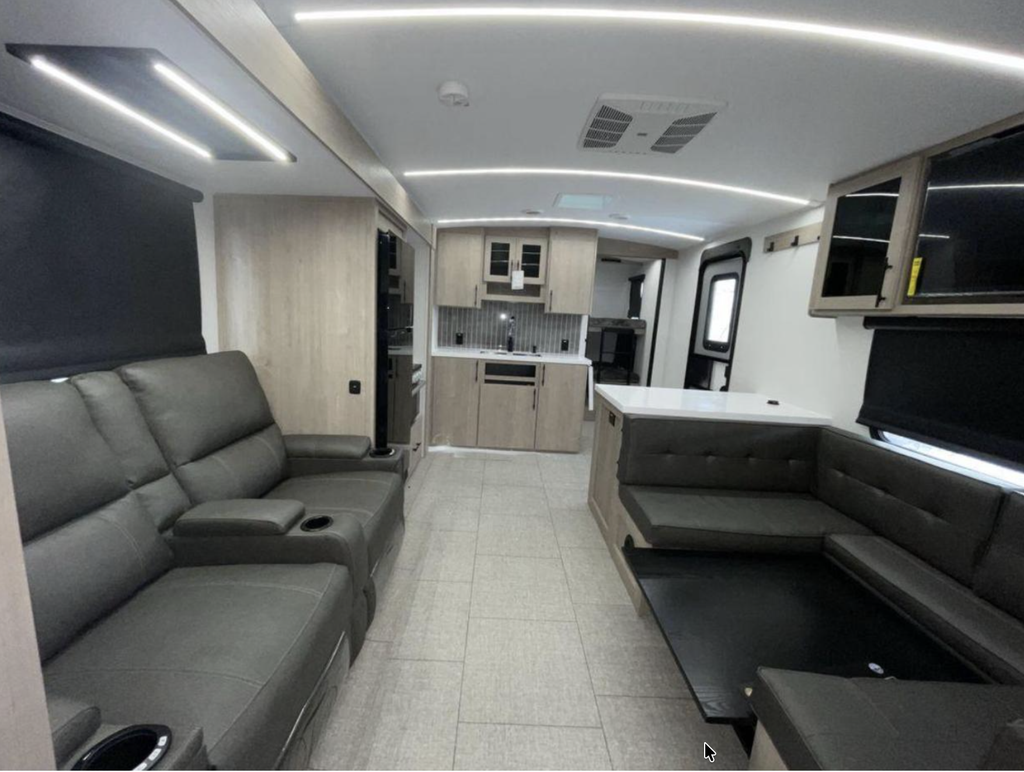
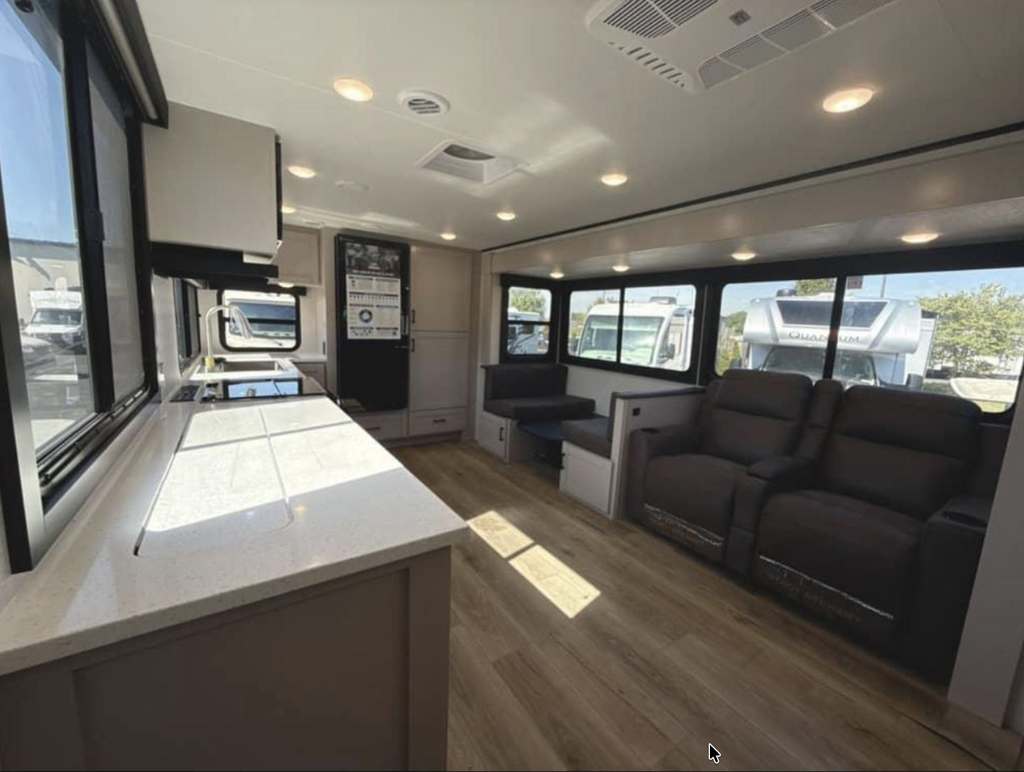
Grand Imagine interiors tend to lean slightly more upscale, with features like fireplaces in larger floorplans, kitchen islands, panoramic windows, and residential-style theater seating showing up more consistently across the lineup. Grand Design has built a reputation for interior fit and finish that often reads as a step up from comparably priced trailers, which is part of why the Imagine commands a higher starting price.
Bottom line: If a more residential, upscale-feeling interior is a priority and you’re willing to pay for it, the Grand Imagine tends to deliver that more consistently. If you want strong functional value without paying extra for interior styling upgrades, the Jay Feather gets you there for less.
Price and Value
That MSRP difference is legit too and will linger: The Jay Feather typically starts out a few thousand dollars below the base Imagine line for the same class size. And on the Grand Design side of the spectrum, the scaled-down, lighter Imagine XLS and Imagine AIM versions are a little more affordable than the full-size, full-featured models-and thus, a little less expensive than the Jayco-though you’ll still find the Imagine offering (a little) more bang for your buck in the same classesize and floorplan.
Is the price difference worth it? That All-Weather package, aluminum framing, gel-coat fiberglass, and larger tanks do add to costs-and keep them there. On the Jayco side, the Azdel-based construction can help keep prices-and weight-down, but you won’t get the same features and an all-weather design.
Bottom line: The Jay Feather generally wins on upfront price and weight-to-dollar value. The Imagine asks for more money but backs it up with larger tanks, a more residential interior, and construction that many owners report holds up better cosmetically over the long haul.
Jay Feather vs Imagine: Quick Decision Guide
- Towing with a smaller SUV or want the lightest trailer possible → Jay Feather (or Jay Feather Micro)
- Want the largest holding tanks for extended off-grid stays → Grand Imagine
- Prioritizing lowest upfront price in this class → Jay Feather
- Want a more residential, upscale interior and don’t mind paying more → Grand Imagine
- Want the lightest possible trailer from either brand → Jay Feather Micro or Grand Imagine AIM (compare these two directly, not the standard lines)
Frequently Asked Questions
Is the Jay Feather lighter than the Grand Design Imagine? Generally, yes. The standard Jay Feather line runs lighter than the standard Imagine line at comparable lengths, and the Jay Feather Micro sub-line is significantly lighter than anything in the standard Imagine lineup. Grand Design’s Imagine XLS and Imagine AIM sub-lines are the more direct lightweight competitors to Jayco’s smaller offerings.
Which is better for boondocking, the Jay Feather or the Imagine? The Imagine has a clear advantage here, with substantially larger gray and black water tank capacity in most floorplans, which extends how long you can stay off-grid before needing to dump.
Is the Grand Design Imagine worth the higher price over the Jay Feather? It depends on priorities. The Imagine’s aluminum-framed, gel-coated fiberglass construction and larger tanks justify the higher price for buyers who want long-term durability and off-grid capacity. Buyers focused on minimizing upfront cost and tow weight often find the Jay Feather delivers comparable everyday livability for less.
Do both the Jay Feather and Imagine hold up in cold weather? Both offer meaningful cold-weather features — Jayco’s Climate Shield package (tested 0°F–100°F) and Grand Design’s enclosed, heated underbelly — but neither the standard lines should be treated as a true four-season trailer without additional precautions in sustained sub-freezing conditions. Grand Design’s Imagine AIM sub-line specifically offers an optional Four Seasons Protection Package for buyers who want more built-in cold-weather capability.
Conclusion: Jay Feather vs Imagine
There’s no clear winner when it comes to the Jay Feather vs Imagine as it really depends on what you’re truly after. If you’re watching your weight and budget and your tow vehicle ain’t much of a beefcake, then the Jayco Jay Feather is a great choice. However, if bigger tanks, more opulent interior and a unit that will look good down the road appeal, then the Grand Design Imagine is the one for you.
Whichever you choose, ensure it matches your tow vehicle’s capabilities and let the tank sizes, interior styling and price sell you on which one to buy.