
If you’ve spent any time shopping for a travel trailer, you’ve probably noticed that Forest River doesn’t just make one Rockwood, it makes four distinct families under that name, and the differences between them aren’t always obvious on a dealer lot. The Rockwood Roo, Mini Lite, Geo Pro, and Ultra Lite all share the Rockwood badge, a reputation for solid build quality, and a loyal following among weekend campers and full-timers alike. But each one is engineered around a different priority: towability, hybrid flexibility, budget efficiency, or full-size comfort.
This guide breaks down what separates each Rockwood model, who it’s actually built for, and how to match one to your tow vehicle, budget, and camping style so you don’t end up with a trailer that’s either too much rig or not enough camper.
A Quick Overview of the Rockwood Family
Forest River positions Rockwood as a mid-range brand that bridges the gap between entry-level trailers and premium, feature-loaded rigs. Every model in the lineup is built on Forest River’s typical laminated sidewall construction, but from there, each series branches off to serve a different type of camper.
| Model | Best For | Typical Weight Range | Sleeping Capacity | Price Tier |
| Rockwood Roo | Families needing extra sleeping space without a huge tow rig | ~4,500–7,500 lbs | 6–10 | Mid |
| Rockwood Mini Lite | Half-ton towing, weekend and light full-time use | ~4,500–6,800 lbs | 4–6 | Mid |
| Rockwood Geo Pro | First-time buyers, compact SUV/truck towing, budget-conscious campers | ~3,500–5,000 lbs | 2–5 | Entry-Mid |
| Rockwood Ultra Lite | Longer trips, full-time living, larger families wanting residential comfort | ~6,000–9,000 lbs | 4–10 | Mid-Upper |
Weights and capacities vary by floor plan and model year, so always check the specific build sheet before buying but this table gives you a realistic starting point for comparison.
Rockwood Roo: The Hybrid Expandable
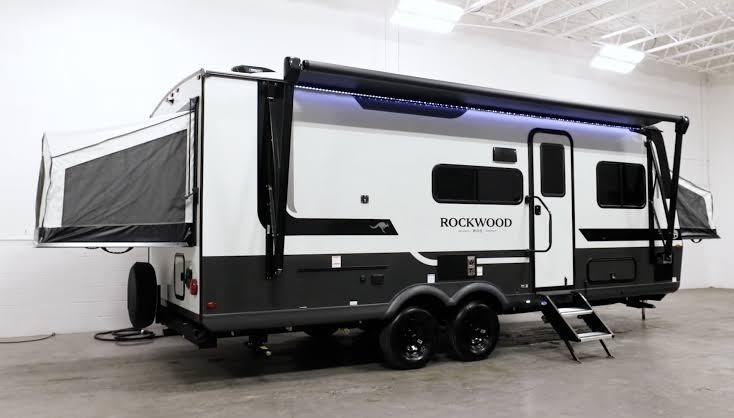
The Rockwood Roo is Forest River’s expandable, or “hybrid,” trailer meaning it combines a hard-sided body with one or more canvas-ended bunk-out sections that pop out at camp and fold back in for towing. This is the model to consider if sleeping capacity is your top priority but garage clearance or towing capacity is limited.
Why campers choose the Roo:
- Sleeps significantly more people per foot of trailer length than a comparable hard-sided model
- Tent-end bunks give kids their own separate sleeping space, which cuts down on nighttime shuffling
- Lower dry weight than a similarly-sized hard-wall trailer, making it towable by more mid-size SUVs and trucks
- Slightly more affordable per sleeping berth than fully hard-sided competitors
Trade-offs to know:
- Canvas ends mean more setup and teardown time at each stop
- Slightly less insulation and sound dampening than a fully hard-sided unit, which matters more in cold-weather or full-time use
- Canvas requires periodic inspection and care to prevent leaks or mildew
Who it’s for: Families and groups who camp seasonally, want maximum sleeping space for the trailer’s size, and don’t mind a few extra minutes setting up the tent ends at each site.
Rockwood Mini Lite: The Half-Ton Favorite
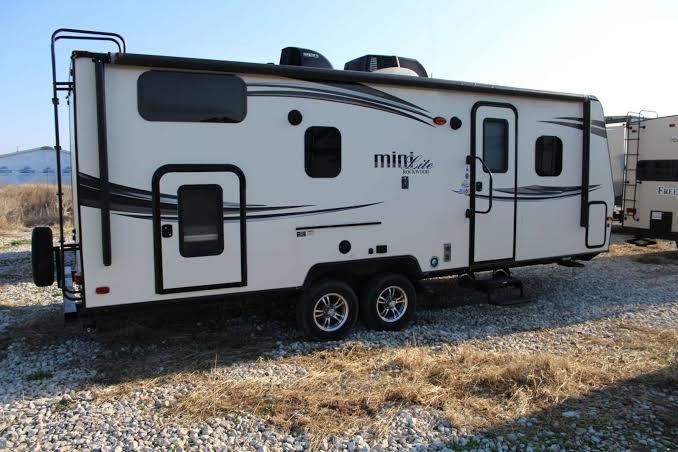
The Rockwood Mini Lite is arguably the best-known name in the lineup, and for good reason — it was built specifically to be towed comfortably by half-ton trucks and full-size SUVs, without sacrificing the residential feel that bigger trailers offer.
Why campers choose the Mini Lite:
- Genuinely lightweight construction without feeling stripped-down inside.
- Floor plans include real kitchens, dinettes, and bathrooms comparable to larger trailers.
- A frequent pick for couples and small families who want to upgrade from a Geo Pro without jumping to a heavier Ultra Lite.
- Strong resale value thanks to its long-standing popularity.
Trade-offs to know:
- Interior storage and countertop space is tighter than in the Ultra Lite series.
- Smaller holding tanks than larger Rockwood models, which matters for boondocking or extended off-grid stays.
Who it’s for: Couples, small families, and anyone towing with a half-ton truck or a full-size SUV who wants a full-featured trailer without pushing their tow rating.
Rockwood Geo Pro: The Budget-Smart Entry Point
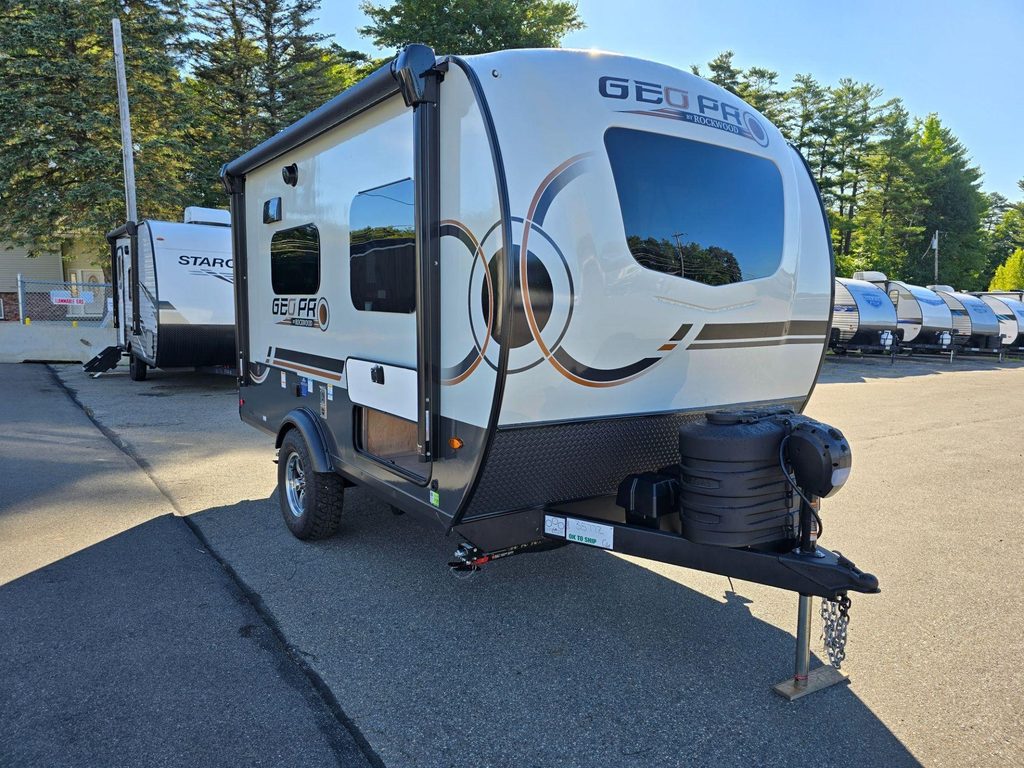
The Rockwood Geo Pro is the lineup’s most affordable and lightest hard-sided option, designed to be towable by smaller trucks, crossover SUVs, and even some minivans (always confirm against your vehicle’s actual tow rating). Forest River leans into a clean, modern interior aesthetic here, which has made the Geo Pro popular with younger buyers and first-time RV owners.
Why campers choose the Geo Pro:
- Lowest price point and lightest weight in the Rockwood family.
- Contemporary interior styling with a less “traditional RV” look.
- Compact enough to tow with a wider range of vehicles, opening up RV ownership to people without a full-size truck.
- Efficient floor plans that still include a functional kitchen and bathroom in most models.
Trade-offs to know:
- Less storage, smaller tanks, and thinner-cushioned furniture than the Mini Lite or Ultra Lite.
- Smaller floor plans mean less separation between living, sleeping, and cooking areas.
- Fewer heavy-duty options for extended off-grid or full-time living.
Who it’s for: First-time trailer buyers, couples, and solo campers who want to get into RVing affordably and are towing with a smaller vehicle.
Rockwood Ultra Lite: The Comfort-Focused Upgrade
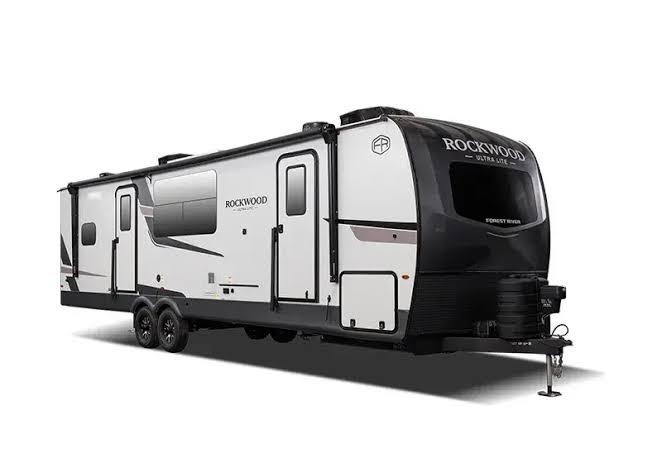
The Rockwood Ultra Lite sits at the top of the lineup, aimed at campers who want more space, more storage, and more residential features while still staying lighter than many full-size travel trailers on the market. This is the model for people who camp often, take longer trips, or want a trailer that can comfortably handle extended stays.
Why campers choose the Ultra Lite:
- Larger holding tanks and more storage than the Mini Lite or Geo Pro.
- Floor plans with bunkhouses, larger bathrooms, and outdoor kitchens in many trims.
- More residential-style furniture, cabinetry, and finishes.
- Better suited to full-time or extended seasonal living.
Trade-offs to know:
- Heavier overall, which usually requires a three-quarter-ton truck or a properly rated full-size SUV depending on floor plan.
- Higher price point than the other three models.
- Larger footprint means fewer campsite and storage options in some parks.
Who it’s for: Larger families, full-time RVers, and anyone who prioritizes space and comfort over minimizing tow weight.
How to Choose the Right Rockwood for You
Rather than starting with the trailer, start with these three questions:
- What can your tow vehicle actually handle? Check your vehicle’s real-world tow rating (not just the advertised max) and compare it against a fully loaded trailer weight — cargo, water, and gear included. This alone will eliminate one or two models from consideration immediately.
- How many people need to sleep in it, and how do they sleep best? If you need to sleep six-plus people in a trailer towable by a mid-size SUV, the Roo’s hybrid design is hard to beat. If it’s just two people who want maximum comfort, the Mini Lite or Geo Pro will feel more efficient.
- How long and how often will you be camping? Weekend warriors can get away with the smaller tanks and tighter storage of a Geo Pro or Mini Lite. Full-timers and extended-trip campers will appreciate the larger tanks and storage capacity of the Ultra Lite.
Quick Decision Guide
- Towing with a crossover or smaller SUV, budget is the priority → Geo Pro
- Towing with a half-ton truck, want full features without excess weight → Mini Lite
- Need to sleep a crowd but towing capacity is limited → Roo
- Have a heavier tow vehicle and want maximum space and comfort → Ultra Lite
Final Thoughts
The Rockwood name covers a surprisingly wide range of camping needs under one roof. The Geo Pro wins on affordability and towability, the Mini Lite hits the sweet spot for half-ton towing with real comfort, the Roo solves the “too many people, not enough truck” problem, and the Ultra Lite delivers the most space and residential feel for those willing to tow a bit more weight. Matching your tow vehicle, group size, and camping frequency to the right model will save you from buyer’s remorse — and get you to the campsite with the right rig from day one.