
The United States has more good public golf than anywhere else on earth, which is a wonderful problem until you actually have to pick somewhere. A trip to the Oregon coast and a trip to the Arizona desert are both excellent golf vacations, and they have almost nothing in common in terms of cost, season, travel time or the kind of week you will have when you get there.
This guide covers the best golf destinations in the US and, more usefully, what each one actually costs and how you get on the tee. Access rules vary enormously. Some of the most famous courses in the country require a resort stay before they will sell you a tee time, one runs a lottery for its trips, and one of the best rounds in American golf is a city-owned municipal you can book online. Knowing which is which is the difference between a trip that comes together and one that does not.
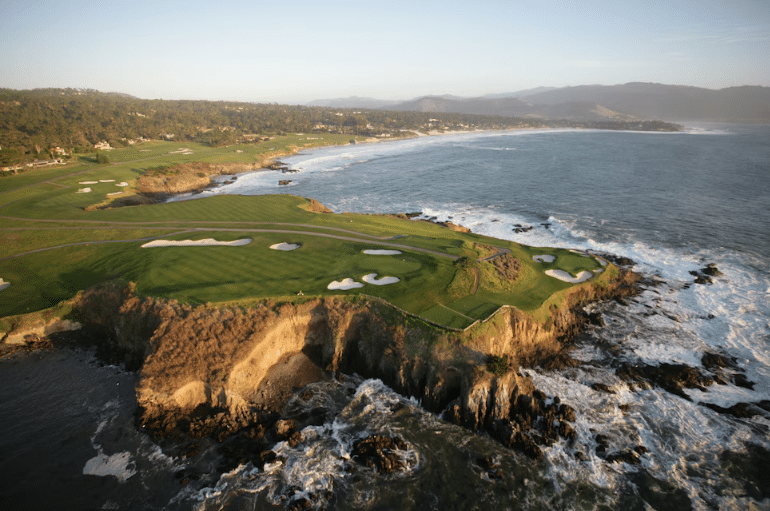
Coastal Golf Course, United States | golfdigest.com
How to Choose a US Golf Destination
Before you fall in love with a photograph, work through four questions. They will narrow the field faster than any ranking.
- What is the access model? Fully public destinations like Myrtle Beach, Scottsdale and San Diego let you book rounds without booking a room. Resort-controlled destinations like Pinehurst, Streamsong and Kohler tie the marquee tee time to a stay, which changes the budget substantially.
- When can you actually travel? Wisconsin golf is a summer proposition. The Arizona and California deserts are winter destinations that become brutally hot in July. The Carolinas peak in spring and fall. Your available dates may decide the destination for you.
- What is your real per-round budget? There is roughly a tenfold spread between a Grand Strand package round and a round at Pebble Beach. Most good trips mix one splurge with several strong value rounds rather than paying premium rates every day.
- Are you walking or riding? Several of the best modern destinations are walking-only, with caddies or push carts and nothing else. That is part of the appeal for some golfers and a dealbreaker for others, so check before you book.
The Best Golf Destinations in the US
Monterey Peninsula, California
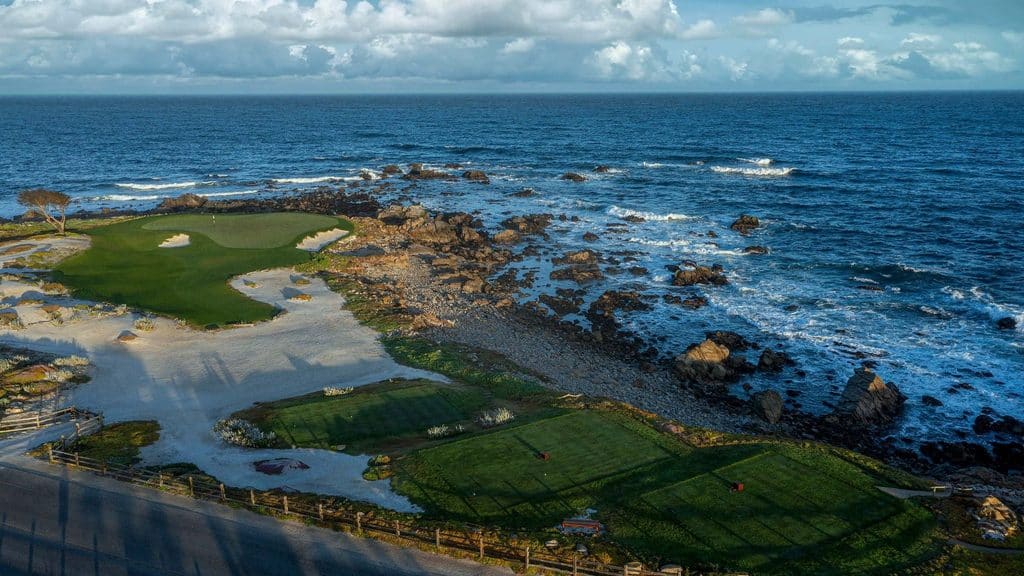
Monterey Peninsula, California | championships.usga.org
Pebble Beach is the most recognizable public golf course in the world and the round most American golfers put at the top of their list. It is also the most expensive standard public green fee in the country. The rate moved to $695 per player from April 2026, before a cart fee of around $60 or a caddie, and in practice you need to stay at The Lodge at Pebble Beach or an affiliated property to secure a tee time, since resort guests can book up to 18 months ahead while non-guests are limited to a 24-hour window. A two-night minimum stay applies for most dates.
What saves the trip financially is everything around it. Spyglass Hill runs roughly $435 to $495 depending on guest status, the Links at Spanish Bay sits lower again, and the peninsula is full of quality public and municipal golf well under $300, including Poppy Hills, the Bayonet and Black Horse pair, the historic Del Monte course and the municipal Pacific Grove Golf Links. A smart Monterey itinerary spends heavily once and plays value golf around it.
Bandon Dunes, Oregon
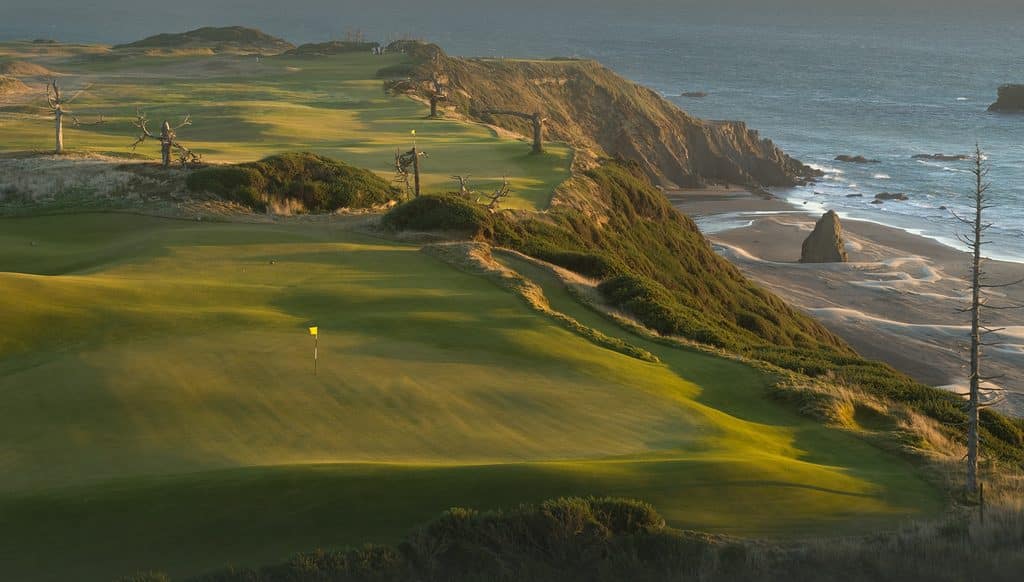
Bandon Dunes Golf Resort, Oregon | bandondunesgolf.com
Bandon Dunes is the destination that reset expectations for American resort golf, and 25 years on it remains the benchmark. There are five full-length courses, Bandon Dunes, Pacific Dunes, Bandon Trails, Old Macdonald and Sheep Ranch, plus two par-3 courses in Bandon Preserve and the 19-hole Shorty’s. Every course is walking only, year round, with no carts and no cart surcharge.
Pricing swings hard with the calendar, which is the key planning insight. Resort guests pay about $130 per round in January and December, rising to $375 through the June to September peak. Day guests who are not staying on property pay roughly $180 in the depths of winter and up to $425 in peak season, with a premium tier above that for advance bookings. Same-day replay rounds are half price, which makes 36-hole days unusually good value.
The catch is access to lodging. The resort runs a registration and drawing system for trip windows, and those fill far in advance, so anyone planning now is generally working toward a future season. Two workarounds exist: persistence with the reservations line for cancellations, and the day-guest route, which lets you book golf-only tee times after 10:00 a.m. and sleep in the town of Bandon.
Pinehurst, North Carolina
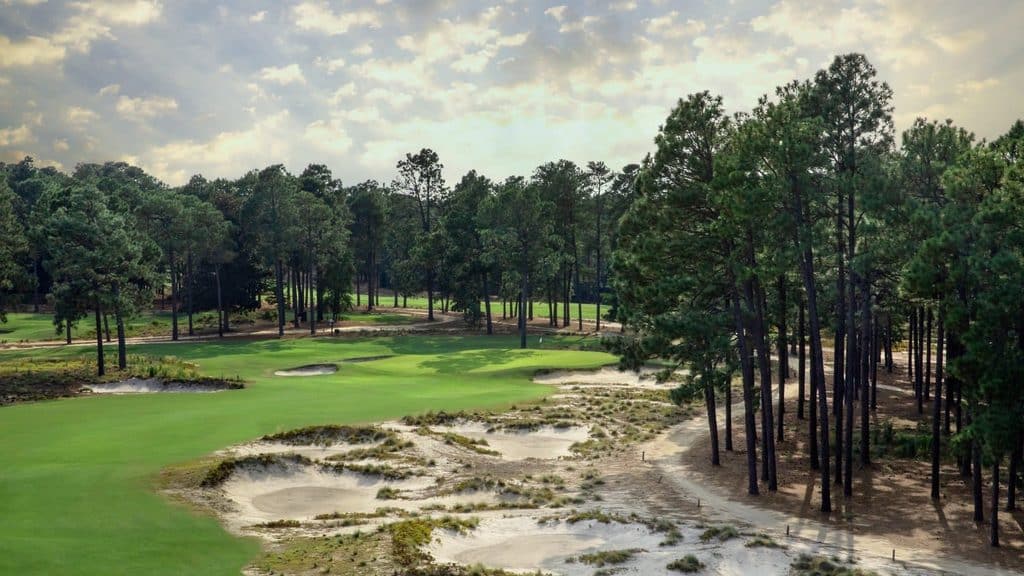
Pinehurst, North Carolina | pga.com
Pinehurst is the closest thing American golf has to St Andrews, a village built around the game with an enormous concentration of courses in the surrounding Sandhills. The resort itself has ten courses plus The Cradle short course, and the wider Moore County area packs more than 40 courses into roughly a 15-mile radius, including strong mid-priced options like Talamore, Longleaf and Foxfire.
Pinehurst No. 2, the restored Donald Ross design with its crowned greens and sandy waste areas, hosted the 2024 U.S. Open and is now a USGA anchor site scheduled to host again in 2029, 2035, 2041 and 2047. Playing it requires a two-night minimum stay, and the green fee is generally bundled into a package rather than sold as a standalone rate. Peak-season rounds land in the $500 to $650 range, with off-season rates falling considerably.
The best window is spring, from March to May, or fall, from September to November. Those are also the busiest and priciest periods, so book early and consider the mid-priced courses in Southern Pines and Aberdeen for your non-resort days.
Kiawah Island and Charleston, South Carolina
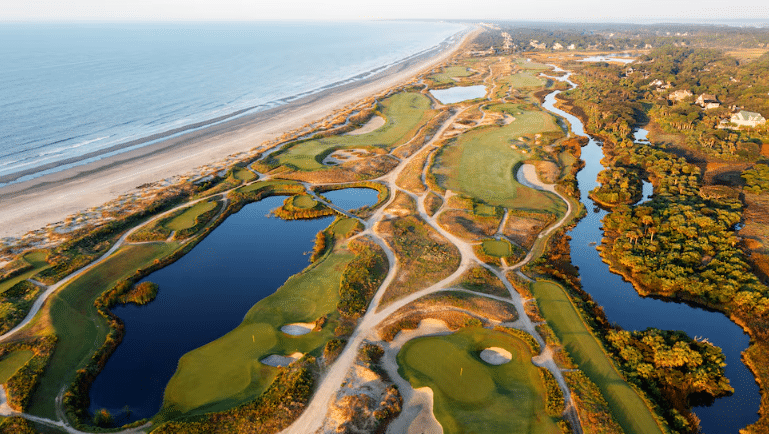
The Ocean Course, Kiawah Island, South Carolina | golfdigest.com
The Ocean Course at Kiawah is Pete Dye at his most exposed and most theatrical, with ten holes running along the Atlantic and wind that can change club selection by several clubs from one day to the next. It hosted the 1991 Ryder Cup and the 2012 and 2021 PGA Championships, and it consistently sits at or near the top of public-access rankings in the country. Expect roughly $550 to $600 all in, with a caddie or forecaddie mandatory on most tee times.
Five of the island’s seven courses are open through the resort, with Osprey Point, Turtle Point, Cougar Point and Oak Point offering considerably gentler pricing and, in the case of Osprey Point, a round many regulars quietly prefer. The two Kiawah Island Club courses, Cassique and the River Course, are private. The other advantage here is Charleston, which is 45 minutes away and gives non-golfing partners one of the best food and history cities in the South.
Scottsdale, Arizona
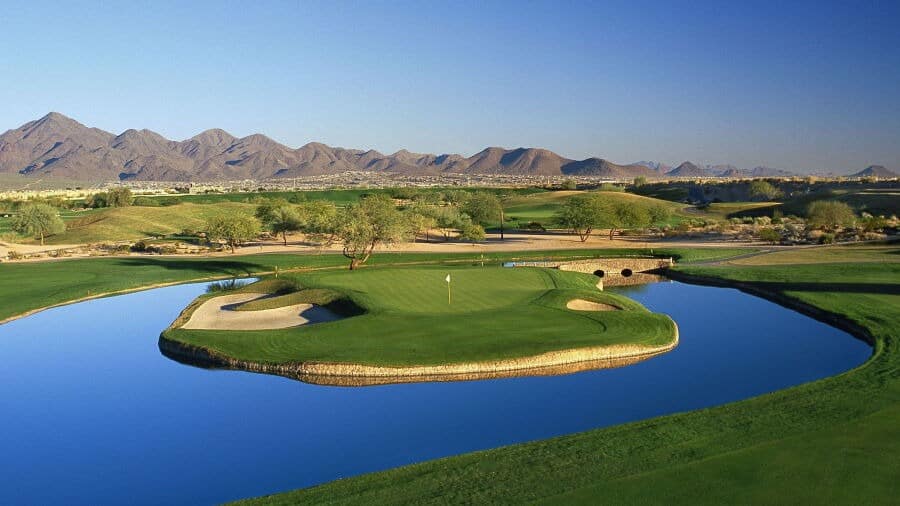
Scottsdale, Arizona | golfpass.com
Scottsdale is the most complete winter golf destination in the continental United States, with 75 or more public and semi-private courses inside a compact area and a genuine range of price tiers. The headline round is the Stadium Course at TPC Scottsdale, home of the WM Phoenix Open and its famously loud par-3 16th, which runs roughly $399 to $550 in peak season and falls to around $303 in summer.
Below that, the market has real depth. Troon North, We-Ko-Pa and Grayhawk sit in the premium tier, mid-range resort courses run around $80 to $150, and municipal courses can be found under $50. Peak season runs November through April, and summer rates drop by 40 to 70 percent for those who can tolerate the heat and tee off at dawn. Two practical notes: forecaddies are mandatory at several premium courses in peak months, and October overseeding can affect conditions, so check before booking that month.
Myrtle Beach, South Carolina
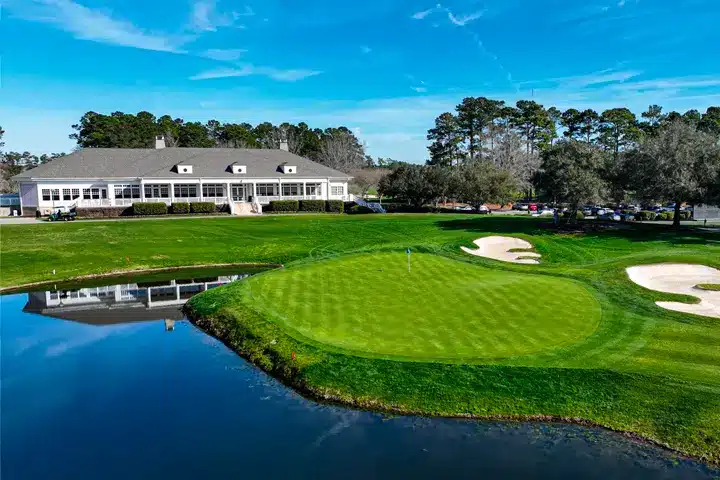
Myrtle Beach | golfpass.com
If the goal is maximum golf for minimum money, the Grand Strand is the answer and has been for decades. More than 80 public courses sit within a 60-mile stretch, most within 30 minutes of Myrtle Beach International Airport, and the sheer density of operators keeps package pricing genuinely competitive in a way no other American destination matches.
This is not just a volume market. Caledonia, True Blue, Tidewater, TPC Myrtle Beach, the Dye Course at Barefoot Resort, Grande Dunes and the Dunes Golf and Beach Club all hold up against serious competition, and the Dunes Club now hosts a PGA Tour event. Multi-round packages and course-group deals are the norm rather than the exception, so almost nobody pays rack rate. The best conditions come in March through May and September through November.
Streamsong, Florida
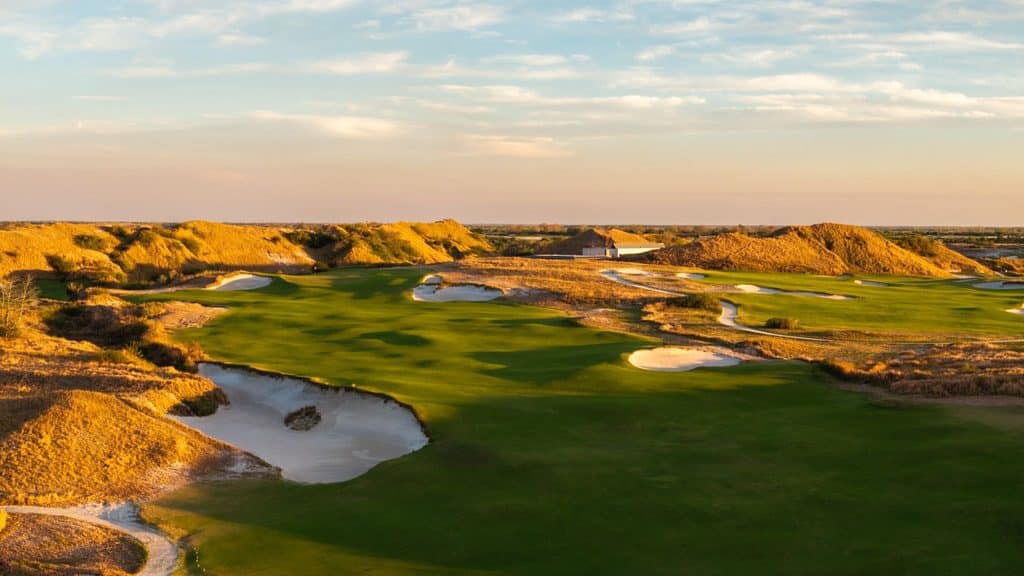
Streamsong Resort, Florida | pga.com
Streamsong is Florida golf that looks nothing like Florida golf, built on reclaimed phosphate mining land in the middle of the state, roughly 90 minutes from either Tampa or Orlando. The three championship courses are Red by Coore and Crenshaw, Blue by Tom Doak and Black by Gil Hanse, joined by The Chain, a 19-hole short course with holes ranging from under 60 yards to nearly 300 and no par on the scorecard.
Green fees on the three main courses run roughly $200 to $375 depending on season, with The Chain far cheaper. The critical detail is that tee times are reserved for overnight guests, so booking golf here means booking a room. Winter is peak; summer is hot, stormy and much cheaper.
Wisconsin: Sand Valley and Kohler
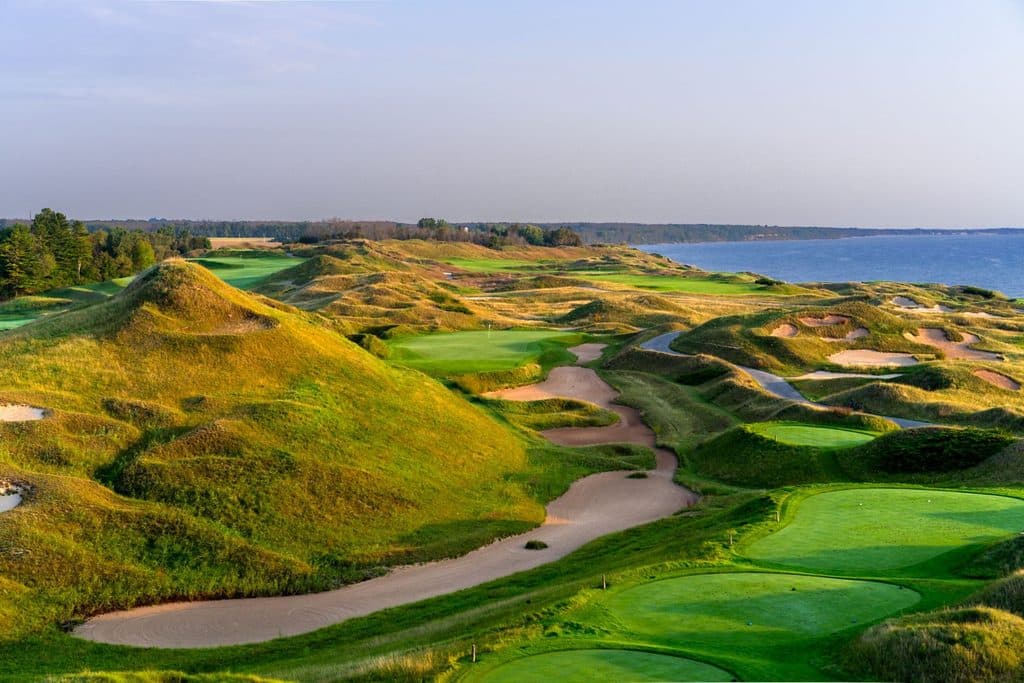
Whistling Straits, Kohler, Wisconsin | kohlerwisconsin.com
Wisconsin has quietly become one of the strongest golf states in the country, with two destinations worth building a trip around. Sand Valley, from the same family behind Bandon, now has six courses: Sand Valley and Sandbox by Coore and Crenshaw, Mammoth Dunes by David McLay Kidd, Sedge Valley by Tom Doak, the 12-hole Commons by Jim Craig, and The Lido, a full recreation of C.B. Macdonald’s lost Long Island masterpiece with restricted access. Peak green fees sit around $325, which is a bargain relative to its peer group, though demand has grown sharply and trip registration fills fast.
Two hours away, Destination Kohler offers Whistling Straits on Lake Michigan, host of three PGA Championships and the 2021 Ryder Cup, alongside the Irish Course and the two Blackwolf Run layouts. The Straits Course runs about $645 in peak season, is walking only, and requires a stay at a Kohler property to book in advance. Caddies cost around $90 plus gratuity. Twilight rates at 30 percent off and replay rates at 45 percent off are the value plays here.
San Diego, California
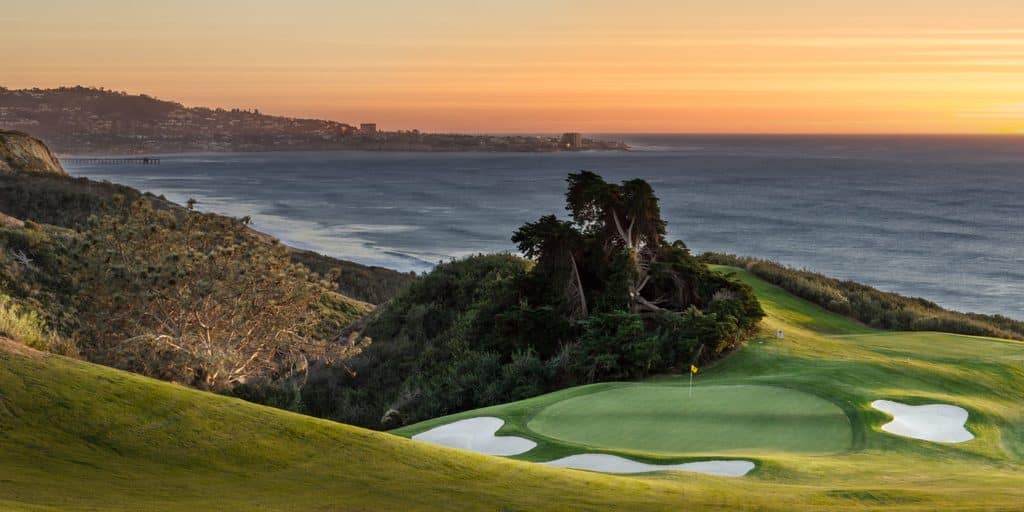
San Diego, California | pga.com
Torrey Pines is the best argument in American golf that a bucket-list round does not have to cost a fortune. The South Course hosted the 2008 and 2021 U.S. Opens and stages the Farmers Insurance Open every January, and it is a city-run municipal course open to anyone. Non-residents pay $258 on weekdays and $322 on weekends and holidays for 18 holes on the South, while the North Course comes in at $163 and $204. San Diego residents with an ID card pay a fraction of that, at $73 and $90 in the South.
Budget for the extras, which are not trivial. Carts run around $48 per player, and non-residents pay booking and reservation service fees on top of the green fee. Residents can book much further ahead than visitors, so plan around a narrower window and have backup dates.
Greater Palm Springs, California
The Coachella Valley packs more than 120 courses into a compact desert basin across Palm Springs, Palm Desert, Rancho Mirage, Indian Wells and La Quinta. PGA West is the marquee property, with the Pete Dye Stadium Course and its island-green 17th leading a group of layouts by Dye, Nicklaus, Norman, Palmer and Weiskopf.
Seasonality here is more extreme than anywhere else on this list. Peak winter rates from January to April run roughly $80 to $180 at mid-tier courses and $200 to $400 or more at premium layouts, while summer rounds at the same courses can fall to $40 to $80 as temperatures pass 110 degrees. For golfers who can handle early tee times in the heat, summer in the desert is the single cheapest way to play good courses in America.
US Golf Destinations Compared
Green fees below are indicative 2026 figures for the signature course at each destination. Rates move by season, day of week and how far ahead you book, and they usually exclude tax, cart and caddie, so always confirm directly before booking.
| Destination | Signature Course | Indicative 2026 Green Fee | Access |
|---|---|---|---|
| Monterey Peninsula, CA | Pebble Beach Golf Links | $695 from April 2026, plus cart or caddie | Resort stay in practice |
| Bandon Dunes, OR | Pacific Dunes | $130–$375 resort guest; $180–$475 day guest | Fully public, walking only |
| Pinehurst, NC | Pinehurst No. 2 | Bundled into packages; roughly $500–$650 peak | Two-night resort stay |
| Kiawah Island, SC | The Ocean Course | Roughly $550–$600, caddie included | Public, guests get priority |
| Kohler, WI | Whistling Straits (Straits) | About $645 peak, plus $90 caddie | Advance times need a stay |
| Sand Valley, WI | Sand Valley / Mammoth Dunes | About $325 in peak season | Public times plus stays |
| Streamsong, FL | Red, Blue and Black | $200–$375 by season | Resort guests only |
| Scottsdale, AZ | TPC Scottsdale Stadium | $399–$550 peak; about $303 summer | Fully public |
| San Diego, CA | Torrey Pines South | $258 weekday, $322 weekend non-resident | Municipal, fully public |
| Greater Palm Springs, CA | PGA West Stadium Course | Roughly $200–$400 winter; far less in summer | Resort and public play |
| Myrtle Beach, SC | 80-plus Grand Strand courses | Mostly package-driven, low by comparison | Fully public |
Choosing a Destination by Trip Type
Rankings are less useful than fit. The table below matches the common reasons people plan a golf trip to the destinations that serve them best.
| Trip Type | Go To | Why It Fits |
|---|---|---|
| Once-in-a-lifetime bucket list | Monterey Peninsula or Kiawah Island | Single rounds you will talk about for years, on courses you have watched on television |
| Pure golf, nothing else | Bandon Dunes, Sand Valley or Streamsong | Walking-only architecture in remote settings with no distractions and no traffic |
| Buddies trip on a budget | Myrtle Beach | The lowest cost per round of any major destination, with packages built for groups |
| Winter escape | Scottsdale or Greater Palm Springs | Reliable sunshine from November through April when most of the country is closed |
| History and tradition | Pinehurst | Donald Ross architecture, a village built around golf, and repeat U.S. Open hosting |
| Best value marquee round | San Diego | A U.S. Open venue on a city-run municipal course at a fraction of resort pricing |
| Mixed golf and non-golf | Charleston area or Scottsdale | Strong restaurant, spa and sightseeing options for travelers who are not playing |
When to Go: Golf Season by Region
- Arizona and the California desert: November through April is peak for weather and price. Summer is punishingly hot but extremely cheap. Watch for October overseeding, which can mean temporary closures and soft conditions.
- The Carolinas and the Southeast: March to May and September to November are the sweet spots. Summer is playable but humid, and winter rounds are cheap with the risk of cold snaps.
- The Oregon coast: June through September brings the most reliable weather and the highest rates. May and October offer strong value. January and December are the cheapest golf at an elite resort anywhere in the country, if you can handle wind and rain.
- Wisconsin and the upper Midwest: a genuine seasonal window from roughly May to October. Everything shuts down outside it, so there is no shoulder-season bargain to chase.
- Florida: January to April is peak. Summer is hot with daily afternoon storms, but rates drop sharply and early tee times work well.
- The California coast: playable year round. Winter on the Monterey Peninsula is cooler and wetter but brings lower rates and packages.
Tips for Planning a US Golf Trip
- Book the marquee round first: decide which single tee time the trip is built around, secure it, then arrange flights, lodging and the rest of the schedule around that date.
- Understand the resort-stay rule before you budget: at Pebble Beach, Pinehurst, Kohler and Streamsong the room is what unlocks the tee time. Comparing green fees alone will badly understate what these trips cost.
- Use replay and twilight rates: same-day second rounds are half price at Bandon and 45 percent off at Kohler, and twilight rates across the desert markets can cut the cost of a premium round dramatically.
- Check the aerification calendar: resorts publish maintenance dates and often discount rounds played close to them. If conditioning matters more than price to you, avoid those windows entirely.
- Mix one splurge with several value rounds: nearly every destination on this list has excellent golf at a third of the headline price within a short drive. Play both.
- Confirm walking versus riding: Bandon, Streamsong and the Straits Course at Whistling Straits are walking only. Factor in caddie fees and gratuities, and be honest about whether your group can walk 36 holes in a day.
- Watch the add-ons: cart fees, caddie gratuities, reservation service fees, resort fees and taxes routinely add 20 to 30 percent to the advertised green fee.
- Build in a spare day: weather cancels rounds in Oregon, Wisconsin and the Carolinas. A flexible extra day turns a washed-out round into a rescheduled one.
Planning Your Next Golf Trip
The best golf destination in the US depends almost entirely on when you can travel and what you are willing to spend on a single round. If you want the photograph and the story, the Monterey Peninsula and Kiawah deliver them. If you want the purest golf experience with the least noise around it, Bandon Dunes, Sand Valley and Streamsong are hard to beat. If you want a week of good courses without a painful bill, Myrtle Beach still has no real rival, and Scottsdale offers the same breadth in winter.
Whichever way you go, treat the access rules as the first planning step rather than an afterthought. Green fees are published and predictable. Tee times at the courses people actually want to play are the scarce resource, and the golfers who get them are the ones who started planning a season ahead.
Prices and access rules in this guide reflect published 2026 information and change without notice. Confirm current rates and availability directly with each resort or course before booking.