
Buying a travel trailer as a solo camper is a different problem than buying one as a couple or a family. You are the only person hitching, backing, leveling and unhitching, usually in the dark, usually on uneven ground, and always without someone standing behind the trailer telling you which way to turn the wheel. The trailer that wins on paper for a family of four is often the one that makes solo camping miserable.
This guide covers the best small travel trailers for solo campers, with real 2026 model specs, dry weights and starting prices. It leads with the thing most buying guides bury: weight, and how to work out what your vehicle can actually tow before you fall in love with a floorplan.
What Actually Matters When You Camp Alone
Four things separate a good solo trailer from a merely small one.
- Weight you can control by hand: you will move this trailer manually at some point, whether that is nudging it into a tight site or repositioning it in a driveway. Under about 1,500 pounds is genuinely movable by one person on level ground. Above 2,500 pounds it is not.
- Setup you can do in ten minutes: every step that needs two people is a step you will do badly alone. Look for power tongue jacks, simple stabilizers and awnings you can deploy from one end.
- A layout that works without conversion: floorplans that require folding a dinette into a bed every night are fine with a partner and tedious alone. A permanent or split bed you can leave made up is worth more than an extra seat you will never use.
- Length that fits everywhere: many national park and older state park campgrounds cap trailer length at 20 or even 16 feet. Staying under that opens up the sites that book out last and cost least.
Understand Weight Before You Shop
This is where most first-time buyers go wrong, so it is worth being precise. Dry weight is the trailer as it left the factory, with no water, propane, battery, cargo or dealer-added options. It is a marketing number, not a towing number.
The figure that matters is GVWR, the maximum the trailer is rated to weigh fully loaded. A trailer with a 1,900-pound dry weight and a 3,500-pound GVWR can legally carry another 1,600 pounds, and you will use more of that than you expect once you add water, a battery, gear and a bike rack. Compare GVWR against your vehicle’s tow rating, not dry weight against it.
Then check payload, which is usually the real limiter. The trailer’s tongue weight, typically 10 to 15 percent of its loaded weight, sits on your vehicle and counts against its payload capacity along with you, your passengers and everything in the trunk. A midsize SUV rated to tow 5,000 pounds can easily run out of payload well before it runs out of tow rating.
One more warning that comes straight from current listings: dry weights drift upward between model years as manufacturers add standard equipment. The same nameplate can gain several hundred pounds in a few seasons. Always read the yellow weight sticker on the specific unit you are buying rather than trusting a spec page.
The Best Small Travel Trailers for Solo Campers
1. Happier Camper HC1 — Best for Versatility
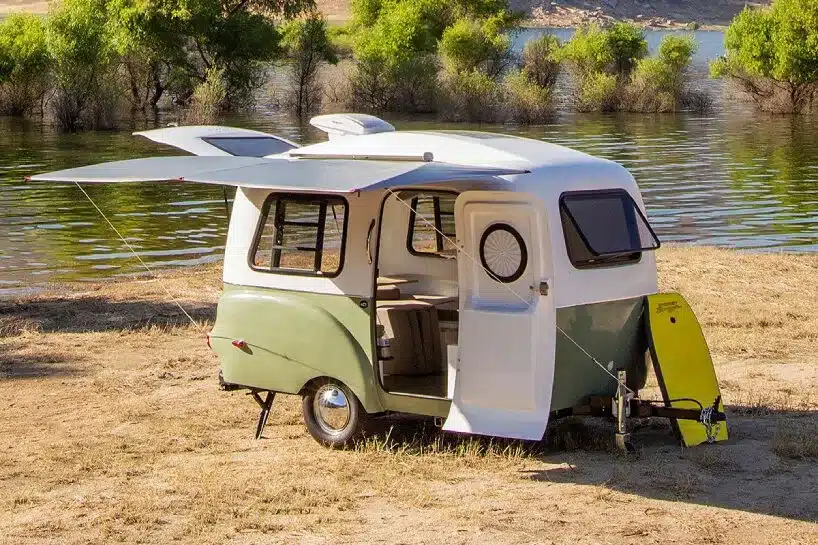
Specs: 13 ft long; approximately 1,100 lb dry; modular Adaptiv interior; sleeps up to 5 depending on configuration
The HC1 is the lightest serious trailer on this list and the most flexible. Its Adaptiv system uses movable cubes that reconfigure into beds, seating, a galley or a toilet module, and the cubes can be pulled outside entirely, leaving an empty shell you can use to haul a motorcycle or bikes. At around 1,100 pounds it fits in a single parking space and tows behind almost anything.
For a solo camper this is either perfect or frustrating, depending on temperament. You are buying a platform rather than a finished camper, and the configuration you want costs extra. If you like the idea of one vehicle that is a camper on the weekend and a cargo trailer on Monday, nothing else does it this well.
2. Taxa TigerMoth — Best Minimalist Off-Road Option
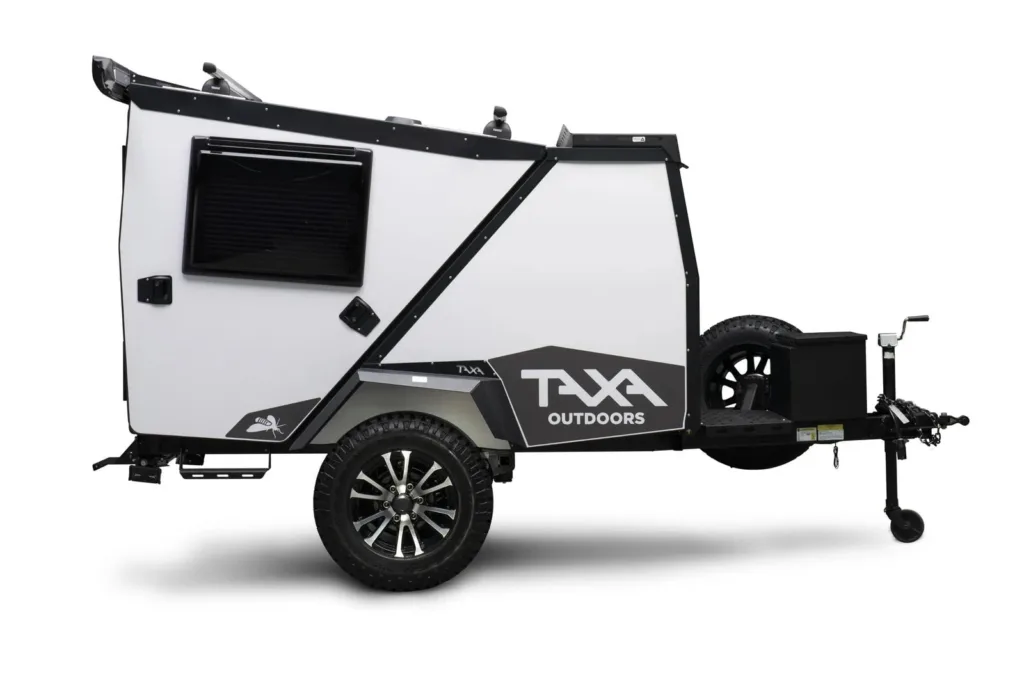
Specs: 12–13 ft long; approximately 1,310–1,360 lb dry; pull-out exterior kitchen; sleeps 2 inside, up to 5 with optional rooftop tent; no bathroom
The TigerMoth is built for people who intend to be outside and want the trailer purely as a hard-sided place to sleep and store gear. The kitchen slides out from underneath, the side and rear hatches open the interior up completely, and a bungee cargo network on the walls and ceiling handles storage without cabinetry weight.
There is no bathroom, which is the honest trade. The Overland version adds around 18 inches of clearance and Timbren axle-less suspension for rough forest roads, and it is one of the few trailers on this list genuinely suited to getting well off pavement behind a midsize vehicle.
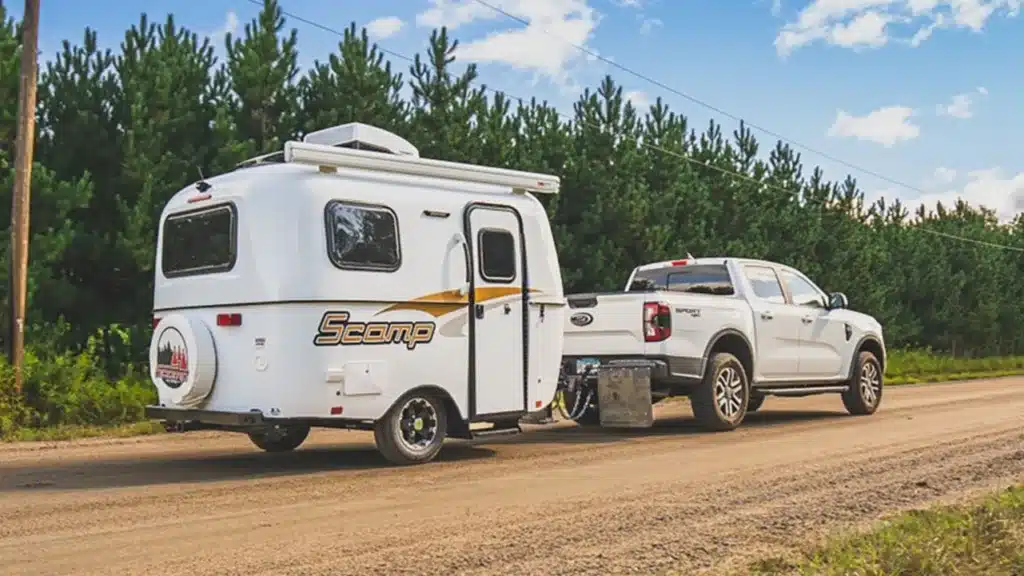
3. Scamp 13 — Best Value in Molded Fiberglass
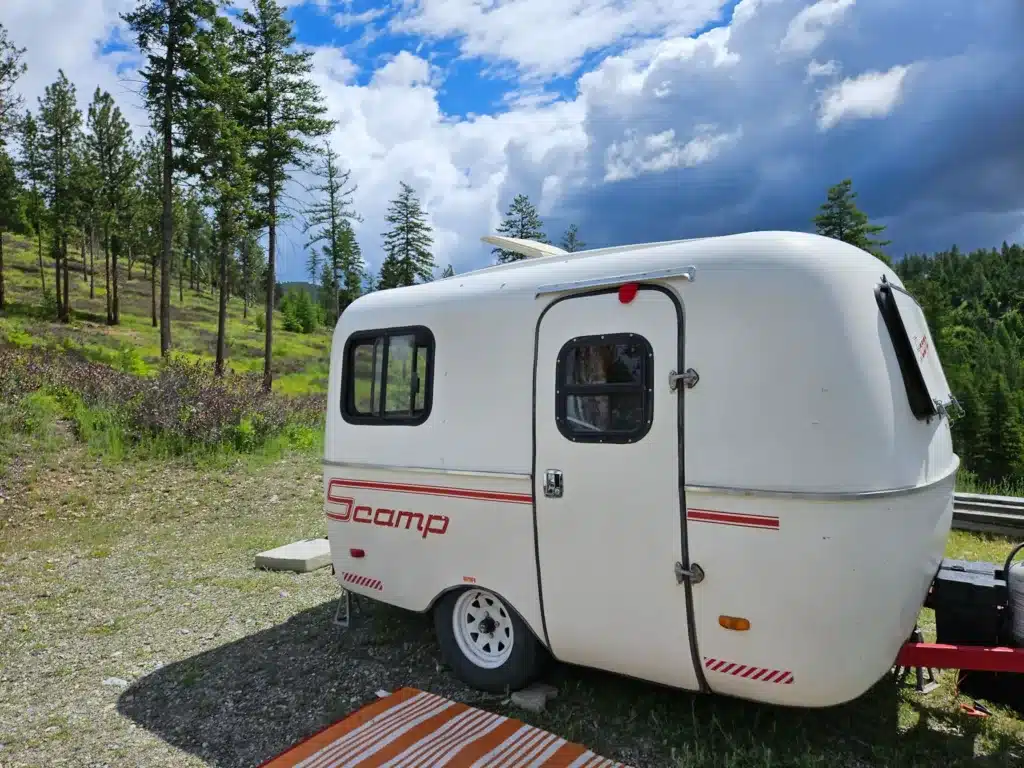
Specs: 13 ft long; approximately 1,200–1,600 lb dry depending on layout; 6 ft 3 in interior height in Deluxe; optional wet bath; from about $22,000
The Scamp 13 has been in production since the early 1970s and the formula has not needed to change. It is a two-piece molded fiberglass shell with no roof seams, which is why decades-old Scamps are still on the road while stick-built trailers of the same age have rotted from water intrusion. It is sold factory-direct from Backus, Minnesota, built to order, in eight layout and trim combinations.
For solo camping the appeal is the weight and the resale. At 1,200 to 1,600 pounds it tows behind a compact SUV or even some sedans, and clean used Scamps sell close to new prices, which makes the purchase unusually low-risk. Finishes are basic compared to pricier fiberglass brands, and 13 feet is genuinely tight for two people, but for one it is close to ideal. Scamp has also introduced an off-road version, the Scamp X, with upgraded suspension and higher clearance at just under 2,000 pounds.
4. Taxa Cricket — Best Pop-Top for Headroom
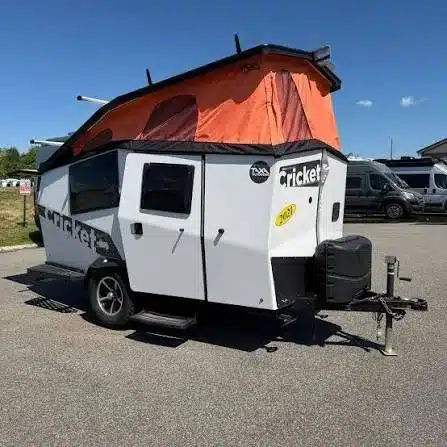
Specs: 15 ft long; approximately 1,500 lb dry; pop-up roof for standing height; multi-tier sleeping; optional bathroom
The Cricket solves the biggest complaint about ultralight trailers, which is that you cannot stand up in them. Its pop-up roof gives real headroom and ventilation when parked while keeping the towing profile low and the weight around 1,500 pounds. Sleeping is arranged in tiers, so it accommodates more people than the footprint suggests.
For a solo camper who plans longer stays rather than quick weekends, that standing height changes daily life inside the trailer considerably. The trade is one more setup step at every stop and a roof mechanism to maintain over time.
5. Casita 17 Spirit — Best Fiberglass Trailer With a Real Bathroom
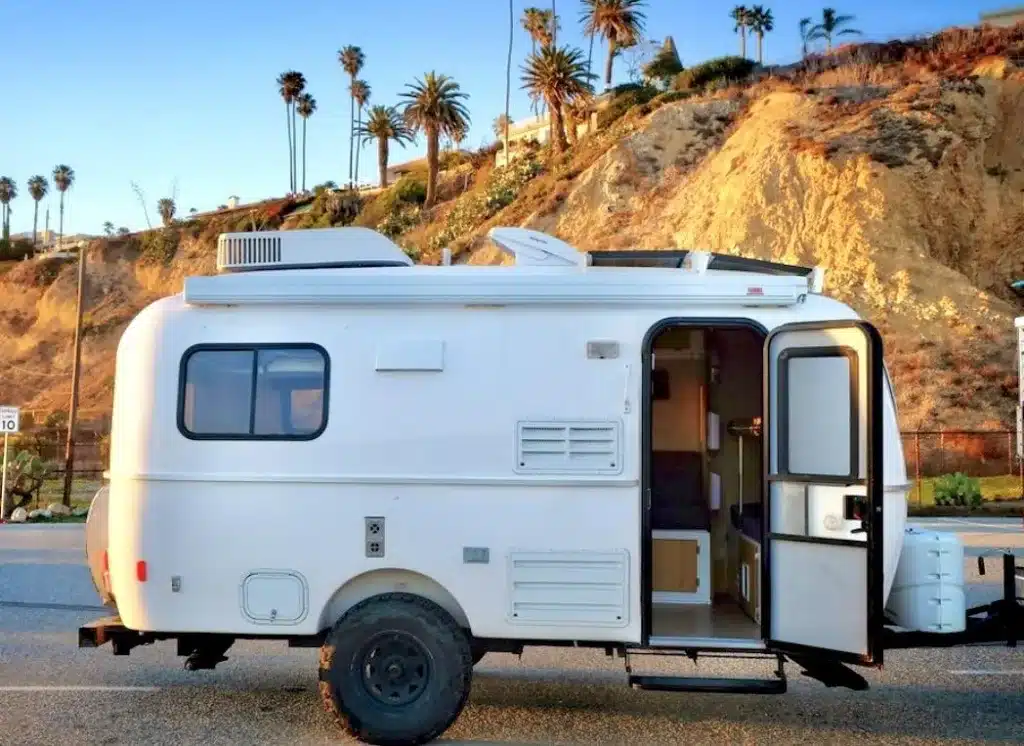
Specs: 17 ft long; approximately 1,950–2,480 lb dry depending on package; 3,500 lb GVWR; Standard from about $23,000, Deluxe from about $30,000
If you want molded fiberglass durability but need a proper bathroom, the Casita is the answer. The 17-foot Spirit is the core of the range, and the Ultra Lite package is the most popular choice, bringing dry weight down to roughly 1,950 pounds. The fully equipped Deluxe runs 2,480 pounds with a 3,500-pound GVWR.
Casita made a meaningful change for 2026, replacing the flooring with a fully composite structure that removes the OSB board previously used, eliminating a common rot point. The interior furnishings are molded fiberglass rather than wood, which is part of why these trailers last. Casita has also added a shorter 15-foot Patriot to the lineup, worth looking at if 17 feet feels like more trailer than you need.
6. nuCamp T@B 320 — Best Teardrop With Full Amenities
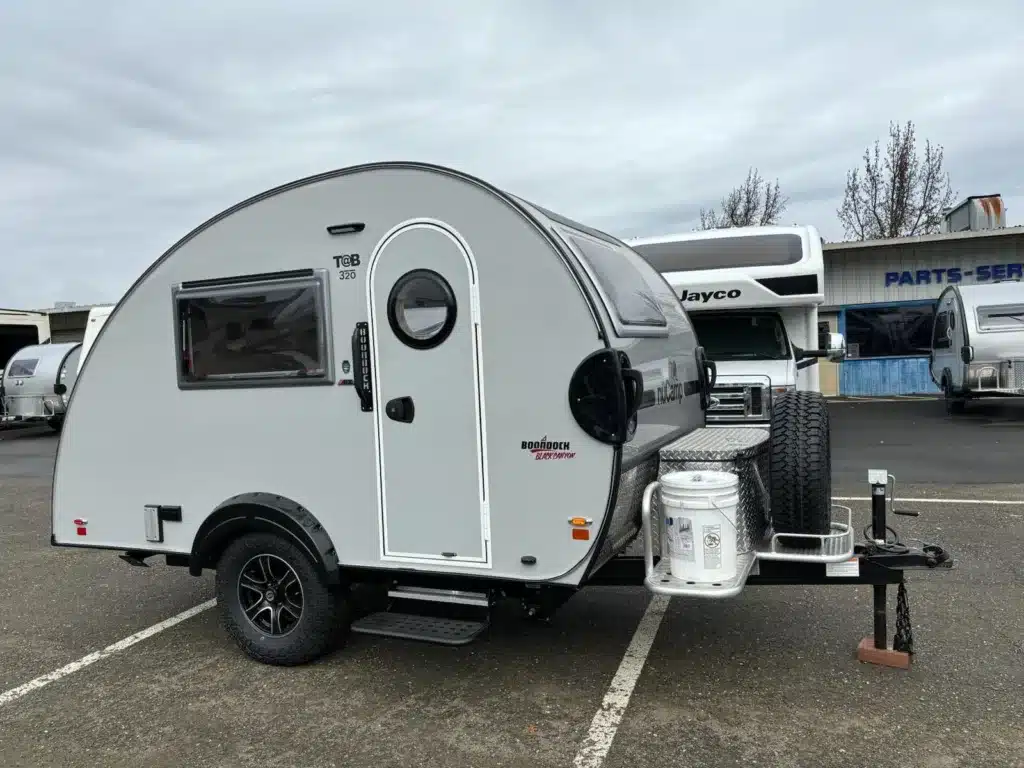
Specs: approximately 15 ft 6 in long; approximately 2,100 lb dry in Boondock trim; wet bath with cassette toilet; Alde heating and hot water; expandable split bed
The T@B 320 is the teardrop that proved a trailer this small could have everything. Current models include a wet bath with a cassette toilet, a two-burner glass-top stove, a 12-volt compressor refrigerator, central air conditioning and the Alde hydronic heating system, which is genuinely better than a standard RV furnace for cold-weather camping.
For 2026 nuCamp added a T@B 320 Lite trim, which strips back to an LP furnace and standard air conditioning at a lower price point, aimed at buyers who found the standard 320 more camper than they needed. The Boondock package adds off-road tires, a pitched axle and solar. The split bed layout means you can leave one side made up permanently, which suits solo use well.
7. Airstream Basecamp 16X — Best Premium Adventure Trailer
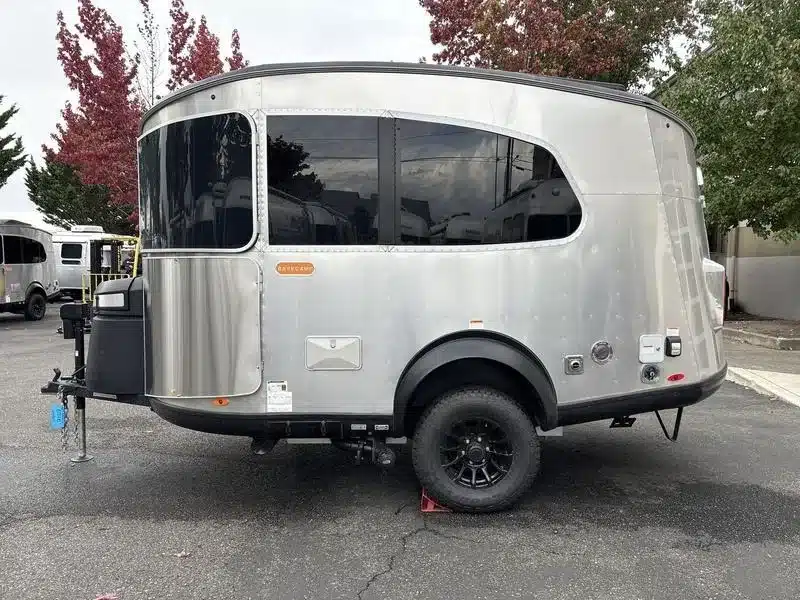
Specs: 16 ft long; approximately 2,650 lb dry; sleeps 2; wet bath; 21-gallon fresh tank; aluminum L-track cargo floor; from about $54,900
The Basecamp is the least Airstream-looking Airstream and the most practical one for a solo adventurer. The X-Package off-road setup is now standard, the floor is an aircraft-style L-track system with tie-downs for bikes and boards, and a rear hatch opens the back for loading gear. It sleeps two, has a wet bath, and is the lightest and most towable trailer Airstream builds.
It is also the entry point to Airstream ownership and still costs more than twice a Scamp. What you get for that is the aluminum shell, the dealer network and resale values that hold up better than almost anything else in the category.
8. Airstream Bambi 16RB — Best Classic Aluminum Small Trailer
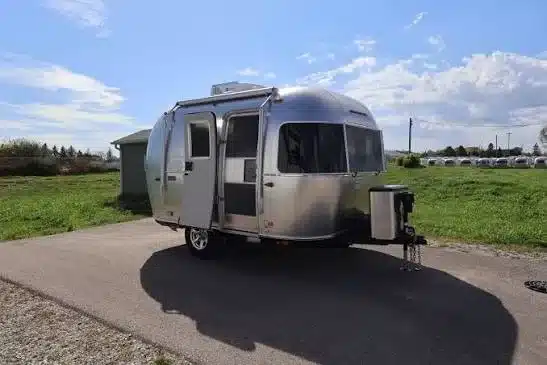
Specs: 16 ft long; approximately 3,150 lb dry; sleeps 4; rear wet bath; starting MSRP about $63,400, with as-equipped dealer MSRPs commonly $70,000 and above
If the iconic riveted aluminum shell is the point, the Bambi 16RB is the smallest and least expensive way in. It sleeps four in 16 feet, has a rear wet bath, and delivers the build quality and the badge. At roughly 3,150 pounds dry it needs a more capable tow vehicle than most trailers on this list.
Be careful reading prices here. Airstream quotes a base MSRP around $63,400, but dealer listings for equipped 2026 units routinely show MSRPs from $70,000 to $76,100, with negotiated sale prices often well below sticker. Shop several dealers.
9. Forest River Rockwood Geo Pro G15TB — Best Conventional Small Trailer
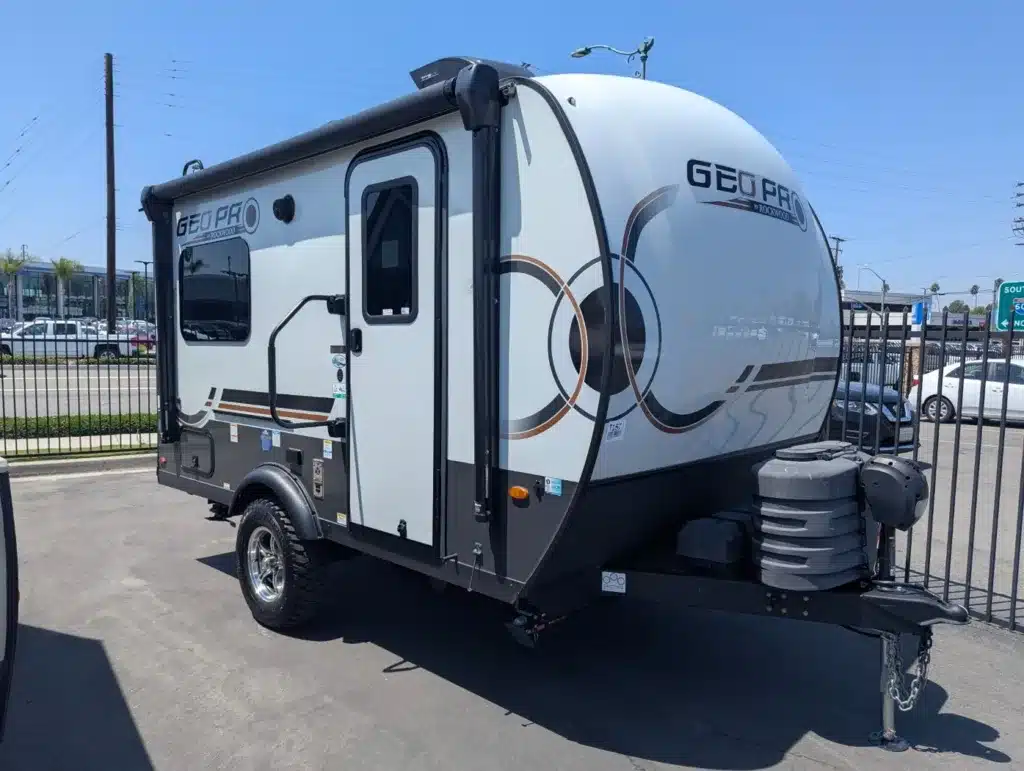
Specs: approximately 15 ft 8 in long; dry weight varies substantially by model year, roughly 2,700 lb on earlier units and around 3,400 lb on some 2026 builds; twin beds that convert to a king; full bathroom with tub/shower
The Geo Pro G15TB is the smallest walkable trailer in the Rockwood line and packs a remarkable amount into 15 feet: a full bathroom, a three-burner cooktop, a convection microwave, a 12-volt refrigerator, an outside griddle and solar. Twin beds convert into a king, which for a solo camper means one permanently made bed and a second surface for gear.
This model is also the clearest illustration of the weight-creep problem. Published dry weights for the 15TB have ranged from roughly 2,667 pounds on earlier units up to about 3,417 pounds on a current 2026 dealer listing with a 4,432-pound GVWR. That is a difference big enough to change which vehicle can tow it, so verify the sticker on the actual trailer.
10. Winnebago Micro Minnie — Most Trailer for the Money
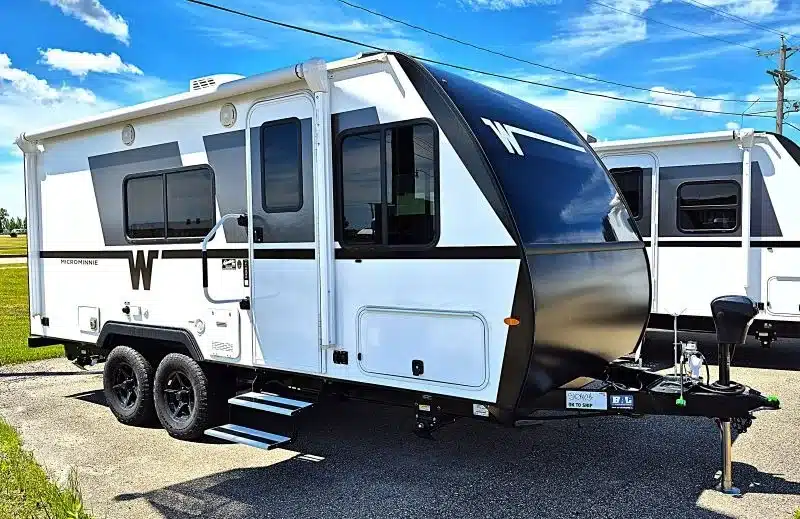
Specs: 18–22 ft depending on floorplan; the 2100BH is 21 ft 11 in with an MSRP around $38,900; slide-outs on some plans; full bathroom
The Micro Minnie is where you land if you want conventional RV comfort at a conventional RV price and are willing to accept a longer trailer. Standard equipment includes a 10-plus cubic foot 12-volt refrigerator, a powered awning, power tongue and stabilizer jacks, torsion axles and an enclosed heated underbelly.
For solo camping, look at the shorter no-slide floorplans rather than the bunkhouses. Slide-outs add weight, complexity and one more thing to fail, and the bunk models are solving a family problem you do not have. Anything over 20 feet also starts closing off the smaller campground loops.
Small Travel Trailers Compared
Figures below are approximate and drawn from published 2026 information. Dry weight excludes water, propane, battery, cargo and options, and prices are base MSRPs before dealer markups, freight and taxes.
| Model | Length | Dry Weight | Starting Price | Bathroom |
|---|---|---|---|---|
| Happier Camper HC1 | 13 ft | approx. 1,100 lb | Varies by build | Optional module |
| Taxa TigerMoth | 12–13 ft | approx. 1,310–1,360 lb | From about $19,000 | None |
| Scamp 13 | 13 ft | approx. 1,200–1,600 lb | From about $22,000 | Optional wet bath |
| Taxa Cricket | 15 ft | approx. 1,500 lb | Mid $30,000s | Optional |
| Casita 17 Spirit | 17 ft | approx. 1,950–2,480 lb | From about $23,000 | Yes |
| nuCamp T@B 320 | approx. 15 ft 6 in | approx. 2,100 lb | Mid $30,000s | Wet bath |
| Airstream Basecamp 16X | 16 ft | approx. 2,650 lb | From about $54,900 | Wet bath |
| Rockwood Geo Pro G15TB | approx. 15 ft 8 in | approx. 2,900–3,400 lb | Low $30,000s | Yes |
| Airstream Bambi 16RB | 16 ft | approx. 3,150 lb | From about $63,400 | Wet bath |
| Winnebago Micro Minnie | 18–22 ft | approx. 3,500–4,000 lb | From about $38,900 | Yes |
Matching a Trailer to Your Tow Vehicle
As a rough guide, and always subject to your specific vehicle’s ratings: a compact crossover or small SUV rated around 1,500 to 2,000 pounds can handle a Happier Camper HC1, a TigerMoth or a lightly optioned Scamp 13. A midsize SUV rated 3,500 pounds opens up the Casita Ultra Lite, the Cricket and the T@B 320. Getting into the Basecamp, Geo Pro and Bambi territory generally means a 5,000-pound-plus rating, which in practice means a larger SUV or a midsize or full-size pickup.
Apply a safety margin rather than towing at the limit. A common rule is to keep loaded trailer weight at or below roughly 80 percent of your vehicle’s tow rating, which leaves headroom for mountain grades, headwinds and the fact that manufacturers test tow ratings under ideal conditions with an empty vehicle.
Buying Tips for Solo Campers
- Rent before you buy: a weekend with a T@B or a Casita from a peer-to-peer rental platform tells you more about whether you can live in that layout than any amount of walkthrough video.
- Practice hitching and backing in an empty lot: do it alone, repeatedly, before your first trip. Add a backup camera and consider a hitch alignment system, both of which are aimed squarely at people towing without a spotter.
- Weigh the trailer loaded: take it to a public scale once it is packed the way you actually camp. Most owners are surprised, and it is the only way to know your real numbers.
- Consider buying used in molded fiberglass: Scamps and Casitas hold value so well that a used one costs nearly as much as new, but it also means you can sell without losing much if solo camping is not for you.
- Budget beyond the sticker: freight, dealer prep, a weight-distribution hitch if needed, a battery upgrade, solar and basic setup gear routinely add several thousand dollars.
- Think about security: camping alone means leaving the trailer unattended. A hitch lock, wheel lock and a simple interior deadbolt upgrade are worth doing before the first trip.
- Check campground length limits: before committing to anything over 20 feet, look up the parks you actually plan to visit. Many older national park loops cannot take longer trailers.
Choosing the Right Trailer
If you want the lightest tow and the most flexibility, the Happier Camper HC1 and the Taxa TigerMoth are the answers, provided you can live without an indoor bathroom. If you want one trailer to keep for twenty years, the Scamp 13 and the Casita Spirit are the safest purchases in the category, and their resale values reflect it. If budget is not the constraint and you plan to get well off pavement, the Airstream Basecamp 16X is purpose-built for it.
Whatever you choose, do the weight math before the emotional math. The trailer that fits your vehicle, your campgrounds and the reality of setting up alone in the rain will get used every season. The one that looked perfect in the showroom but sits 400 pounds over your payload will not.
Specifications and prices reflect published 2026 model-year information and are approximate. Weights, options and pricing change without notice and vary by build, dealer and region. Verify the weight sticker and current pricing on the specific unit before purchase.