Business travel expenses are easy to lose track of. A taxi here, a hotel breakfast there, and by Friday you’re digging for crumpled receipts. Packing is similar: forget a charger and the trip gets harder.
This guide covers both. First, how per diems, receipts and reimbursements work, using official GSA and IRS figures at the time of writing (November 2026). Then a carry-on packing list that works for most work trips.
How Per Diems Work
A per diem is a daily allowance for lodging, meals and incidentals, paid instead of reimbursing every sandwich.
Many companies base their allowances on the federal rates set by the General Services Administration (GSA). Those rates are for federal employees, so your employer’s rules may be higher, lower or entirely different.
Current GSA standard rates
| Fiscal year | Standard lodging (per night) | Standard M&IE (per day) | Total |
|---|---|---|---|
| FY2026 (Oct 2025–Sep 2026) | $110 | $68 | $178 |
| FY2027 (Oct 2026–Sep 2027) | $113 | $68 | $181 |
M&IE means meals and incidental expenses. The standard rate covers most of the continental US, but 295 higher-cost areas have their own rates for FY2027. The M&IE tiers run from $68 to $92 a day.
Two details catch people out. Federal travelers get only 75% of the M&IE rate on the first and last day of a trip. And lodging taxes aren’t included in the lodging rate. Look up your destination on the GSA per diem tool before you go.
Receipts and IRS Record-Keeping
If you’re self-employed or must account to your employer, IRS Publication 463 sets the ground rules:
- Keep receipts for all lodging, whatever the amount.
- Keep receipts for any other expense of $75 or more.
- Note the amount, date, place and business purpose of each expense.
- Record expenses at or near the time, not weeks later.
- Keep records for generally three years from the date you file the return that claims the deduction.
Self-employed travelers can generally deduct only 50% of business meals. Most W-2 employees can’t deduct unreimbursed work expenses on their federal return right now, so it pays to claim everything through your employer. A tax professional can confirm what applies to you.
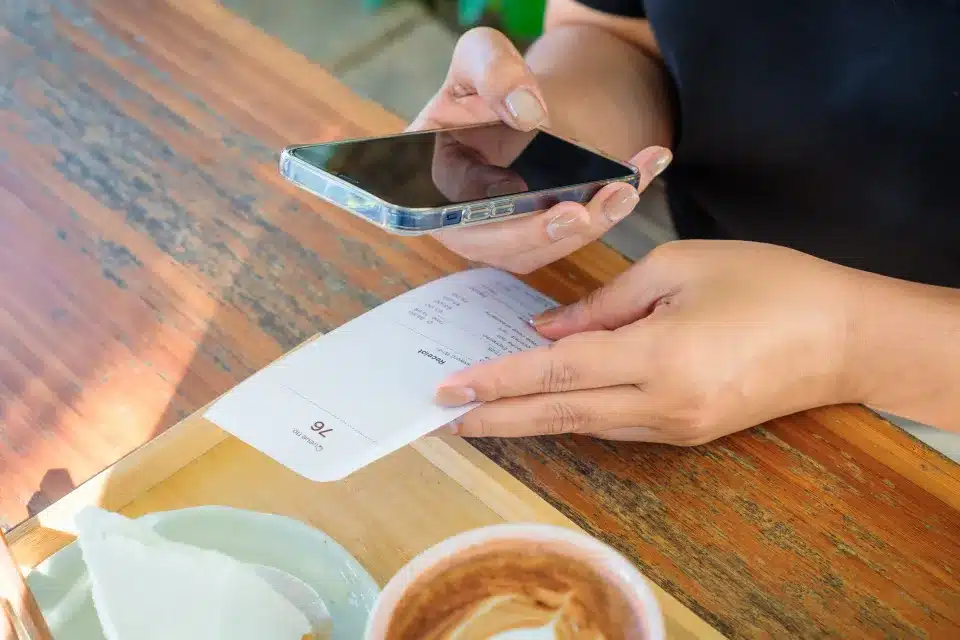
Snap receipts on the spot
Photograph every receipt the moment you get it. Most corporate expense tools and many accounting apps can read the amount and date from a photo. Add a one-line note on the business purpose while you remember it.
What’s Typically Reimbursable
Every company sets its own list, but these are usually covered:
- Airfare, rail and checked bag fees for business trips.
- Hotel nights on business days.
- Meals on the road, up to a daily limit or per diem.
- Rideshares, taxis, parking and tolls.
- Mileage in your own car. The IRS business rate is 76 cents per mile for travel from July 1, 2026 (72.5 cents before that).
- Work-related Wi-Fi and phone charges.
Usually not covered: upgrades you choose, minibar snacks and personal days added to the trip. If you plan to stay on for a weekend, our guide to bleisure travel explains how to split the costs.
Using Cards to Track Business Travel Expenses
If your company gives you a corporate card, use it for everything work-related and nothing else. If you pay and get reimbursed, put work spending on one dedicated personal card so your statement doubles as an expense log.
That card can earn something for you, too. Our guide to travel points vs cash back helps you pick a reward type, and frequent flyers may value the best credit cards with airport lounge access. Card terms change often, so confirm details on the issuer’s site before applying.
The Business Travel Packing List
Go carry-on only
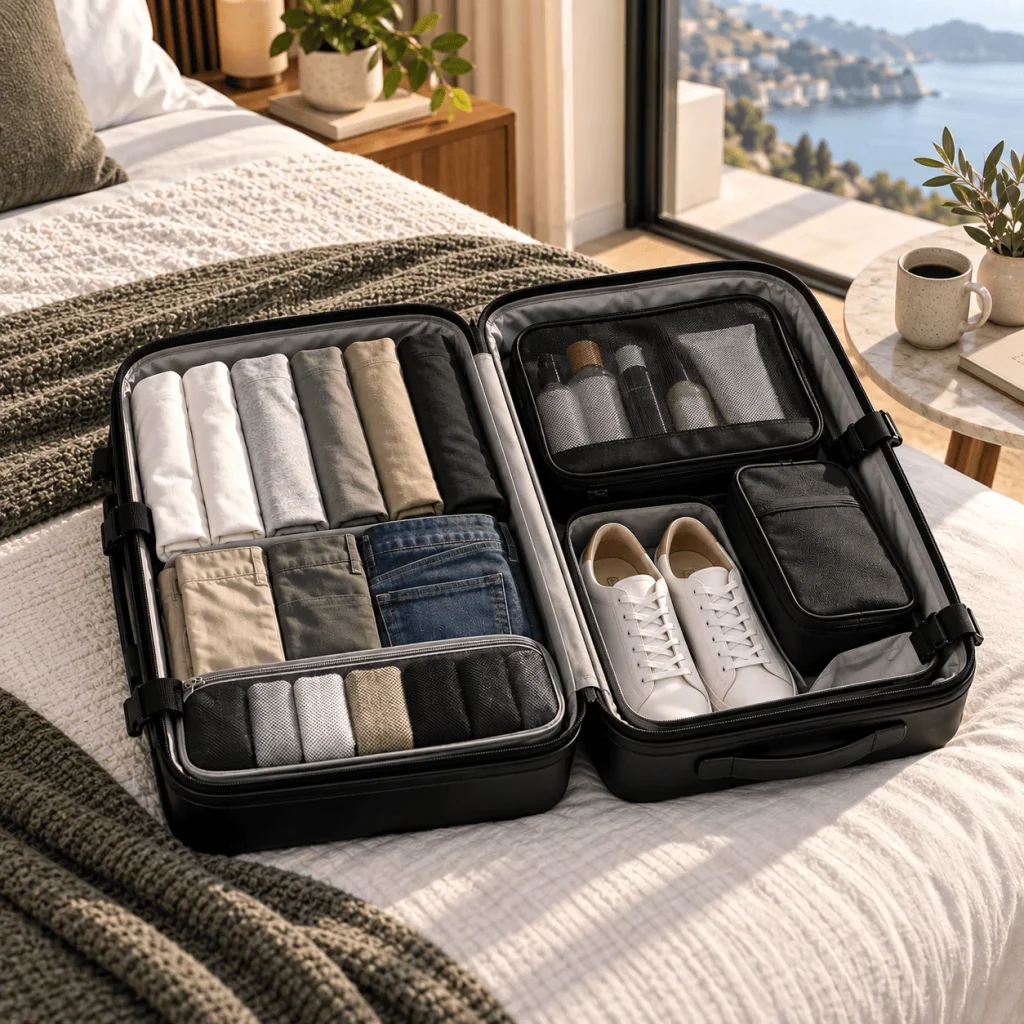
For trips of up to about four nights, a carry-on and a laptop bag are usually enough. You skip the bag drop and the carousel, and your suit can’t get lost. A good carry-on for frequent flyers makes this much easier. Check your airline’s size limits, and remember basic economy fares can be more restrictive.
Clothes that don’t wrinkle
Pick a simple color scheme so everything matches: one blazer, two pairs of pants or skirts, and a shirt per day. Merino wool, knits and wrinkle-resistant shirts hold up best. Hang creased items in the bathroom while you shower.
Tech and chargers
- Laptop, phone and their chargers.
- A compact multi-port charger and a short extension cord.
- A power bank, which must go in your carry-on. TSA doesn’t allow spare lithium batteries or power banks in checked bags, and each lithium-ion battery is limited to 100 watt-hours.
- Noise-canceling headphones and a universal plug adapter for trips abroad.
Documents and toiletries
Bring a REAL ID-compliant license or a passport for domestic flights; TSA has enforced REAL ID since May 7, 2025. Pack your passport for international trips, plus your company travel policy and any visa paperwork.
Liquids still follow TSA’s 3.4-ounce (100 ml) limit, in a quart-size bag. For longer trips, our guide to the best checked luggage is worth a look.
Keeping Work Trips Simple
Business travel expenses get easier with a few habits: know your per diem, photograph receipts, and keep work spending on one card. Pair that with a carry-on you can live out of, and you’ll spend less time on admin.
FAQs
What is the GSA per diem rate for 2026?
For FY2026 (October 2025 to September 2026), the standard rate was $110 for lodging and $68 for M&IE. For FY2027, which began October 1, 2026, it’s $113 for lodging and $68 for M&IE.
Do I need a receipt for every business expense?
Under IRS rules, you need receipts for all lodging and for other expenses of $75 or more. Your employer may require receipts for everything.
Can I bring a power bank in checked luggage?
No. TSA requires spare lithium batteries and power banks to travel in your carry-on bag.